
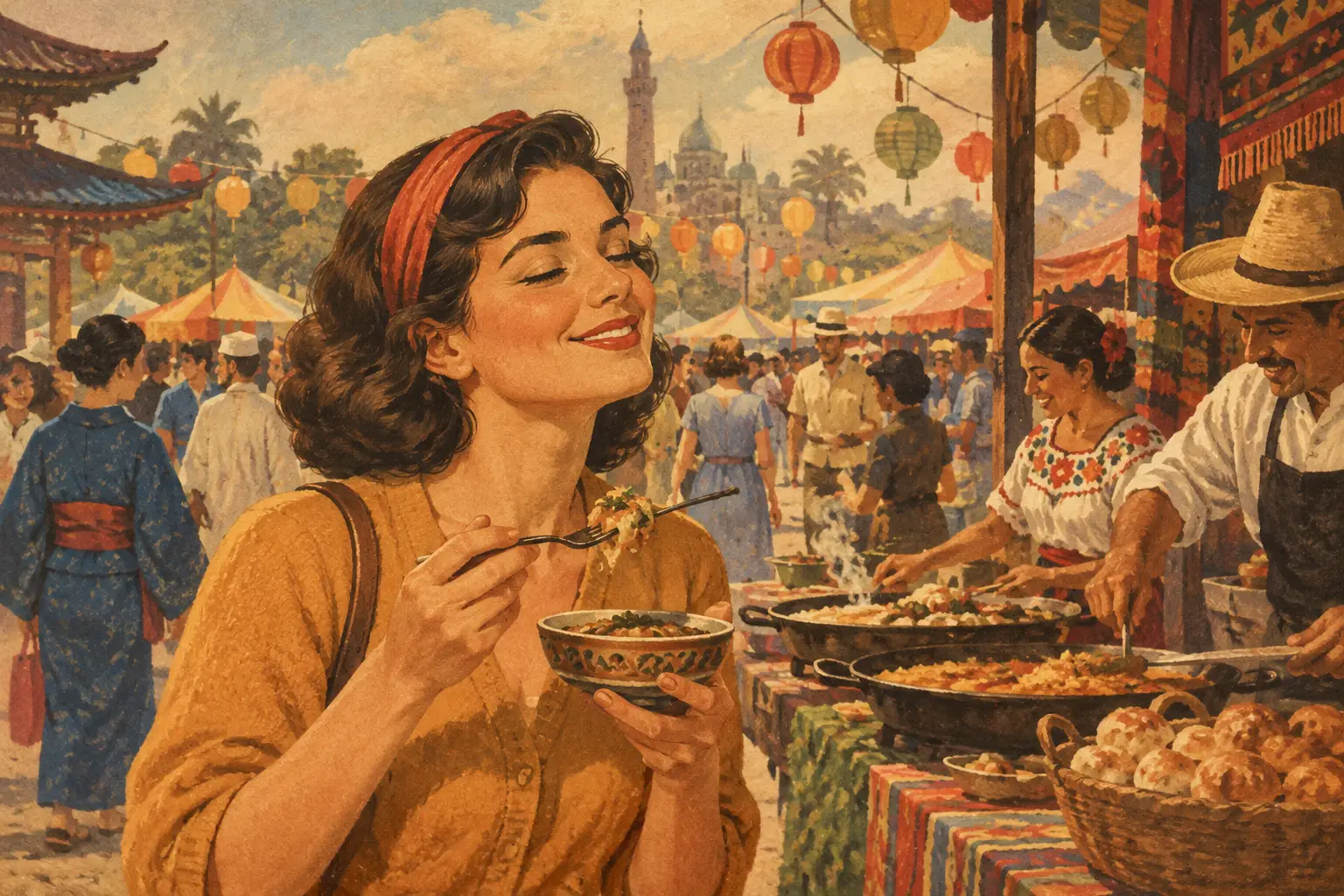
The best travel memories rarely begin with a reservation. They begin with a sound drifting down the street, a line forming around a grill, or the moment a stranger insists you try the dish their grandmother made every summer. Cultural food festivals create that kind of magic. They turn local flavor into a full-sensory celebration, where every bite comes with a story, a soundtrack, and a reason to stay a little longer.
For travelers who want more than a photo in front of a landmark, these festivals offer a direct invitation into the heartbeat of a place. You are not just tasting a destination. You are sharing space with the people who shape it.
Cultural Food Festivals Make Culture Feel Personal
A museum can tell you what happened. A food festival can make you feel why it matters.
At a great festival, recipes are never just recipes. A slow-cooked stew might carry generations of family history. A hand-folded dumpling might reflect a migration story. A cup of sweet, spiced coffee can reveal how a community gathers, welcomes guests, and marks time together. Food gives travelers a delicious starting point, but the real experience lives in the people behind the table.
That is what makes these events so memorable. The vendor explaining why a particular pepper is used. The chef laughing as a crowd reacts to a fiery sauce. The local family debating which booth has the best version of a hometown favorite. These are small moments, but they make a destination feel less like a backdrop and more like a conversation.
There is also something wonderfully democratic about a festival table. You do not need an invitation to a private dining room to experience meaningful food. You can show up curious, follow the aromas, and discover a dish that changes the way you think about a cuisine you thought you already knew.
The Music Matters as Much as the Menu
Food may bring people to the festival, but music often gives the experience its pulse. A brass band, a steel drum ensemble, a mariachi group, a DJ mixing regional sounds, or a singer carrying a familiar folk melody across a packed plaza can shift the entire mood of a meal.
This connection is bigger than entertainment. Music helps place food in its cultural setting. The flavor of smoky barbecue hits differently when blues guitar is rolling from the stage. A plate of Caribbean specialties feels even brighter when the rhythm around you invites movement. A harvest celebration can become emotional when a local choir sings songs that everyone nearby seems to know by heart.
That blend of food and music is where a festival becomes more than a tasting event. It becomes atmosphere. It gives you a memory with texture, color, sound, and feeling. Years later, one particular song or spice can take you right back to that afternoon.
For a traveler, that is the good stuff. Not just what you ate, but what was playing while you ate it, who you shared it with, and how the whole scene made you feel.
Come Hungry, but Bring Curiosity Too
The most rewarding festival strategy is simple: do not try to eat everything. Try to understand something.
It is easy to chase the biggest crowd, the most camera-ready dessert, or the dish with the longest line. Sometimes that works out beautifully. But the quieter booth with a handwritten sign may be where you hear the best story of the day. Ask what is special about a dish. Ask how it is traditionally served. Ask which item the vendor would choose for someone trying their food for the first time.
Those questions create connection without turning anyone into a tour guide. Most people who cook with pride enjoy talking about what they have made, especially when the interest is genuine. Listen first, then taste. You may find that the detail you remember most is not the flavor itself, but the care that went into it.
It also helps to pace yourself. Cultural food festivals are marathons of discovery, not an eating contest. Share plates with your travel companion, leave room for a second lap, and drink plenty of water if the day is hot or the spices are serious. A little planning means you can enjoy the music, demonstrations, and community moments instead of needing to find the nearest chair after 30 minutes.
Look Beyond the Main Stage
Big-name chefs and headline performers can be a major draw, especially at well-established events. Still, some of the richest experiences happen just outside the busiest areas.
Watch a cooking demonstration where an elder explains a traditional technique. Stop by the artisan section to see how ingredients, pottery, textiles, or serving traditions connect to the meal. Notice which foods families are buying in multiples to take home. These details can reveal what a community considers comforting, celebratory, or essential.
If the festival includes regional ingredients, pay attention to them. A local fruit, seafood catch, grain, or spice can tell you a lot about geography and season. Food is one of the most immediate ways to understand how people have adapted to a landscape. Coastal dishes, mountain cooking, desert preservation methods, and farm-driven harvest menus all reflect a relationship with place.
That is especially true when traveling by cruise or visiting a destination for a limited time. A festival can offer a meaningful window into local traditions in just a few hours. It is not a replacement for spending longer in a community, of course, and it should not be treated like a culture checklist. But when approached respectfully, it can be a vibrant first introduction that inspires a return trip.
Respect Is Part of the Experience
Celebration and respect belong at the same table. The best visitors arrive ready to enjoy themselves while recognizing that many cultural traditions hold deep personal, religious, or historical meaning.
Take cues from the event. If there are ceremonies, performances, or spaces where photography is limited, honor that. If a dish has a history connected to hardship, migration, or resilience, receive that story with care rather than treating it as a fun fact for social media. And when you love something, support the people who made it by buying directly from local vendors when possible.
There is room for joy here. Plenty of it. But joy becomes richer when it is paired with attention. You can dance, laugh, take beautiful photos, and try the spicy thing everyone warned you about while still remembering that you are a guest in someone else’s celebration.
That balance matters because it keeps cultural exchange human. It makes room for pride instead of performance, conversation instead of consumption.
How to Capture the Feeling Without Missing It
A food festival is a dream for photos and video: steam rising from a skillet, bright sauces catching the sunlight, performers moving through a crowd, a first-bite reaction that needs no caption. Capture those moments, absolutely. Just do not experience the whole day through your screen.
Try taking a few intentional photos early, then put the phone away while you eat. Record the music for a few seconds, then listen to the next song without recording it. If you are creating travel content, focus on the details that tell a real story: the hands preparing a dish, the name of the family business, the ingredients that make a recipe distinct, and the reaction of the crowd when the beat drops.
The strongest stories are not built from perfect angles alone. They come from honest moments. Maybe you ordered something you could not pronounce and loved it. Maybe you found a familiar flavor in an unexpected city. Maybe a performer pulled the crowd together just as the sun began to set. Those are the scenes worth carrying home.
Let the Festival Change Your Next Meal
The real gift of a cultural food festival often shows up after the trip. You may seek out a restaurant in your hometown, attempt a recipe, build a playlist around a new artist, or start planning a return visit with more time to explore. A single dish can become a bridge between where you have been and where your curiosity wants to go next.
So join the adventure with an open appetite and an even more open mind. Find the booth with the story, stay for the music, and let the meal remind you that the most unforgettable journeys are often shared one plate at a time.
Leave a Reply