
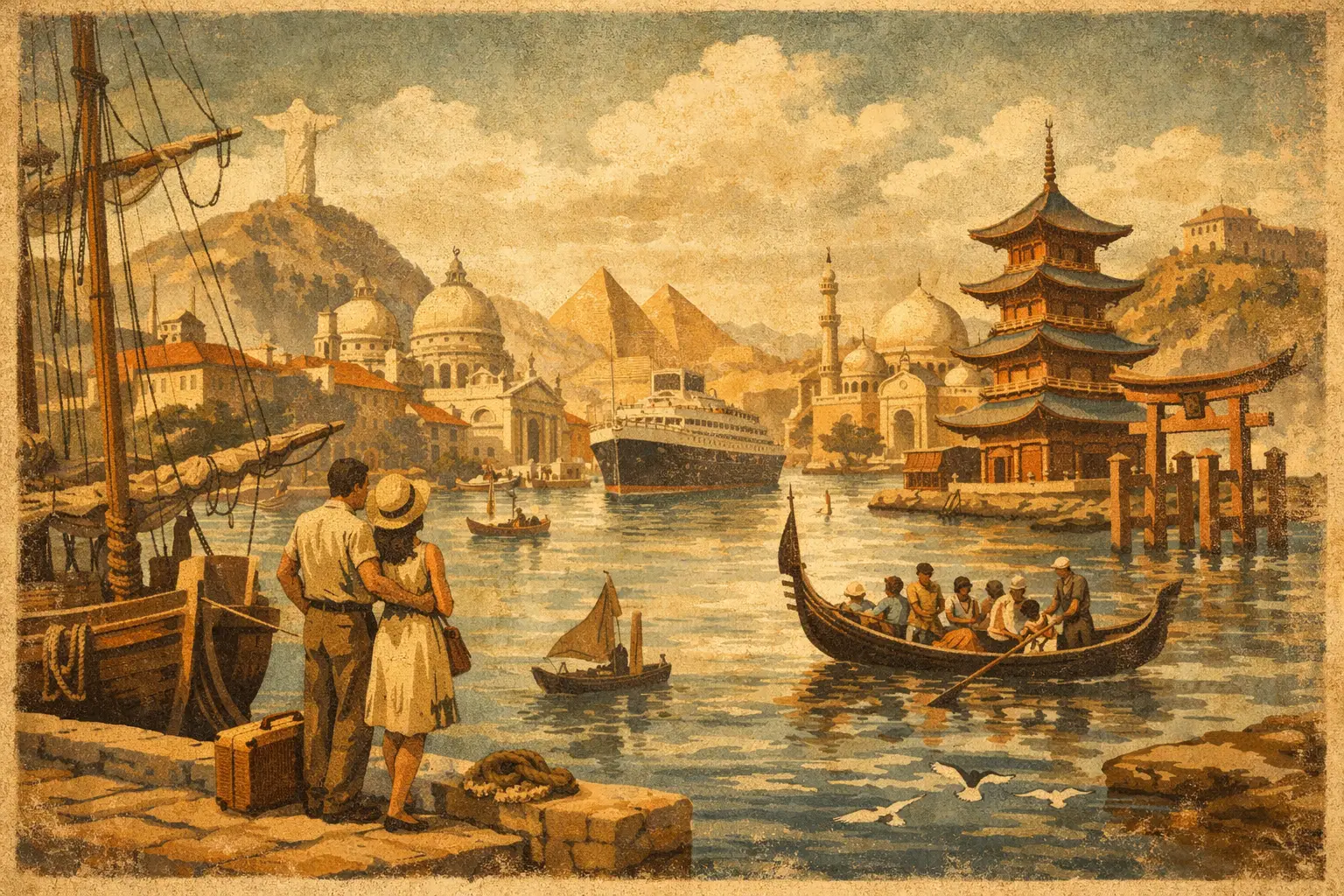
Some ports are made for quick photos and a fast walk back to the ship. Others practically dare you to stay longer, listen closer, and let the destination set the rhythm for the day. If you’re looking for the best ports for cultural immersion, the difference usually comes down to this: can you step off the ship and feel the real pulse of a place without forcing it?
That pulse might sound like live salsa drifting through a plaza, vendors calling out over a market stall, or church bells bouncing off old stone streets. It might taste like a family-run lunch spot you almost missed or look like a neighborhood mural that tells you more than any brochure ever could. For travelers who want more than a checklist, these are the ports that reward curiosity.
What makes the best ports for cultural immersion?
A culturally rich port is not always the prettiest or the most polished. Sometimes the most memorable places are the ones where daily life is still happening right in front of you, not staged for visitors. That means walkable access to neighborhoods, strong local food culture, visible history, public gathering spaces, and some kind of artistic heartbeat, whether that’s music, dance, crafts, or street art.
It also helps when a port city feels like a city first and a cruise stop second. You can tell the difference quickly. In the strongest destinations, locals are out living their day, cafes have regulars, markets serve residents, and the experience feels shared rather than packaged. That doesn’t mean tourism is bad. It just means authenticity survives.
10 best ports for cultural immersion
San Juan, Puerto Rico
San Juan gets this right almost immediately. Step into Old San Juan and you’re surrounded by color, history, and a layered identity shaped by Spanish colonial influence, Afro-Caribbean culture, and modern Puerto Rican energy. The blue cobblestones, balconies, fort walls, and neighborhood cafes create a setting that feels cinematic without losing its soul.
The beauty here is how easy it is to move from landmark to lived-in culture. You can spend the morning walking historic streets, hear live music by afternoon, and sit down to mofongo or fresh seafood by dinner with the sense that the city is still unfolding around you. San Juan works especially well for travelers who want depth without needing a long transfer from port to center.
Lisbon, Portugal
Lisbon has a way of pulling you in slowly, then all at once. One minute you’re admiring tiled facades and steep streets, and the next you’re in a tiny bakery wondering how something as simple as a pastry can carry so much local pride. The city feels textured in every sense – visually, musically, historically, and emotionally.
For cultural immersion, Lisbon shines because it rewards wandering. Neighborhoods like Alfama still feel intimate and rooted, and the city’s relationship with fado gives it a soundtrack that is reflective, soulful, and unmistakably local. It’s also a place where food culture is not performative. It’s woven into daily life.
Cartagena, Colombia
Cartagena is vibrant from the first step off the ship, but the real magic is not just in the bright buildings and horse-drawn carriages. It’s in the contrasts. You have colonial architecture, Caribbean flavor, Afro-Colombian heritage, street performers, fruit vendors, and a food scene that can swing from humble and local to upscale and inventive in just a few blocks.
This is one of the best ports for cultural immersion if you like destinations with strong visual identity and social energy. The trade-off is that some parts of Cartagena can feel very tourism-forward, especially inside the walled city. The move is to appreciate the beauty, then look for the edges where everyday culture shows itself more naturally.
Istanbul, Turkey
Few port cities feel as layered as Istanbul. This is where continents, empires, religions, and cuisines have intersected for centuries, and you can feel that complexity in almost every neighborhood. The call to prayer, the ferry traffic, the spice markets, and the domes on the skyline all create a sense that history is not behind glass here. It’s still active.
Istanbul is ideal for travelers who want culture in a big, bold, full-sensory way. It can be intense, and that’s part of the point. You’re not drifting through a pretty backdrop. You’re entering a city with gravity. If your favorite travel moments come from contrast, conversation, and surprise, Istanbul delivers.
New Orleans, Louisiana
Not every culturally immersive port requires a passport. New Orleans remains one of the strongest examples of a place where music, food, faith, language, and neighborhood tradition all shape the visitor experience in a real way. The city’s identity is so distinct that even a short visit can feel rich.
Yes, the French Quarter is the headline, but the city’s cultural power runs deeper than one famous district. Brass bands, Creole and Cajun influences, second-line spirit, and an almost unmatched relationship to food make New Orleans feel alive in every direction. For anyone who believes travel should sound as good as it looks, this port belongs near the top.
Naples, Italy
Naples is not trying to charm you in the polished, easygoing way that some Mediterranean ports do. That’s exactly why it works. It’s energetic, a little chaotic, deeply proud, and packed with local character. The street life is the attraction as much as any monument.
This is a city where pizza is not a trend or a tourist ritual. It’s civic identity. Churches, piazzas, laundry lines, scooters, and family-run shops all add to the feeling that Naples is performing itself for no one. It just is. Travelers who prefer tidy experiences may find it rough around the edges. Travelers who want honesty tend to love it.
Havana, Cuba
When accessible for your travel plans, Havana is unforgettable. The city carries history in a visible, weathered, emotionally charged way. Vintage cars, crumbling facades, live son music, cigar culture, dance, and neighborhood conversation all combine into an atmosphere that feels deeply human and artistically alive.
What makes Havana stand out is how connected music and daily life feel. This is not background entertainment. It’s part of the social fabric. If your idea of immersion includes lingering in public squares, hearing rhythm spill out of doorways, and letting a city reveal itself through mood as much as landmarks, Havana is a standout.
Barcelona, Spain
Barcelona can absolutely do culture, but it depends on how you approach it. If you only skim the biggest icons, it may feel crowded and overly familiar. If you give the city a little room, though, its layers start to come through – Catalan identity, neighborhood markets, design culture, late-night dining, and a strong sense of local pride.
This port works well for travelers who like mixing big-name sights with smaller sensory moments. A market visit, a slow lunch, a live performance, or time in a less tourist-heavy district can shift the entire experience. Barcelona is a reminder that cultural immersion is not always about going obscure. Sometimes it’s about going deeper.
Ketchikan, Alaska
At first glance, Ketchikan might seem like a surprising pick. But if you care about Indigenous art, storytelling, and place-based culture, it deserves attention. The area’s connection to Tlingit, Haida, and Tsimshian heritage offers a dimension that many travelers miss when they focus only on scenery.
The key here is intentionality. Ketchikan can become a quick souvenir stop if you let it. But with the right focus, it becomes a meaningful encounter with carving traditions, totem poles, and cultural history rooted in the land and water. It’s quieter than some ports on this list, but not less powerful.
Valletta, Malta
Valletta feels compact, but its cultural reach is bigger than its size suggests. Built by the Knights of St. John and shaped by centuries of Mediterranean exchange, the city carries military history, baroque beauty, and a strong local identity in a very walkable format.
What makes Valletta immersive is the density of experience. Architecture, churches, harbor views, language, and food traditions all sit close together, so even a day in port can feel full. It’s especially appealing for travelers who want history and atmosphere without spending half the day in transit.
How to choose the right port for your travel style
Not every traveler connects with culture the same way. Some people want music and nightlife. Others want museums, sacred spaces, or food that tells a regional story. Some love the rush of a big city like Istanbul, while others prefer the slower rhythm of Valletta or the focused heritage experience of Ketchikan.
It also depends on how much friction you’re comfortable with. The best cultural experiences are not always the easiest ones. Cities like Naples and Havana can feel less polished, but that roughness is often part of what makes them memorable. If you want convenience and immersion together, San Juan and Lisbon are especially strong choices.
For the Musical Smile Guy kind of traveler, the sweet spot is usually a port where music, food, and street-level energy are all within reach. That’s where a destination stops feeling like a stop and starts feeling like a story you’ll replay long after you’re home.
The best port is the one that changes your pace. It makes you stay for one more song, one more block, one more bite, and suddenly the day is not about seeing everything. It’s about feeling like you were really there.