
A jazz set starts in a tucked-away New Orleans club at 9 p.m. On a group trip, you may arrive with new friends already laughing over shared plates of gumbo. On a solo trip, you might take the last open stool at the bar, strike up a conversation with the saxophone player during the break, and decide to stay until the final note.
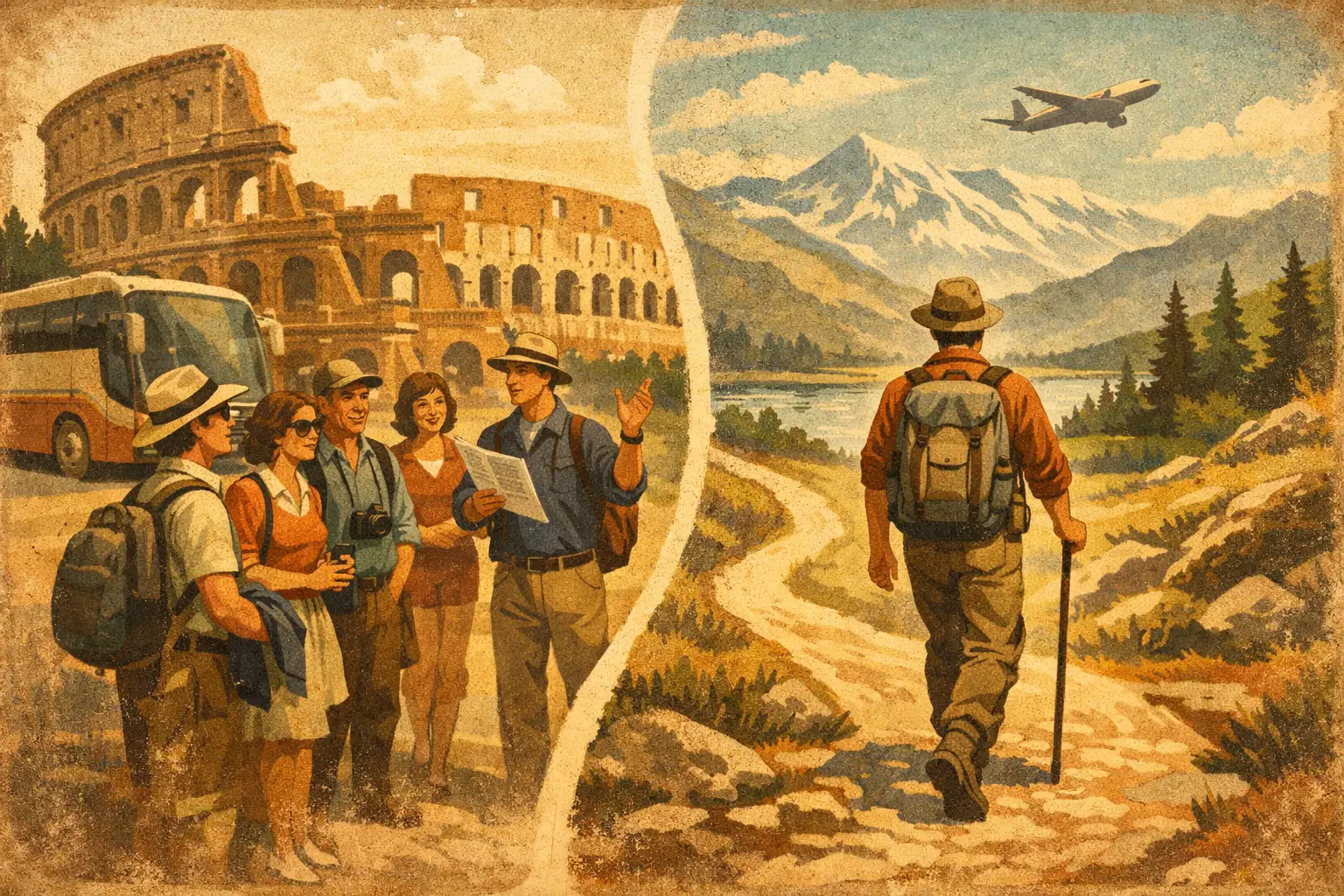
That difference is the heart of group tours versus solo travel. Neither style is automatically more adventurous, more affordable, or more meaningful. They simply create different rhythms for seeing the world. One gives you built-in company and a thoughtfully paced experience. The other leaves room for detours, quiet mornings, and the delicious surprise of changing your plans because a local recommended a bakery three blocks away.
The best choice comes down to the kind of story you want to bring home.
Group Tours Versus Solo Travel: Choose Your Rhythm
Travel is not only about where you go. It is about how much energy you want to spend making decisions, how you like to meet people, and whether your ideal day needs a loose plan or an open canvas.
A group tour can be a beautiful answer when you want to be present without carrying every detail. Transportation, accommodations, major sights, and often a few memorable meals are organized ahead of time. That can leave more room to notice the color of the market stalls, the harmony of a street musician, or the way a destination changes after sunset.
Solo travel offers a different kind of luxury: ownership of your time. You can wake up early for a sunrise walk, spend two hours in one museum gallery, or skip the famous attraction altogether for a long lunch. Your day does not need a vote. It needs your curiosity.
The case for traveling with a group
The strongest reason to choose a group tour is not that it is easier, though it often is. It is that shared experiences can turn quickly into real connection. A cooking class in Florence feels different when the table is full of people comparing their imperfect pasta shapes. A scenic cruise excursion becomes more fun when someone else is just as excited to spot dolphins from the rail.
For first-time visitors to a destination, groups can also provide valuable context. A knowledgeable guide can point out the tiny details that are easy to miss: why a neighborhood is painted in certain colors, how a regional dish developed, or where local musicians gather after the formal show is over. You are not merely checking sights off a list. You are getting an introduction to the place from someone who knows its stories.
There is practical comfort, too. If navigating train stations, language differences, unfamiliar currencies, or evening transportation creates stress, a good group tour reduces that mental load. This matters especially on a packed itinerary, a multigenerational vacation, or a destination where you would rather focus on the experience than the logistics.
Group travel can be especially rewarding for cruise guests who want to make the most of a short port day. When the ship is in Santorini, Alaska, or Cozumel for only a handful of hours, a well-run excursion can make the day feel full rather than rushed. You have a clear meeting point, a guide with local knowledge, and fellow travelers ready to share the view.
Still, the group itself shapes the trip. An itinerary may move faster than you prefer, include stops you would skip, or leave little room for a spontaneous evening out. Before booking, look beyond the destination photos. Check the group size, the activity level, the number of free afternoons, and whether meals are built around large tourist venues or leave room to seek out local flavor.
The case for going solo
Solo travel is often described as brave, but it does not have to feel dramatic. Sometimes it is simply peaceful. You can move through a destination at your own pace and let your interests lead. If food is your love language, you can build a whole day around a farmers market, a tiny family-run lunch spot, and a chef’s counter reservation. If music is calling, you can follow the sound without worrying whether anyone else is ready to leave.
Traveling alone also makes space for deeper observation. Without a companion to talk to at every turn, you may notice more. You might hear the cadence of a new language, linger over a neighborhood’s architecture, or have an unexpected conversation with a shop owner. Those quiet moments can become the ones you remember most vividly.
There is confidence in realizing you can figure things out. Ordering dinner in another language, finding your platform in a busy station, or choosing the right bus after a wrong turn can give you a lasting sense of independence. That confidence tends to travel home with you.
But freedom asks something from you in return. You are the planner, navigator, photographer, and decision-maker. On a long trip, choice fatigue can be real. Safety requires more attention, particularly at night or in unfamiliar areas. And there may be moments when you wish someone else were there to say, “Did you see that?”
The answer is not to avoid solo travel. It is to design it honestly. Choose accommodations in a walkable area, book arrival transportation before you land, and share your itinerary with someone you trust. A guided food tour, a small-group day trip, or a cooking class can add social connection without giving up the freedom of traveling on your own terms.
What Your Travel Personality Is Telling You
If you get energized by conversations, shared jokes, and the feeling that someone has already done the research, a group trip may suit you beautifully. It can be a welcoming way to travel after a life change, when you are new to international travel, or when your usual travel partner cannot make the trip.
If your favorite vacation memories involve wandering, lingering, and choosing the next stop based on instinct, solo travel may be your sweet spot. It works especially well for travelers who have a strong point of view about what they want to experience. You do not need anyone’s permission to spend an entire afternoon chasing the best slice of pie in town.
Budget can influence the decision, but it is rarely as simple as “group equals expensive” or “solo equals cheap.” Group tours can include transportation and experiences that would cost more separately, while solo travelers may face single supplements or higher per-night room prices. At the same time, solo travelers can balance a splurge meal with a low-key day, while group travelers may have fewer choices around optional activities and dining.
Think about your energy, too. A lively tour group can be a gift when you are craving connection. It can feel exhausting when you need quiet. Solo travel can feel restorative when you want space, but isolating if you are already feeling disconnected. The right style can change from one season of life to the next.
You do not have to pick one forever
Some of the most satisfying trips mix both approaches. Book a few nights alone in a city, then join a small group for a food-focused day trip. Take a cruise with family or friends, then reserve an afternoon in port to wander independently. Start a longer international journey with a guided tour to get oriented, then continue on your own once you feel comfortable.
This hybrid approach is especially useful in destinations with lots to absorb. Let a guide introduce you to the history and geography, then return to the neighborhood that caught your attention. You get the confidence of local insight and the joy of following your own soundtrack.
Ask These Questions Before You Book
Picture a free afternoon in your destination. Do you want someone to say, “Meet in the lobby at two,” or do you want to choose between a beach, a gallery, and a street-food crawl at the last minute? Your honest answer says more than any travel quiz.
Also ask what you want from the people around you. Are you hoping to make new friends, share milestone moments, or simply avoid dining alone? A group can offer instant camaraderie. Are you looking for reflection, creative inspiration, or the thrill of being completely self-directed? Solo travel protects that space.
Finally, consider the destination itself. A structured group can make a complicated route feel approachable. A familiar city with excellent public transportation may be ideal for an independent escape. Your comfort level, the language, the length of the trip, and the time you have to plan all deserve a place in the decision.
The goal is not to travel the “right” way. It is to choose the format that lets you be fully present when the view opens up, the meal arrives, or a song floats out into the street. Pick the rhythm that makes you want to stay curious, say yes to the moment, and carry a little more of the world’s joy home with you.