
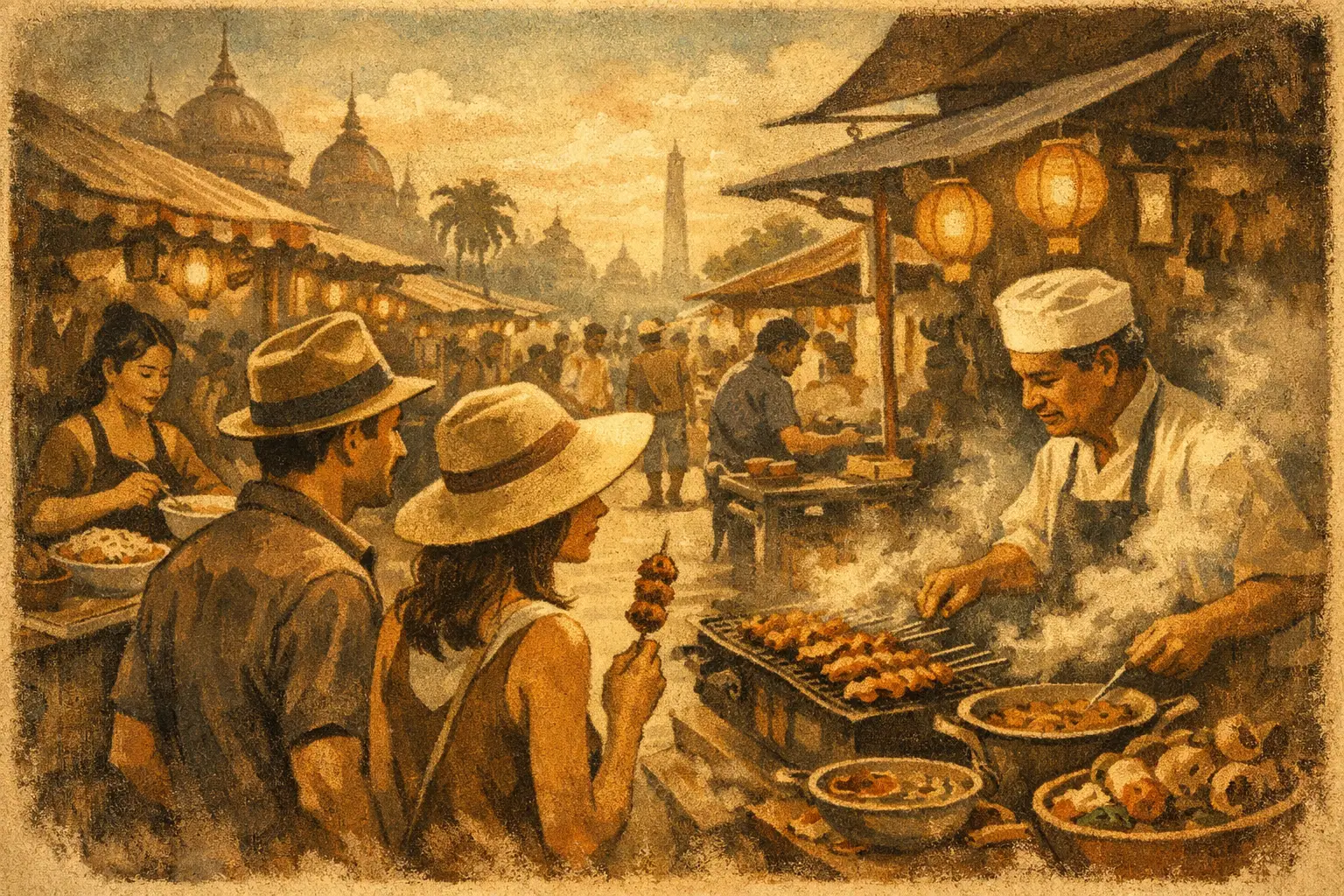
The first perfect bite on a street food tour usually happens before you expect it. Not at the most famous stand, not in the polished market with the best lighting, but somewhere loud, a little crowded, and full of locals who already know exactly what they want. That is the magic of eating this way. You are not just trying food. You are stepping into the rhythm of a place.
For travelers who want more than a checklist, a street food tour can be one of the fastest ways to feel connected to a city. You hear the sounds of the neighborhood, catch the smoke rising off a grill, watch somebody fold dough or slice fruit with the kind of speed that only comes from years of repetition. It feels immediate and alive. And when it is done well, it gives you something better than a meal – it gives you context.
What makes a street food tour memorable
A memorable food experience is rarely only about flavor. Yes, the food matters. It should surprise you, comfort you, maybe even challenge you a little. But the bigger reason people remember a great street food outing is that it blends taste with atmosphere.
One stop might hand you something crispy, spicy, and wildly satisfying. The next might be sweet, cool, and familiar enough to make you smile. Between bites, you are walking blocks you may never have chosen on your own. You are noticing murals, market chatter, music spilling from storefronts, and the small details that make a neighborhood feel like itself.
That is why street food works so well for story-driven travel. It is less formal than a restaurant crawl and often more revealing. Street vendors are serving real daily cravings, quick comforts, and longtime specialties. In many cities, that means you are tasting the foods people actually eat on busy afternoons, after work, or on the way home. There is honesty in that.
Should you book a street food tour or build your own?
This depends on the kind of traveler you are and what you want from the day.
A guided street food tour is great when you want someone else to shape the experience. A strong guide can give you history, neighborhood insight, and confidence if you are in a place where the food scene feels unfamiliar. That matters, especially in a destination where language barriers, crowded markets, or too many choices can make you hesitate. A guide also helps you avoid the trap of only eating what looks most Instagram-friendly instead of what is actually beloved.
On the other hand, building your own version can be deeply rewarding if you like to wander, follow your senses, and leave room for surprise. It can also be more flexible with your appetite and budget. The trade-off is that you may miss the stories behind the dishes, and without local knowledge, you might stop at places that are convenient rather than exceptional.
For a lot of travelers, the sweet spot is doing both. Take one guided street food tour early in your trip, then use what you learn to shape your own food adventures afterward. Once you understand the local patterns – when vendors open, what dishes are morning foods versus evening foods, which neighborhoods feel most dynamic – you move through the city with more confidence.
How to spot a good street food tour
Not every food tour delivers the same experience, even if the photos look incredible. The best ones feel personal and rooted in the place rather than rushed or overly commercial.
Look for a tour that spends real time in one or two neighborhoods instead of trying to cover half the city in a hurry. Street food is best when you can settle into the energy of an area. If the tour is all transportation and no atmosphere, something gets lost.
It also helps when the stops feel varied. A strong route might balance savory and sweet, hot and cold, iconic dishes and lesser-known ones. If every stop is heavy, fried, or similar in texture, the experience can flatten out. Great pacing matters more than people think.
The guide is another big piece of it. You want someone who can tell a story, not just point at a plate. The difference between hearing, “This is popular,” and hearing why the dish matters to local families, migration patterns, or neighborhood identity is huge. One gives you a snack. The other gives you a memory.
The best mindset to bring with you
Come hungry, but not competitive. A street food tour is not about proving how much you can eat. It is about staying curious enough to enjoy each stop.
That means pacing yourself. Take a few bites, pay attention, and leave room for the next surprise. If you treat the first dish like your last meal on earth, you may be too full to appreciate the rest of the experience.
It also means being open without pretending to love everything. Not every bite will be your favorite, and that is part of the fun. Sometimes the point is discovering texture combinations, spice levels, or ingredients that locals grew up with but you did not. Travel gets more interesting when your palate has room to be surprised.
One more thing: put the camera down long enough to actually taste. Capture the sizzle, the color, the steam rising from the cart, absolutely. But then be present. Street food is part performance, part community, part flavor. If you only document it, you miss the feeling.
What you learn about a city on a street food tour
A good meal tells you what people enjoy. A great street food tour tells you how a city moves.
You start to notice what foods are tied to time of day. Maybe breakfast belongs to handheld pastries and strong coffee. Maybe late evening means grilled meats, noodles, or a line forming around a cart that stays busy long after sunset. Those patterns say a lot about work life, nightlife, commuting, family habits, and climate.
You also see the city’s layers. Street food often reflects migration, trade, adaptation, and survival. A simple dish may carry generations of influence. A market stall might reveal how one neighborhood changed over time. Even the way food is served – wrapped, skewered, stacked, dipped, shared – can tell you something about pace, space, and social life.
For travelers who love culture, this is where the experience opens up. The food becomes a doorway into people’s routines and pride. It is not about consuming a destination. It is about meeting it where it lives.
Street food tour etiquette that actually matters
Most etiquette comes down to respect and awareness.
If there is a line, watch how locals order before jumping in. If the vendor is moving fast, be ready with your choice and payment. If the space is small, step aside after you receive your food so the next person can order. Those tiny gestures make you part of the flow instead of an interruption.
Asking questions is great when the moment allows for it. Vendors often have amazing stories, but timing matters. During a rush, a smile and a thank you go a long way. During a slower moment, that is when conversation can happen more naturally.
And if you are on a guided street food tour, remember that the neighborhoods you walk through are not a backdrop. People live there. Taking photos respectfully, keeping noise reasonable, and treating each stop with appreciation helps preserve the experience for everyone.
Why this kind of travel stays with you
Some travel memories fade into a blur of hotel rooms, transfer times, and scenic overlooks. Food tends to stay vivid. You remember the crunch, the heat, the sweetness, the surprise of a flavor you had never met before. You remember the person who handed it to you. You remember the corner where you ate it, standing under a sign you could not fully read while music played somewhere behind you.
That is why a street food tour can feel bigger than the schedule suggests. It compresses so much of a destination into a few hours – flavor, movement, personality, texture, conversation, and place. It gives you an experience that feels both grounded and electric.
If you love travel that feels human, colorful, and a little bit cinematic, this is one of the easiest ways to get there. A city introduces itself differently when it feeds you first. So the next time you travel, follow the crowd around the corner, trust your senses, and let the best bite of the day find you before you even know to look for it.
And if you are the kind of traveler who hears music in every market and finds a story in every plate, a street food tour might be exactly where the adventure starts to sound like you.