
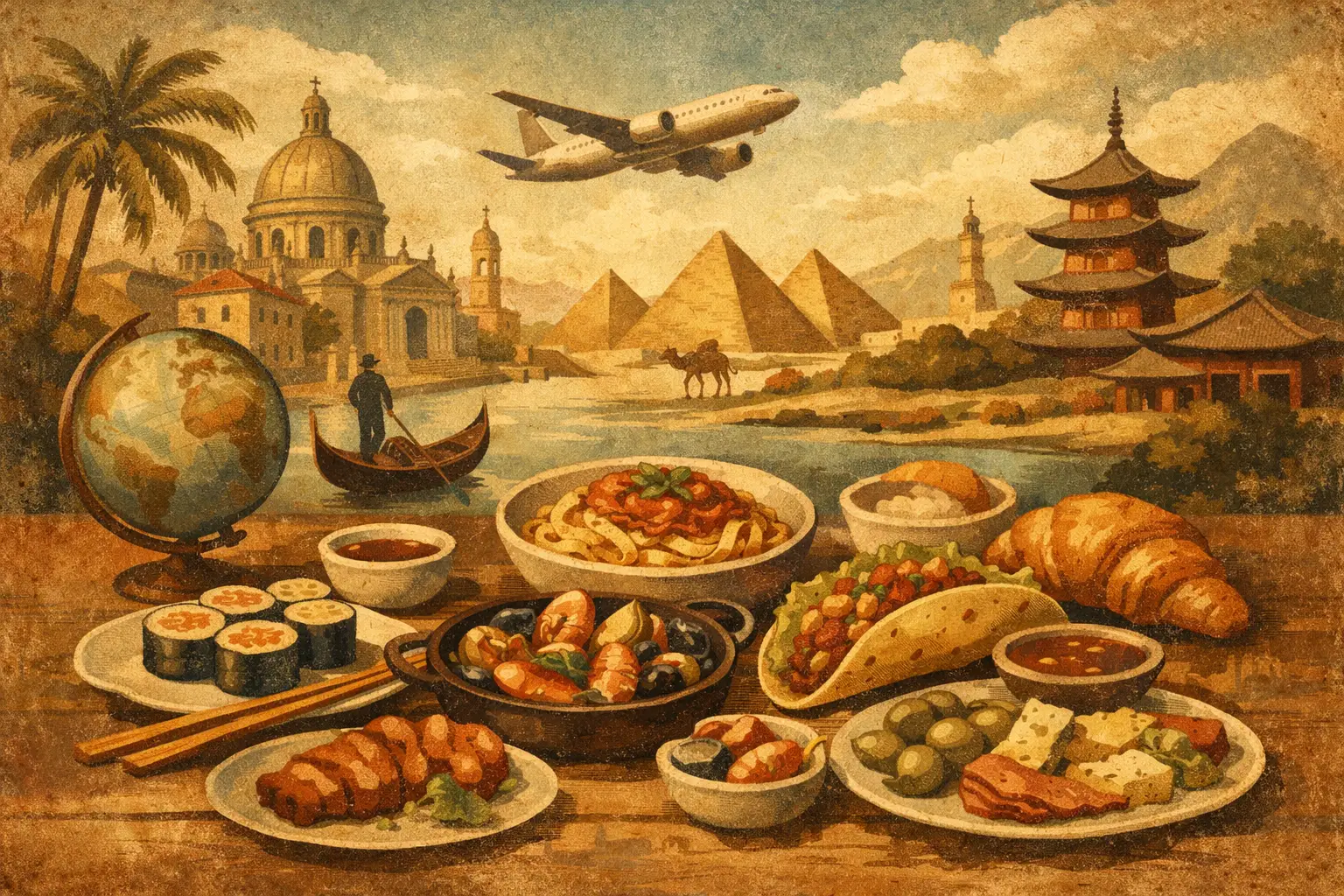
A destination can look incredible from the ship deck, a scenic train window, or the front seat of a tour bus. But the moment it truly starts to feel alive is often much smaller: steam rising from a bowl at a market stall, a server placing down a family recipe, or a song drifting through an open doorway while you take your first bite. The phrase best foods to try traveling is not really about checking off famous dishes. It is about tasting the stories, rhythms, and people that give a place its flavor.
The best meals are not always the fanciest ones. Sometimes they come from a restaurant that has been busy since sunrise. Sometimes they come from the food cart with a line of locals, or from a tiny bakery where the person behind the counter knows exactly which pastry is still warm. Join the adventure with an open appetite, and let these food experiences guide you beyond the postcard view.
Best Foods to Try While Traveling Start Locally
There is no single global menu of must-eat dishes, and that is the fun of it. A classic meal can be wonderful, but the version that matters most is the one that makes sense in its hometown. Fresh seafood beside the water tastes different because it was caught nearby. A stew has more character when you learn it was made to stretch ingredients through a cold season. A sweet treat can reveal a whole history of trade, migration, celebration, and family tradition.
Rather than chasing every viral recommendation, look for foods with a connection to place. Ask what is in season, what locals eat on weekends, and what people order when they are bringing visiting friends along. Those questions tend to lead to far more memorable meals than a generic “top 10” list.
1. Market breakfasts
Morning markets are a beautiful introduction to a destination because the food is practical, fresh, and full of local routine. In Mexico City, that might mean chilaquiles with a bright salsa and a strong coffee. In Istanbul, it could be a spread of cheeses, olives, eggs, bread, and honey. In Japan, a simple breakfast of grilled fish, rice, miso soup, and pickles can feel like a quiet lesson in balance.
Arrive early enough to see the market waking up. You may not understand every ingredient, but you will recognize the energy: vendors arranging fruit, neighbors greeting one another, and cooks moving with the confidence of people who have made the same dish hundreds of times. It is a delicious way to start the day before the crowds arrive.
2. The dish made with the region’s freshest ingredient
Every great food destination has an ingredient that gets treated like a local celebrity. In coastal Greece, it may be octopus or grilled fish with lemon and olive oil. In Maine, lobster is part of the landscape. In Peru, bright peppers, potatoes, and fresh lime shape dishes with real personality. In the Caribbean, tropical fruit, rum, spice, and just-caught seafood often share the plate.
This is where timing matters. A seafood dish at a harbor restaurant can be extraordinary, while the same dish served far inland may be less exciting. If an ingredient is not in season, choose something else. Eating what the region is producing at its best is one of the simplest ways to travel like a curious guest rather than a hurried tourist.
3. Street food with a steady local line
Street food can deliver some of the biggest flavor moments of a trip. Think tacos carved from a sizzling trompo, Vietnamese bánh mì filled to order, Jamaican patties tucked into a paper sleeve, or Singaporean satay sizzling over charcoal. The experience is part of the meal: the sound of the grill, the quick exchange at the counter, the first bite taken standing on a lively corner.
A little common sense goes a long way. Choose stalls with high turnover, food cooked hot in front of you, and a crowd that includes locals. If you have dietary restrictions or a sensitive stomach, ask questions and start gently. You do not have to prove your adventurous spirit by ignoring what your body needs. The goal is joy, not a rough night in your hotel room.
4. A regional comfort food
Comfort food carries a destination’s personality in a different way. It is often humble, filling, and tied to weather, work, or family gatherings. In Italy, that might be a bowl of pasta made with a sauce specific to one city. In France, a slow-cooked cassoulet can speak to the cooler southwest. In the American South, soulful dishes like shrimp and grits or gumbo hold layers of regional history.
Look for restaurants that specialize instead of trying to serve everything. A small menu is often a good sign, especially when one dish appears again and again at nearby tables. Ask the server what their kitchen is known for, then give that answer your full attention.
5. Dumplings, stuffed doughs, and handheld classics
Few foods invite connection faster than something folded, wrapped, or baked around a filling. Dumplings appear in countless forms around the world: Chinese jiaozi, Polish pierogi, Nepalese momos, Turkish manti, and Latin American empanadas, to name only a few. Each carries a different texture, seasoning style, and story.
These dishes are especially fun to seek out when traveling with friends or family because they are made for sharing. Order a few varieties, compare favorites, and let the table conversation become part of the memory. Food is never just fuel when it gets people talking, laughing, and reaching for one more piece.
6. The neighborhood bakery specialty
A bakery is one of travel’s most reliable joys. The scent alone can pull you down a street you might otherwise have missed. In Paris, that may be a flaky croissant or a butter-rich kouign-amann. In Portugal, it is hard to resist a warm pastel de nata with its caramelized top. In New Orleans, a powdered-sugar-covered beignet brings its own little celebration.
Try the specialty that locals buy with their morning coffee, not only the pastry designed for visitors. A good bakery also makes an easy, low-pressure stop between bigger meals, especially on a day packed with museums, beach time, or exploring a port city.
7. A dish that belongs to a celebration
Some foods are best understood in the context of a holiday, festival, or gathering. Mooncakes, tamales, king cake, roast meats, festive breads, and sweets made for religious or seasonal celebrations all carry meaning beyond the plate. If your travels overlap with a local event, ask respectfully what people are eating and why.
You do not need to be an expert to appreciate a tradition. Listen, observe, and enjoy the invitation if one is offered. These moments often create the kind of travel story that stays with you long after the photos have been posted.
8. One memorable late-night bite
Every city has a different answer to the question, “What do people eat after a great night out?” It might be a slice of pizza in New York, a kebab in London, poutine in Montreal, or noodles at a late-night counter in Tokyo. These meals are rarely formal, but they can be pure atmosphere.
Late-night food is where music, laughter, and local rhythm often meet. After a concert, a dance floor, or an evening stroll along the waterfront, that simple snack can feel like the perfect final chorus of the day.
How to Make Every Food Experience Better
The most rewarding travelers stay curious without treating local culture like a performance. Learn the name of the dish, ask before photographing people or food stalls, and be patient when a meal is prepared slowly. Tip according to local custom, and remember that the “authentic” choice is not always the least expensive or the most hidden. A celebrated restaurant can be deeply rooted in its community, while a tiny hole-in-the-wall can sometimes be built for social media buzz.
If you are cruising, use port days strategically. Skip the temptation to eat a full breakfast onboard when a local market or café is calling your name. At the same time, do not overpack your schedule. Leave room for the restaurant you notice while wandering, the snack you spot after a beach stop, and the recommendation that comes from someone who lives there.
Bring your appetite, but bring your attention too. The next unforgettable meal may not be the one you planned for. It may be the dish you almost walked past, enjoyed with a new friend and a soundtrack you can still hear when you close your eyes.