
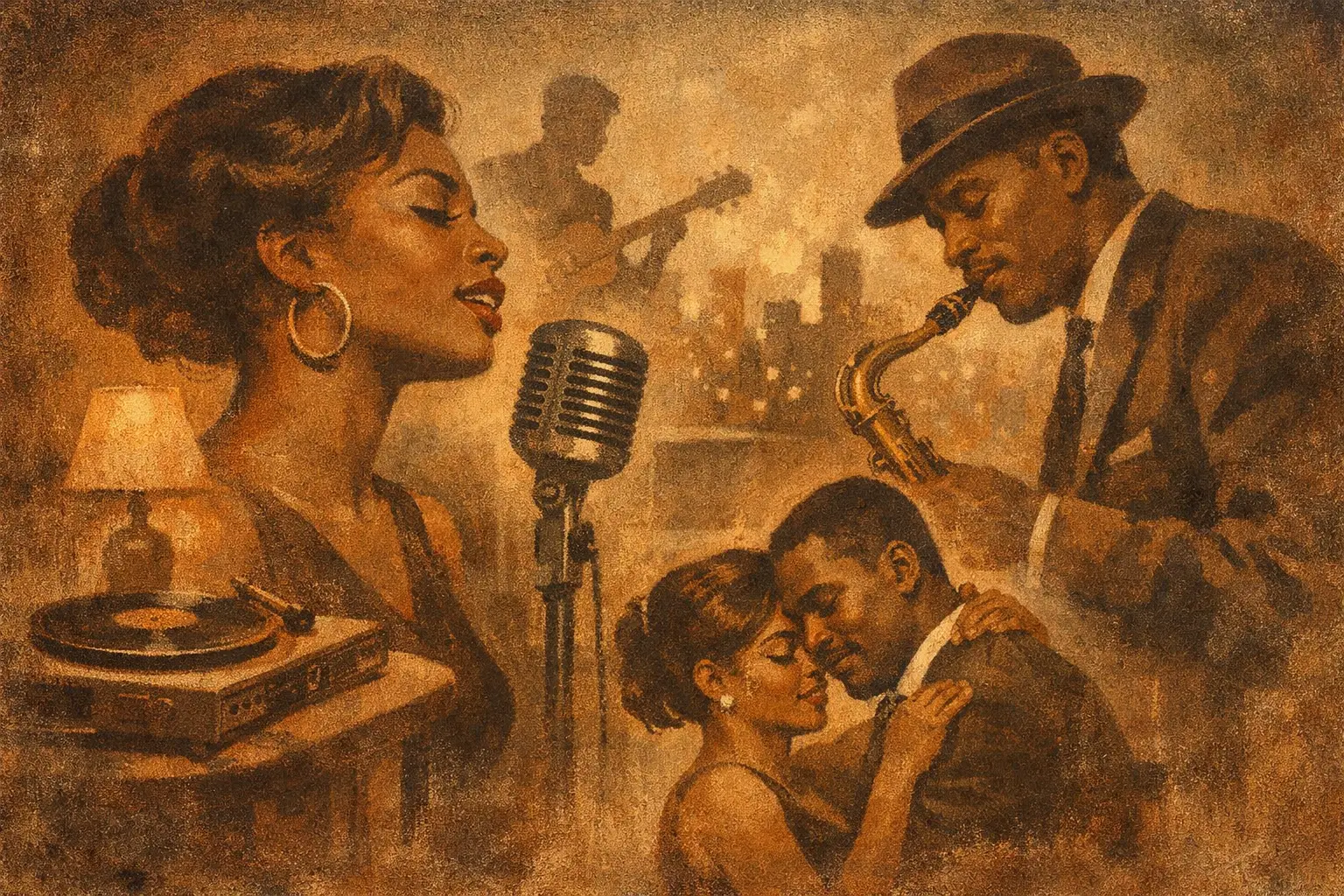
You can hear r&b music working before anyone says a word. It’s in the hotel lounge that suddenly feels more stylish, the rooftop dinner where the lighting hits just right, the late-night drive through a city you’re still getting to know. Some genres ask for your attention. R&B changes the whole atmosphere.
That’s a big reason it has lasted. R&B is not just a playlist category or a radio format from another era. It is one of the most emotionally fluent forms of popular music America has ever created – a genre built on feeling, rhythm, intimacy, and expression. And whether you’re traveling, hosting friends, trying a new restaurant, or setting the tone for a quiet night in, it still knows how to meet the moment.
What makes r&b music different
At its core, r&b music is about groove and emotional clarity. The rhythm matters, of course. So does the vocal delivery, which often sits right at the center of the experience. But what really makes R&B stand out is how it balances polish with vulnerability. It can sound elegant and raw at the same time.
Historically, rhythm and blues grew from Black musical traditions including blues, jazz, gospel, and soul. Over time, it kept evolving. What started as a label for postwar Black popular music became a broad, living genre that shaped and borrowed from funk, pop, hip-hop, electronic music, and quiet storm radio culture. That flexibility is part of its power. R&B does not stay still for long.
Still, there are familiar threads. Strong melodies. Vocal phrasing that feels conversational one second and soaring the next. Lyrics that often deal in love, desire, heartbreak, confidence, longing, and self-reflection. And production that understands mood as much as momentum.
Why r&b music travels so well
Some music belongs to a scene. R&B belongs to a feeling, which is why it moves so easily across places and experiences.
Think about how often music becomes your memory keeper when you travel. You might not remember every street name from a weekend getaway, but you remember the song that played at dinner when the seafood arrived, or what was in your headphones while the coastline rolled past your cabin balcony. R&B excels in those moments because it adds texture without overwhelming them. It supports the experience while deepening it.
That’s also why the genre fits so naturally into lifestyle storytelling. It pairs beautifully with food, nightlife, fashion, romance, and city energy. A good R&B track can make a tasting menu feel richer, a waterfront walk feel cinematic, and a familiar destination feel brand new. It carries a kind of emotional hospitality.
There’s range within that, too. Not every R&B song is soft and candlelit. Some records are playful, sharp, flirtatious, or proudly extravagant. Others are reflective and stripped down. That range gives listeners room to build a soundtrack for almost any setting.
The sound keeps changing, but the heart stays the same
One of the most exciting things about R&B is that every generation seems to remix its identity without losing the emotional center.
Classic R&B brought powerful vocalists, live instrumentation, and songwriting that could turn romance into an event. Later eras leaned into drum machines, slicker studio production, and crossover appeal. Then came the deep conversation with hip-hop, which changed the cadence, edge, and texture of the genre. Contemporary artists often blend atmospheric production, alternative influences, and minimalist beats while keeping the vocal intimacy that makes R&B feel personal.
That evolution matters because it keeps the genre alive instead of preserved behind glass. You can hear older traditions in newer music, but not always in obvious ways. Sometimes it’s a gospel-style run. Sometimes it’s the warmth of the bass. Sometimes it’s simply the way a singer lingers on a line that sounds like a confession.
The trade-off is that genre labels get messy. Some listeners like a clear line between classic soul, contemporary R&B, and pop. Others are happy to let those borders blur. Both views are fair. R&B has always been shaped by crossover, and that means people will keep debating what counts. Usually, that’s a sign of a healthy genre, not a weak one.
R&B as culture, not just entertainment
To talk about R&B only as mood music would miss the bigger story. The genre has long been a site of Black creativity, style, storytelling, and innovation. It has shaped the sound of American popular culture while also documenting love, ambition, pleasure, pain, and social change from deeply human perspectives.
That cultural role is part of why R&B keeps resonating. It doesn’t just sound good. It carries history. It reflects communities, eras, and evolving ideas of beauty, romance, masculinity, femininity, softness, and power. In many cases, it has also given artists room to present emotional honesty in ways mainstream culture did not always make easy.
You can feel that influence far beyond music itself. In fashion, branding, nightlife, visual aesthetics, and even the pacing of digital storytelling, R&B’s fingerprints are everywhere. The smooth confidence, the slow reveal, the attention to atmosphere – those are not accidental. They are part of a larger artistic language that keeps getting reinterpreted.
The best way to listen to r&b music
There isn’t one right way, and that’s part of the charm. R&B works in headphones, in cars, in restaurants, on dance floors, and in the background of meaningful conversations. But if you really want to appreciate it, context helps.
Start with the voice. Not just whether someone can sing, but how they use space, restraint, and phrasing. Great R&B performances often feel close, as if the artist is telling you something directly. Then listen to the production. Notice how drums, keys, bass, and harmonies create atmosphere. A lot of R&B magic lives in details that are easy to miss when you treat songs like disposable background noise.
It also helps to listen across eras. If you only know modern streaming favorites, go backward and hear where certain choices came from. If your taste leans classic, spend time with newer artists who stretch the form in unexpected ways. The joy is in hearing the conversation across decades.
And yes, let your surroundings join the experience. R&B pairs beautifully with travel because both are about discovery through feeling. A city at night, a great meal, ocean air, unfamiliar streets, and the right song can turn an ordinary memory into one that sticks. That’s a big part of the Musical Smile Guy spirit – enjoying culture as something you feel with your whole life, not just consume in a hurry.
Why the genre still matters now
A lot of current culture moves fast, rewards performance, and encourages people to flatten their feelings into quick captions and shorter clips. R&B pushes in the other direction. It makes room for tension, tenderness, chemistry, doubt, and desire. It allows emotions to take their time.
That feels especially valuable now. Not because every song is deep or serious, but because the genre still respects mood as something worth shaping. It understands that atmosphere can be meaningful. It knows pleasure can be artful. It treats emotional detail as part of the experience, not an interruption.
That’s why R&B keeps showing up wherever people want more than utility. A meal can feed you, but ambiance makes it memorable. A trip can be well planned, but a soundtrack gives it soul. A room can look beautiful, but music gives it pulse. R&B thrives in that extra layer.
For new listeners, the starting point depends on taste. If you love rich vocals and classic romance, older records may pull you in first. If you prefer moody production and genre blending, newer artists may feel like home. If you want something social, there’s plenty of upbeat, party-ready R&B too. The genre is broad enough to welcome all of that.
And maybe that’s the simplest reason it endures. R&B knows how to hold complexity without losing pleasure. It can be stylish without sounding cold, emotional without becoming melodramatic, familiar without getting stale. Very few genres manage that balance for this long.
So the next time a song makes a restaurant feel warmer, a destination feel more vivid, or an ordinary evening feel a little more cinematic, pay attention. There’s a good chance r&b music is doing what it has always done best – turning atmosphere into memory.