
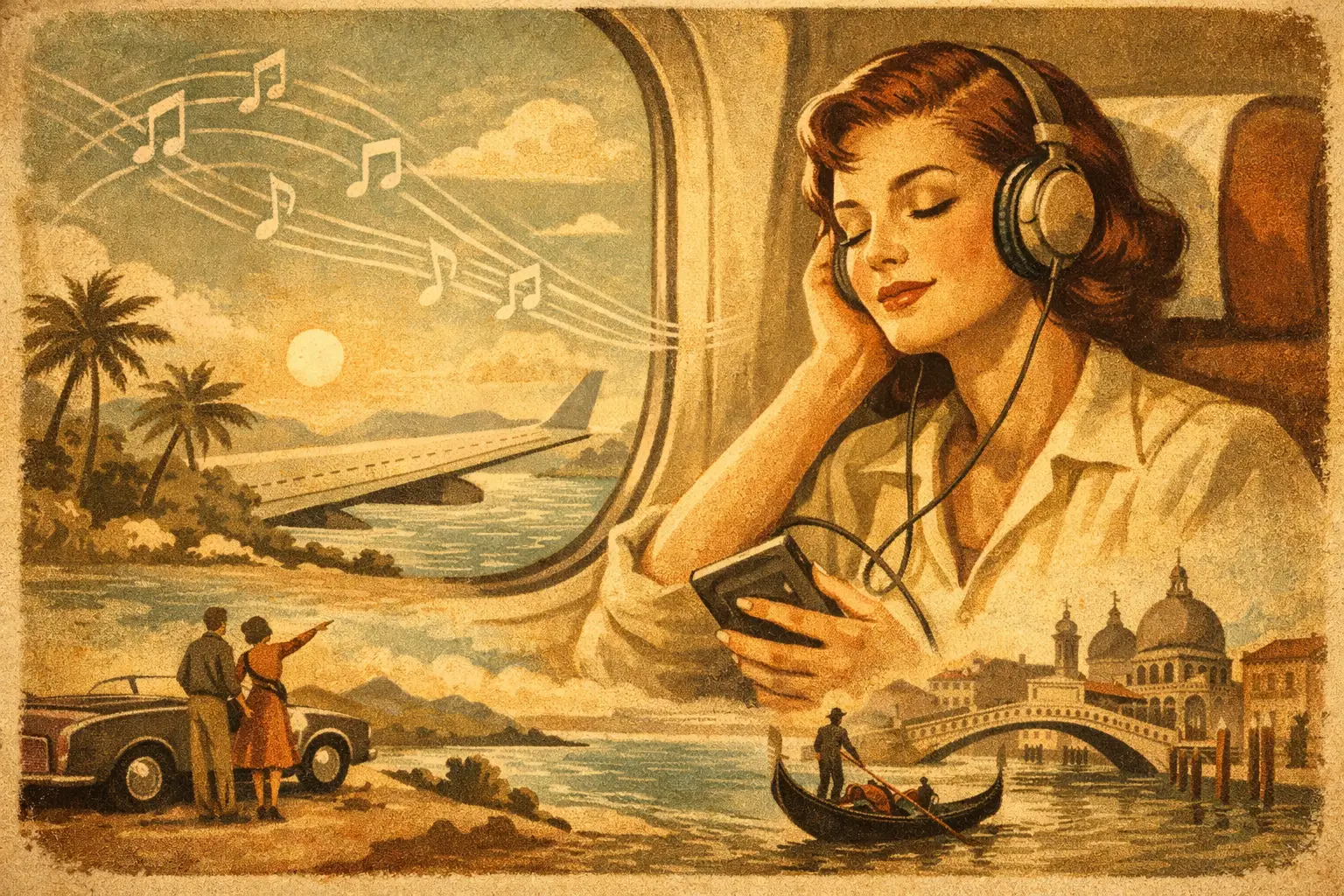
The fastest way back to a place is often not a photo. It’s a song.
Hear a brass band swing through a street corner rhythm, a singer float over a candlelit dinner, or a bassline pulse through a rooftop crowd, and suddenly a destination stops feeling like a pin on a map. music gives a place texture. It adds mood, memory, and motion. It turns travel from something you see into something you feel.
That’s part of what makes great trips so unforgettable. We don’t just remember landmarks. We remember what was playing in the background when the ocean came into view, when dessert hit the table, when the city lights flickered on, or when we took that long walk with no plan at all.
Why music matters more than people think
A lot of travel content focuses on what to do, where to stay, and what to eat. All of that matters, of course. But music often does the quieter, deeper work. It creates atmosphere before a word is spoken. It tells you whether a place feels celebratory, reflective, romantic, chaotic, elegant, or raw.
Walk into two restaurants serving equally incredible food and the soundtrack can change the entire experience. The same goes for beaches, markets, lounges, cruises, festivals, and city squares. A destination can be beautiful on its own, but music often decides how that beauty lands emotionally.
That emotional layer is easy to overlook because it feels natural when it works. You simply feel more present. More connected. More open to what’s happening around you. And when it doesn’t work, you notice that too. A badly matched soundtrack can flatten a space that should feel alive.
music is part of cultural storytelling
One of the best reasons to pay attention to music while traveling is that it tells stories a brochure never can.
You can learn plenty from architecture, museums, and local dishes, but sound carries history in a different way. It reflects migration, celebration, faith, struggle, nightlife, family tradition, and regional identity. In some places, rhythm is community. In others, melody is memory. Sometimes the local sound is polished and theatrical. Sometimes it’s improvised on a sidewalk with a small crowd gathering in real time.
That range is what makes travel so exciting. You’re not just hearing songs. You’re hearing how a place expresses itself.
A coastal city may carry a breezy, relaxed sound that matches the water and pace of life. A global capital might be full of genre collisions – jazz spilling out of one doorway, electronic beats from the next block, and a busker doing something beautifully unfiltered in between. Neither is better. They simply reveal different truths.
If you care about culture, music is not extra. It’s essential.
The soundtrack of a trip starts before you leave
Long before wheels go up or the ship leaves port, people start building a feeling around a trip. Sometimes that happens through mood boards, restaurant reservations, or saved videos. Often, it happens through music.
A playlist can shape expectation in the best way. It can make a snowy mountain escape feel cinematic before you even pack a coat. It can make a Caribbean itinerary feel brighter, lighter, and more playful. It can set your energy for a weekend in a major city or a slower escape where the goal is simply to breathe a little deeper.
There is a small trade-off here. If you over-curate every moment, you can leave less room for surprise. The best travel soundtrack usually balances intention and discovery. Bring your own vibe, yes, but leave space for a café song you didn’t expect, a local artist you stumble into, or the track a stranger recommends that ends up attached to the whole trip forever.
How music changes food experiences
Food and music are natural travel partners because both hit you emotionally before you fully analyze them.
Think about the difference between a quiet brunch spot with soft acoustic tracks and a vibrant dinner room where the beat rises as plates start landing. The menu matters, but the sound shapes your pace, your mood, and even how celebratory the meal feels. A great dish can impress you. A great dish with the right soundtrack can stay with you.
This is especially true when you travel for atmosphere as much as flavor. Maybe it’s a late-night seafood dinner by the water with live guitar in the background. Maybe it’s a tucked-away jazz bar serving small plates that somehow taste even better because the room feels alive. Maybe it’s a street food stop where the energy of the crowd and the speakers nearby make the whole block feel like an event.
That’s where lifestyle travel gets interesting. You’re not collecting meals. You’re collecting moments with flavor, sound, and setting all working together.
On cruises, music becomes part of the journey itself
Cruise travel is one of the clearest examples of how music shapes experience because the soundtrack changes as the day changes.
In the morning, it might be easygoing and bright near the pool deck. By dinner, it shifts toward something more refined or romantic. Later, it can turn playful, theatrical, or full-on dance-floor energy depending on the venue. Good cruise design understands that people are not just moving through spaces. They’re moving through moods.
That matters because life at sea has its own rhythm. There are transitions built into the day – sailaway, dinner, sunset, live shows, late-night lounges, port arrivals. music helps those transitions feel distinct. It gives each chapter a different emotional color.
And then there’s the memory factor. Years later, one familiar song can bring back salt air, balcony views, polished dining rooms, or the feeling of watching a shoreline fade behind you. That’s powerful. It means the trip never really leaves your life. It just waits for the right chorus.
The best travel memories are multisensory
Photos are wonderful. Video is even better for capturing movement. But some of the richest memories come from how multiple senses overlap.
You remember the taste of something incredible, the warmth of the evening, the color of the sky, and the music nearby all at once. That blend is what makes a moment feel complete. It’s also why certain scenes seem impossible to explain to people who weren’t there. You can show them the view, but you can’t fully recreate the feeling without the sound.
This is one reason creator-led travel content works so well when it treats music as part of the story rather than background filler. Viewers don’t just want information. They want atmosphere. They want to imagine themselves in the scene. They want to feel the pulse of a place, not just identify it.
For a brand like Musical Smile Guy, that intersection matters because travel, food, and music are not separate lanes. They’re part of the same emotional experience. The song in the room, the dish on the table, the destination outside the window – together, they create the memory people actually carry home.
How to notice music more when you travel
You do not need to become a music expert to get more from this part of the journey. You just have to pay attention.
Start by noticing what a place is playing and why. Is the soundtrack made for tourists, locals, a dinner crowd, a party, or a reflective moment? Does it match the setting or surprise you? Is there live performance involved, and if so, how does that change the room?
It also helps to remember that not every setting needs a soundtrack. Silence can be part of the experience too. A scenic overlook, an early morning walk, or a quiet beach may feel more meaningful without anything added. The point is not constant noise. The point is recognizing when music deepens a moment and when it would get in the way.
If something does catch you, save it. Make a note, build a playlist after the trip, or simply remember where you heard it. That small habit can preserve the emotional shape of a journey better than you might expect.
What great travel feels like when music is part of it
The best trips don’t always announce themselves as life-changing while they’re happening. Sometimes they arrive softly – in a meal that runs long, a view that quiets you, a crowded room that somehow feels personal, a song that seems to belong exactly where you are.
That’s the magic of music in travel. It doesn’t have to be center stage to transform the experience. Sometimes it only needs a few notes to turn a good moment into one you’ll revisit for years.
So the next time you plan a getaway, leave room for the soundtrack. Let the destination speak in color, flavor, and sound. You may come home with photos you love, but the music will be what keeps the journey moving long after the bags are unpacked.