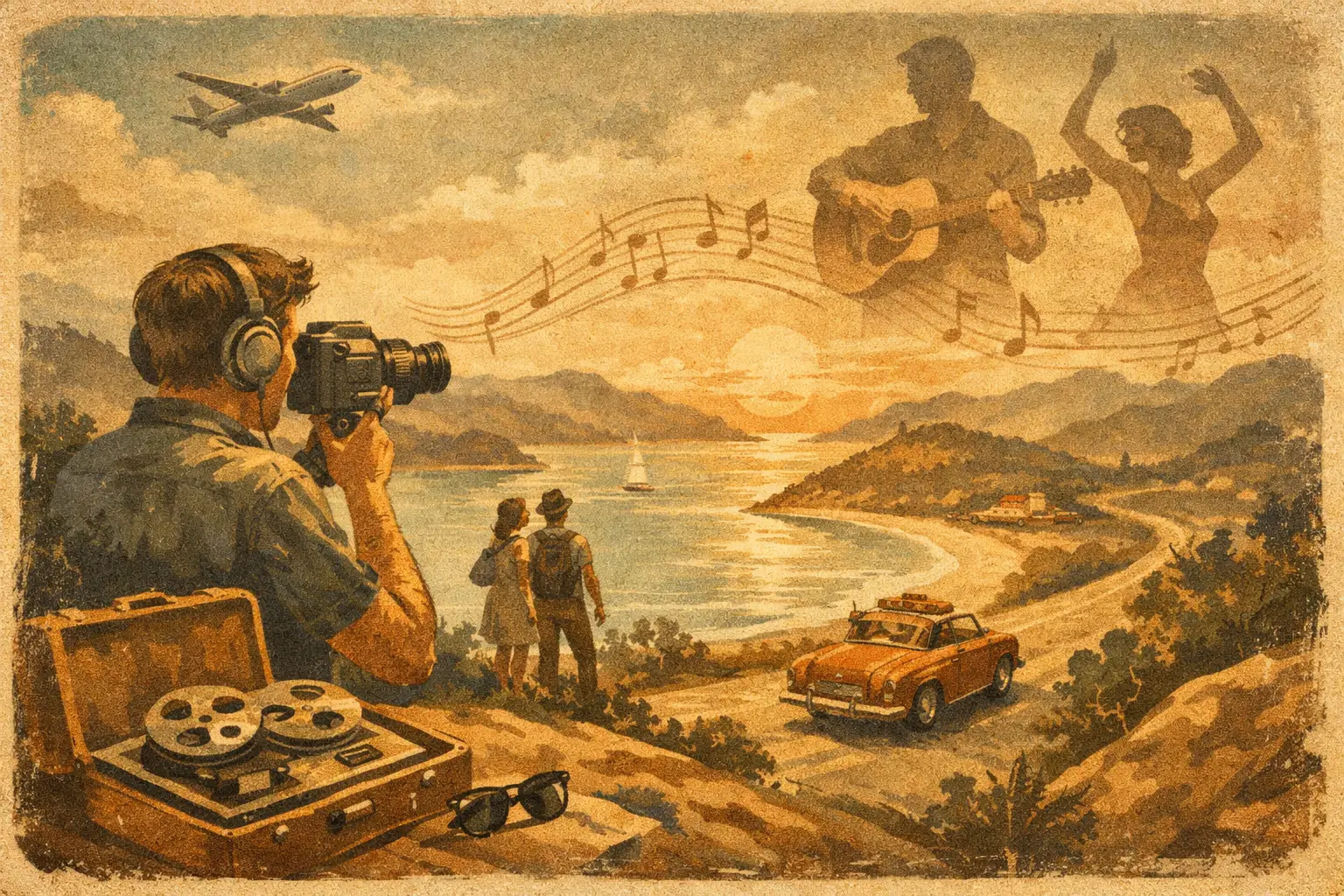
Some travel moments look beautiful on camera, but they do not truly land until the right song hits. A sunset sail, a crowded night market, a train rolling past mountain villages – those scenes can be impressive on their own. But music driven travel videos give them pulse, mood, and memory. They do not just show where you went. They make people feel what it was like to be there.
That is a big reason this format keeps standing out across YouTube, Instagram, and short-form platforms. Viewers are flooded with travel content every day, and a lot of it blends together fast. Music changes that. It creates emotional continuity, gives footage a point of view, and turns a string of pretty clips into a story people actually remember.
What makes music driven travel videos different
A standard travel video often leans on explanation. It tells you what the destination is, what to eat, where to go, and how the day unfolded. That can be useful, especially if someone is planning a trip. Music driven travel videos play a different role. They lead with feeling first.
Instead of centering information, they center atmosphere. The edit, pacing, color, and sound work together so the viewer can sense the personality of a place before they know every detail about it. A jazz track over a city evening says something very different from an upbeat dance beat over the same streets. One feels intimate and stylish. The other feels energetic and social. Same destination, completely different emotional read.
That is where the magic lives. Music is not background decoration. It is part of the storytelling language.
Why music changes the way travel content feels
Travel is already emotional. People watch it because they want escape, inspiration, nostalgia, and possibility. Music meets all of those desires quickly. Within a few seconds, a track can tell the audience whether a moment should feel dreamy, playful, cinematic, reflective, or celebratory.
That matters because viewers usually decide very fast whether they want to keep watching. If the visuals are strong but the emotional direction is flat, attention drifts. If the soundtrack and visuals click, people stay longer because they are not just processing information – they are having an experience.
This is especially true for creator-led brands with a strong personal voice. When your audience follows you for your taste, your energy, and your perspective, the songs you choose become part of your identity. Your soundtrack choices tell viewers how you move through the world. They help shape your signature just as much as your camera angles or on-screen presence.
The best music driven travel videos feel curated, not random
There is a difference between adding a popular song to a montage and building a video around music. The strongest creators think about rhythm before they start dropping clips into a timeline. They ask what the place felt like, what kind of movement happened there, and what emotional arc the video should have.
A beach club sequence might call for polished, high-energy production. A morning in a coastal town might need something lighter and more spacious. A food-focused walk through a lively neighborhood may work best with a groove that matches the pace of browsing, tasting, and reacting. Good music selection is less about trend-chasing and more about alignment.
That is also why the wrong song can flatten an otherwise gorgeous edit. If the track is too aggressive for the visuals, the video feels forced. If it is too sleepy, the destination loses its spark. Music should not fight the footage. It should reveal what is already there.
Story first, soundtrack second – but they need each other
Even in highly stylized travel content, story still matters. People connect more deeply when a video has movement and progression. Maybe it starts with arrival, shifts into discovery, peaks with a meal or performance, and winds down with a reflective night scene. Music can carry that arc beautifully, but it works best when the editor knows what journey the audience is taking.
This is where many creators either over-edit or under-shape. Some rely so heavily on beat cuts and transitions that the destination becomes secondary. Others capture great moments but do not organize them into a satisfying emotional flow. The sweet spot is a video that feels musical without feeling like a music video detached from place.
If you are telling a travel story through personality, this balance gets even more interesting. A quick laugh over street food, a spontaneous dance moment, a glance from a balcony, a crowd singing along in a public square – those human details give the soundtrack something meaningful to carry. They remind the audience there is a real person inside the experience, not just a sequence of scenic shots.
Why this format works so well for culture and food content
Music driven travel videos are especially powerful when food and culture are central to the brand. That is because meals, markets, performances, neighborhoods, and celebrations already come with rhythm. There is natural sound, movement, color, and emotion built into them.
Think about a travel video that moves from a waterfront brunch to a local music venue to an evening stroll through a glowing city center. The soundtrack does more than connect scenes. It gives them social energy. It hints at flavor, tempo, and mood. It makes the audience feel like they are joining the adventure, not watching from a distance.
This is one reason personality-led travel creators can build such loyal audiences through this format. When viewers return for your sense of style and emotional lens, every video becomes more than destination coverage. It becomes a recognizable experience. That consistency is powerful.
For a brand like Musical Smile Guy, where travel, music, and food naturally belong together, this style is not a gimmick. It is a clean expression of the brand itself.
The trade-offs creators should pay attention to
As effective as this format can be, it is not perfect for every goal. If your main objective is practical trip planning, heavily music-led edits may leave viewers wanting more specifics. They are great for inspiration and brand building, but not always enough for logistics-heavy content.
There is also a licensing reality. Great songs matter, but so does having the right to use them. Many creators have learned the hard way that a track can elevate a video creatively while causing distribution headaches later. That can affect reach, monetization, or platform compatibility. So the artistic choice and the business choice have to work together.
Another trade-off is pacing. Music driven edits often move quickly, which can create excitement. But if every shot changes at top speed, the audience may not have enough time to absorb the place. Sometimes the most effective moment in a travel film is a pause – a long look at a harbor, a bite of dessert, a musician on a corner, the soft movement of people at dusk. Rhythm is not only about speed. It is about control.
What audiences really share
People rarely share a travel video because it listed the top five attractions. They share it because it captured a mood they want someone else to feel. That is why music driven travel videos often travel farther than purely informational edits. They are easier to send with a simple message like, this made me want to book a trip, or this feels exactly like summer, or you have to see this place.
That emotional portability matters. It turns content into a social experience. Viewers are not just consuming it. They are passing along a feeling.
And when that feeling lines up with a creator’s personality, the connection gets stronger. Audiences begin to trust your taste. They follow not only for destinations, but for the way you frame those destinations. That is a much deeper kind of loyalty than one-off clicks.
Where this style is heading next
The future of travel storytelling is likely to become even more sensory. Audiences want visual beauty, yes, but they also want tone, personality, and emotional texture. Music will keep playing a major role because it delivers all three fast.
What may change is how intentional the best creators become. The strongest work will not rely on random trending audio pasted over vacation clips. It will feel authored. The music will fit the place, the cuts will respect the story, and the overall piece will leave viewers with something more lasting than envy.
That is the real appeal of this format. At its best, it turns travel media into memory-making media. It gives a destination shape, feeling, and replay value. And for viewers who want more than a checklist – who want culture, energy, flavor, and a sense of being there – that is exactly what keeps them coming back.
If a place has its own rhythm, the smartest travel video does not talk over it. It listens first, then lets the audience feel the beat.