
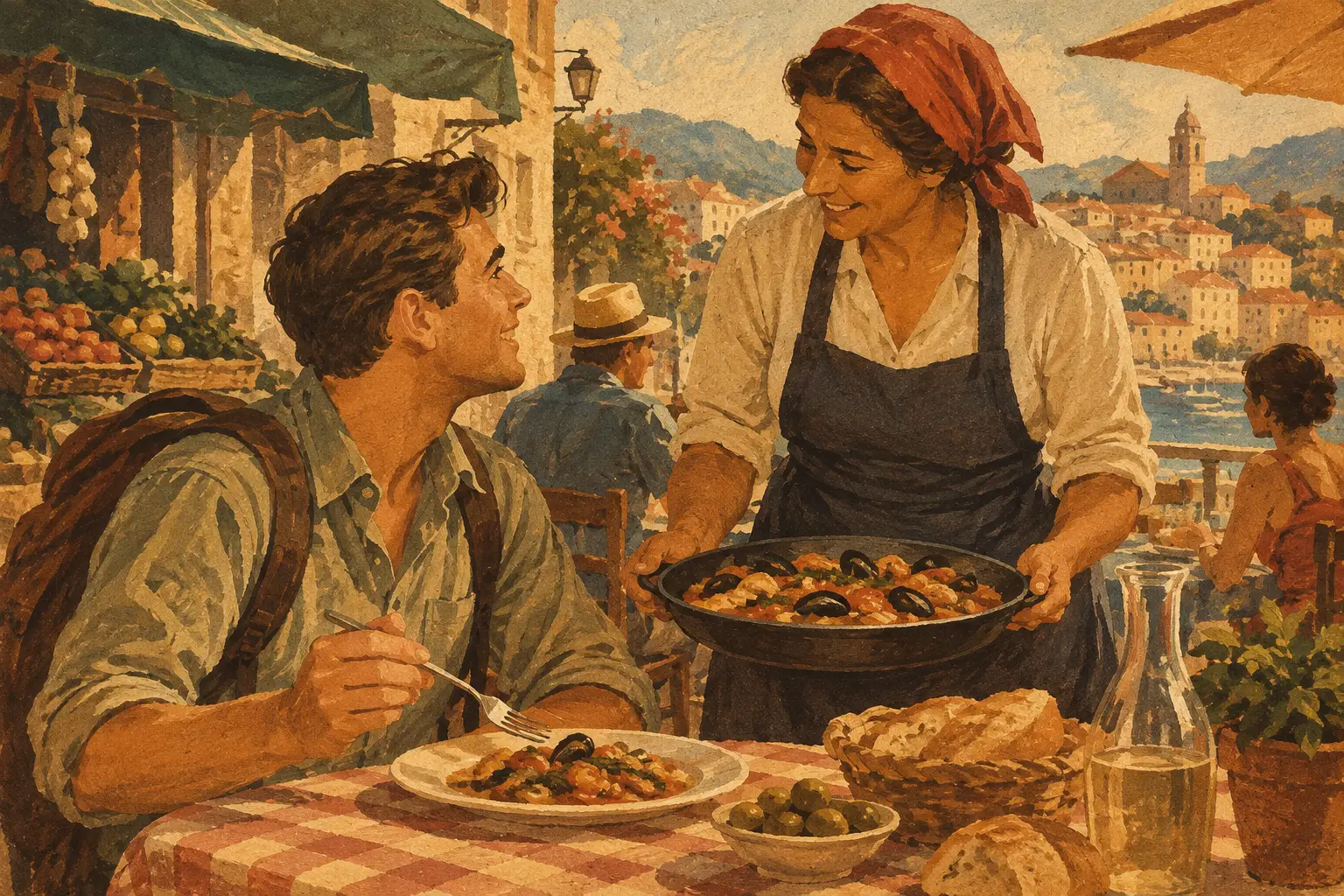
At 12:40 p.m. in a port city, the restaurant with the prettiest sign may be filling with visitors, while the place next door is buzzing with people on lunch break, grandparents, students, and friends catching up over a plate they clearly know by heart. That is the moment travelers are really asking: where do locals eat abroad? Not just where is the food good, but where does a destination reveal its everyday rhythm?
Finding those meals is less about chasing a secret address and more about paying attention. The best local food experiences are often hiding in plain sight: a busy counter near the market, a family-run dining room a block off the scenic square, a bakery where the line starts before sunrise. Join the adventure with an open mind, a little patience, and room for a delicious surprise.
Where Do Locals Eat Abroad? Start With the Daily Routine
The strongest clue is usually timing. Locals eat around work, school, worship, family schedules, and long-standing traditions. If a small restaurant fills up with regulars at 1 p.m. on a weekday, it is probably serving something worth returning for. If the room is empty while every other nearby place has energy, that does not automatically mean the food is bad, but it is a signal to look closer.
Morning is especially revealing. Look for cafes serving commuters, bakeries with residents carrying familiar paper bags, and market stalls where vendors are eating their own breakfast. These places may not have dramatic views or menus designed for photo ops. What they offer is something better: a taste of how the city begins its day.
Dinner can be trickier, especially in heavily visited neighborhoods. In some destinations, locals dine late. In others, the beloved places are built around an early, fast, affordable meal. Watch the pace of the room. Are people lingering over wine and conversation? Ordering a shared spread for the table? Picking up bowls to take home? The answer tells you as much about local food culture as the menu does.
Let the neighborhood set the mood
A restaurant full of locals does not have to be hidden, cheap, or tiny. A polished seafood restaurant in a coastal city may be where families celebrate birthdays. A food hall can be a genuine favorite for office workers. And yes, a famous restaurant can still be loved by residents.
The better question is whether the place feels connected to its surroundings. Does it serve regional ingredients? Are the specials shaped by the season? Do the staff members seem to know repeat guests? A good local meal often has a sense of place, even when it is modern, stylish, or busy with travelers too.
Ask Better Questions Than “Where Do You Eat?”
Asking a hotel concierge or tour guide for recommendations can be useful, but broad questions often lead to the safest, most visitor-friendly answers. Try making your question personal and specific instead.
Ask a barista where they go for a casual dinner after work. Ask the person at a record shop where to find a great bowl of noodles nearby. Ask a museum guide where they take out-of-town friends when they want them to understand the city. These questions invite stories, not just names.
If you are on a cruise stop or have only a few hours, be honest about that. Say you want something local within a comfortable walk or short taxi ride, and mention what you are excited to eat. People can give much better advice when they know whether you are hoping for fresh fish, a lively lunch, a classic pastry, or a memorable dinner with music in the air.
Then ask one follow-up: “What should I order?” That is where the magic often begins. A recommendation for a specific dish, condiment, or drink can point you toward the restaurant’s true personality. It also gives you a little confidence when you sit down.
Follow the Menu, Not the Marketing
Menus tell stories. A short menu that changes frequently can be a wonderful sign, particularly in places known for markets and seasonal cooking. So can a menu focused on a handful of regional specialties rather than a giant catalog of dishes from everywhere.
Look for clues that the kitchen has a point of view. Maybe the fish offering changes with the catch. Maybe one stew appears in several forms. Maybe everyone is ordering the same grilled item, sandwich, dumpling, or dessert. You do not need to read every word perfectly to spot patterns. Take a moment to look around before ordering.
That said, do not confuse unfamiliarity with authenticity. A menu written only in the local language may be exciting, but it is not automatically better. A bilingual menu can be a generous welcome. What matters is whether the food feels cared for and rooted in the place, not whether you have to struggle to decode it.
Order with curiosity, not performance
There is no prize for ordering the most intimidating dish on the menu. If you are genuinely curious, ask the server what they recommend or point to something you have seen at nearby tables. If you have dietary needs, communicate them clearly and kindly. A memorable local meal should feel joyful, not like a test.
One smart approach is to pair one familiar choice with one local specialty. You get a little comfort and a little discovery on the same table. Share if you can. Food is more fun when there is someone across from you saying, “You have to try this.”
Step Beyond the Main Tourist Street, Carefully
The first restaurant beside a landmark is not always a bad choice, but the odds improve when you walk a few blocks farther. Turn onto a residential street, circle the market, or follow the sound of plates and conversation away from the most obvious crowd.
This is not a rule that requires wandering into areas where you feel unsafe or uncomfortable. Trust your instincts, use normal travel awareness, and keep track of how you will get back. The goal is not to prove you found the most obscure restaurant in town. The goal is to spend your precious travel time somewhere that feels alive.
In many cities, the local sweet spot sits between the tourist center and the purely residential outskirts. Think neighborhoods with small shops, transit stops, bookstores, apartment buildings, and people going about ordinary life. That is where you may find the lunch counter, corner cafe, or neighborhood grill that becomes part of your own travel story.
Markets Are a Shortcut to a City’s Flavor
If you only have one food-focused stop, make it a market. Markets bring ingredients, cooks, farmers, shoppers, and regional habits into one colorful frame. You can see what is in season, hear what people are ordering, and often try several local dishes without committing to one long meal.
Arrive hungry, but do not rush. Walk the full market once before choosing. Notice which stalls have steady lines, quick turnover, and customers who seem to know exactly what they came for. Watch for the small details: the grilled aroma near a busy counter, the pastry case nearly empty by midmorning, the vendor greeting regulars by name.
Markets also make it easier to sample at your own pace. A local cheese, tropical fruit, savory snack, or fresh juice can be as meaningful as a formal meal. Take in the colors, the sounds, and perhaps a musician playing nearby. Food and music both have a way of turning a busy public space into a shared language.
Use Reviews as a Map, Not a Verdict
Online reviews can help you avoid an obvious disappointment, check hours, or understand whether a place suits your budget. They are not a replacement for your own eyes. A restaurant with a modest rating may have been judged by travelers expecting a different style of service, while a highly rated spot may simply be excellent at serving visitors.
Read for specifics. Comments about a particular dish, warm service, a long lunchtime line, or a beloved regional specialty are more useful than vague praise. Recent reviews matter, too. Restaurants change, chefs move on, and a once-great address can lose its spark.
Most of all, remember that locals are not one single group with one favorite restaurant. A college student, a chef, a taxi driver, and a family celebrating an anniversary may all send you somewhere different. That variety is part of the fun.
Respect the Table You’re Invited To
Eating where locals eat is not about collecting authenticity points. It is about being a thoughtful guest. Learn a greeting, be patient with a different pace of service, and understand that the restaurant may not operate around your usual dining expectations. In some places, lingering is welcome. In others, tables turn quickly. In some cultures, tipping works differently than it does in the United States.
A little humility goes a long way. Put the camera down long enough to taste the food while it is hot. Notice the people around you without treating them as scenery. If you love the meal, say so. A sincere thank-you, even with a smile and a few imperfect words, is always part of the experience.
The meal you remember most may not be the one with the perfect skyline view. It may be the tiny table near a humming kitchen, the dish a stranger recommended, or the chorus of conversation around you as the city carries on. Leave room in your itinerary for that kind of table. It is often where travel becomes connection.
Leave a Reply