
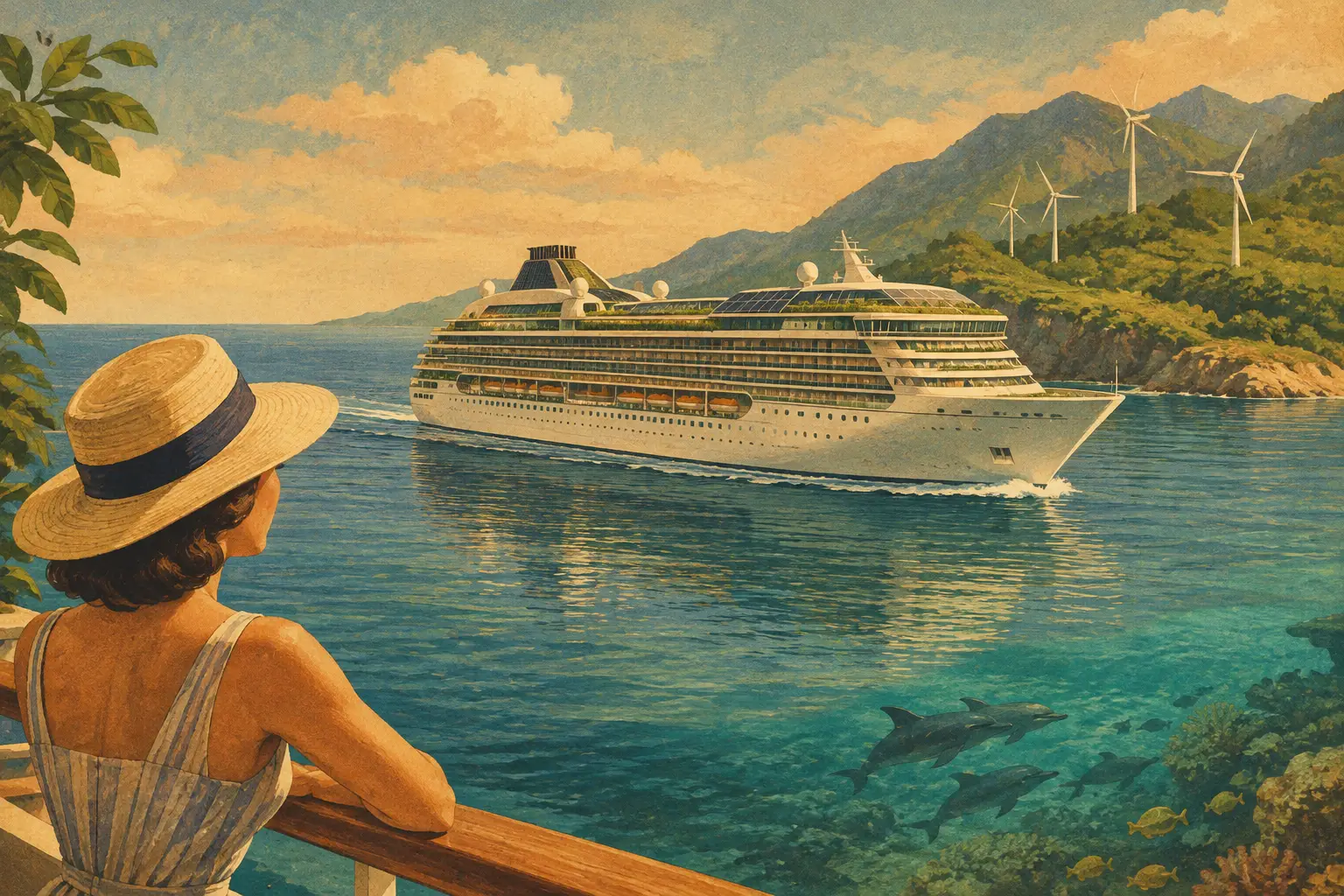
A cruise ship can feel like its own floating city: breakfast with an ocean view, live music after sunset, and a new coastline waiting outside the window each morning. That magic comes with a real question, though: what does it take to make a vacation at sea lighter on the places we have come to experience? Sustainable cruise innovations are beginning to change the answer, and the most exciting part is that many of them can improve the guest experience too.
For travelers who love the rhythm of ship life, this is not about giving up the fun. It is about paying attention to how ships are powered, how ports are treated, where food comes from, and whether a shore day adds something meaningful to a destination. The progress is real, but it is not a finished song. Different routes, ships, and ports face different challenges.
Sustainable Cruise Innovations Start Below Deck
The biggest environmental changes often happen in places guests never see. Cruise lines are experimenting with cleaner energy sources, including liquefied natural gas, batteries, fuel cells, biofuels, and fuels that may be made with renewable electricity in the future. Each option has a different promise and a different limitation.
Liquefied natural gas, for example, can reduce certain air pollutants compared with traditional marine fuel, but it is not a complete climate solution. Methane emissions across the fuel system remain a serious concern. Battery power can be excellent for short distances, port operations, and quieter sailing, yet batteries are heavy and currently cannot power a giant ship across an ocean on their own.
That is why the future will likely be a mix, not one miracle fuel. A ship sailing a short coastal itinerary may use electricity in ways an ocean-crossing vessel cannot. Newer engines designed to switch between fuels may matter as much as the fuel choice itself, because the cleaner options available in 2030 may not be the same ones available today.
For guests, the first noticeable difference may be the quiet. Battery-supported operations and cleaner port power can reduce engine noise and vibration. Imagine enjoying a calm early morning on your balcony while a ship sits in port without the familiar low rumble. Sustainability is most compelling when it protects the atmosphere of the trip, not just the data in a report.
Shore Power Makes Port Days Cleaner
When ships are docked, they still need energy for kitchens, air conditioning, theaters, laundry, lighting, and every other part of onboard life. Traditionally, that energy comes from engines running in port. Shore power lets a compatible ship plug into a local electrical grid instead.
It sounds simple, but it requires a major investment from both the port and the cruise line. The dock needs the right equipment, the ship needs compatible systems, and the local grid needs enough capacity. The climate benefit also depends on how the electricity is generated. Plugging into a grid powered largely by renewables is very different from plugging into one powered mainly by fossil fuels.
Still, where it works, shore power can cut local air pollution and noise in busy waterfront communities. That matters in beloved cruise cities where cafes, homes, museums, and markets sit close to the harbor. A great port day should leave room for the sounds of local life, not just ship engines.
Better Design Can Mean Less Waste
A ship’s design affects its environmental footprint every mile of the journey. New hull shapes, advanced coatings, air lubrication systems, and smarter route planning can help reduce fuel use. Even small improvements become meaningful when a vessel travels week after week across long distances.
Inside the ship, technology is helping crews manage energy with more precision. Sensors can adjust air conditioning in spaces that are not heavily occupied. LED lighting lowers electricity demand. Heat that would otherwise be wasted can sometimes be captured and reused for water heating or other systems.
Water is another quiet but important story. Modern ships can produce freshwater onboard, treat wastewater, and monitor consumption more carefully than older vessels. Those capabilities do not eliminate impact, and travelers should be cautious of broad claims that any ship has “zero impact.” But better systems can reduce pressure on destinations, particularly islands and coastal communities where freshwater is precious.
Food is where sustainability becomes especially personal. Cruise dining is joyful: the late-night slice, the beautiful dessert, the table that turns into a two-hour conversation. Yet food waste is a major challenge in any hospitality setting, especially one designed around abundance. Some ships now use tracking systems to measure what is being discarded, helping culinary teams adjust portions, menus, and preparation without taking away variety.
The best version of this is not a smaller plate with a bigger speech. It is thoughtful food: seasonal ingredients where practical, local flavors handled with respect, and menus designed to celebrate the places on the itinerary. A Caribbean-inspired dish made with regional ingredients can tell a much richer story than a generic buffet item flown halfway around the world.
The Shore Day Is Where Values Become Visible
A cruise can introduce travelers to breathtaking landscapes and vibrant cultures, but a destination is not a backdrop. It is someone’s home. The most meaningful sustainable cruise innovations extend beyond the ship and into the way visitors arrive, move around, spend money, and show respect.
This is where smaller group excursions, locally owned experiences, and destination-aware scheduling matter. A cooking class led by a local chef, a guided walk with a historian, or a visit to an independent restaurant can create a deeper connection than a rushed photo stop. It can also keep more of the visitor economy in the community.
Of course, “local” should not become a marketing label with no substance. Travelers can ask useful questions: Who runs this experience? How large is the group? Is the activity appropriate for the environment? Does the itinerary allow time to enjoy the place without overwhelming it? A tour that includes a reef, wildlife habitat, or cultural site should have clear practices for protection, not just a beautiful brochure.
Timing matters, too. Some ports are working to manage the number of ships and visitors arriving at once. That may mean itinerary changes, staggered schedules, or limits that make popular places feel less crowded. No one loves seeing a favorite stop removed from an itinerary, but a destination that is protected can remain special for years instead of being loved into exhaustion.
What Travelers Can Look for Before They Sail
Cruisers do not have to become marine engineers to make more informed choices. Start by looking beyond a single green label. A newer ship may have more efficient systems, but its actual impact still depends on its fuel, itinerary, speed, occupancy, and access to shore power. An older vessel with a thoughtful operational plan may also be making meaningful improvements.
Look for specifics rather than slogans. Does a cruise line explain its fuel strategy? Does it mention shore power connections, waste reduction, water treatment, or partnerships with ports and local communities? Are goals accompanied by dates and measurable progress? Clear details are more reassuring than dreamy language about saving the sea.
Your own choices matter in smaller, very real ways. Reusing towels, taking only the food you will enjoy, carrying a refillable bottle when appropriate, and choosing excursions that center local guides are all part of being a considerate guest. Onboard, you can bring the same curiosity you bring to a new city. Ask the bartender about a regional ingredient. Choose the family-run spot near the pier. Let the destination set the tone.
There are trade-offs here. Flying to a departure port can add substantially to a trip’s footprint, especially for a short cruise. Sailing from a closer home port may be a practical option, though it depends on the route and the experiences you want. Longer stays in fewer destinations can also create a more relaxed, less rushed journey, but not every traveler has unlimited vacation time. Thoughtful travel is not about perfection. It is about making better choices when the choice is available.
A More Memorable Way to Travel at Sea
The cruise experience has always been about motion: music drifting from a deck party, plates arriving at the table, a horizon changing color by the minute. The next chapter asks the industry to move with greater care. Cleaner energy, smarter ship design, responsible dining, and more respectful port visits can make that movement feel more connected to the world we are lucky enough to explore.
As you plan your next sailing, let curiosity be part of the packing list. Ask how the ship operates, seek out the stories behind the food, and choose shore experiences that leave you feeling connected rather than simply entertained. The best travel memories are not just the ones we bring home. They are the ones that help a place keep shining for the travelers and communities still to come.