
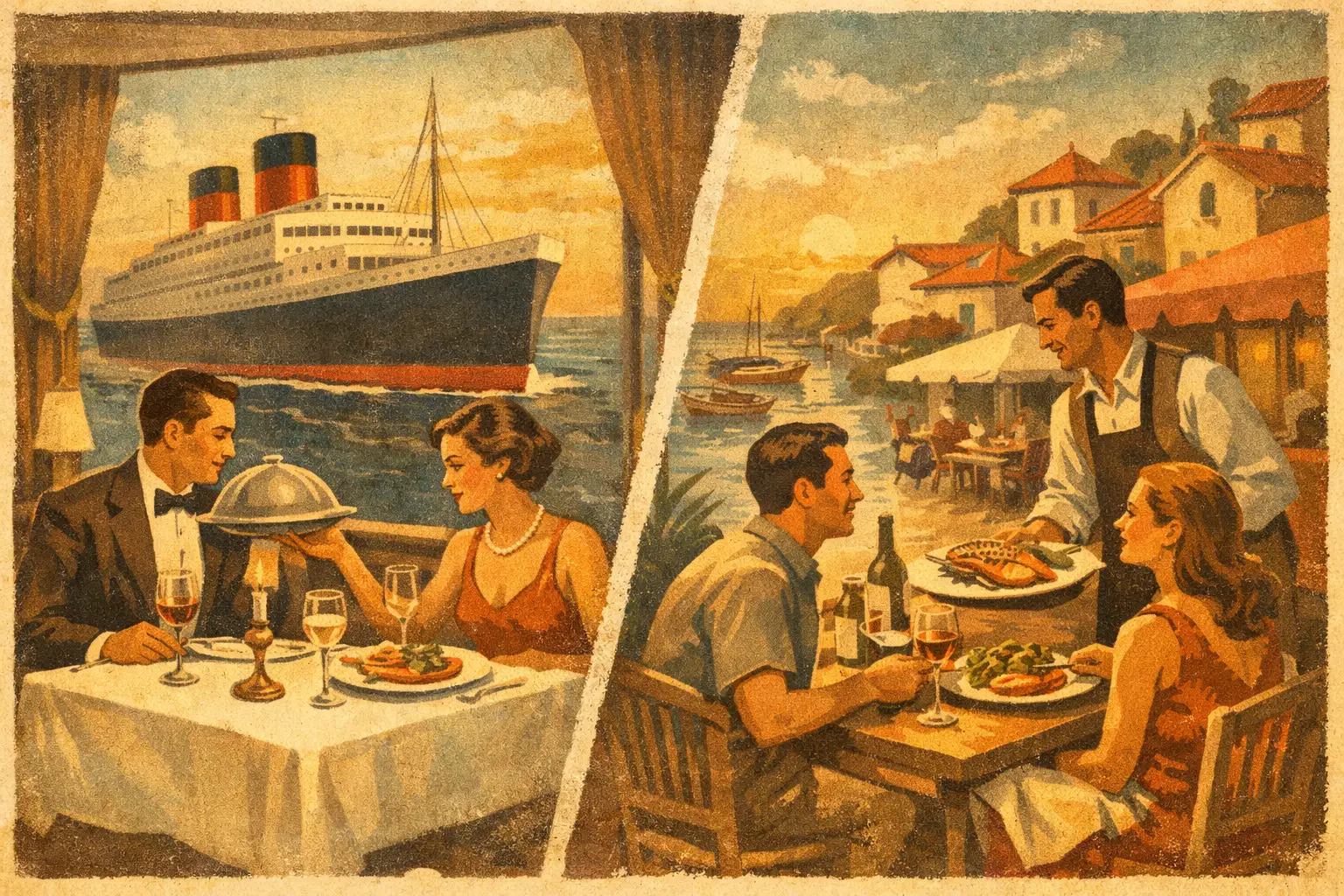
Some cruise days call for a white-tablecloth dinner with ocean views and a perfectly timed dessert. Other days, the best meal is the one you find three streets away from the port, where the music is louder, the flavors feel rooted, and nobody is asking for your cabin number. That’s really the heart of ship dining vs local restaurants – not which one is objectively better, but which one gives the day the kind of memory you actually want.
If you love cruising and also love food, this choice can shape the whole rhythm of a trip. A meal on board can feel polished, easy, and comforting. A meal on land can feel surprising, textured, and alive in a completely different way. Both have their place, and the smartest travelers know that the best answer is rarely all one or all the other.
Ship dining vs local restaurants: what are you really choosing?
At first glance, it sounds like a simple food question. It isn’t. You’re really choosing between convenience and discovery, between predictability and spontaneity, between a curated cruise experience and a direct connection to the destination.
Ship dining is built to remove friction. You already know where to go, how to pay, and what level of service to expect. There’s a comfort in that, especially after a long excursion or a hot afternoon exploring. When the elevator ride to dinner is shorter than the walk back from a crowded port, the appeal is obvious.
Local restaurants offer something different. They can give you a place that feels less produced and more personal. The dish might come from a family recipe. The room might carry the sounds, pace, and humor of the city around it. You are not just eating near a destination. You are participating in it.
That’s why this decision matters so much. Food is one of the fastest ways to feel whether a place is merely visited or actually experienced.
Where ship dining shines
Cruise dining gets underestimated because it is familiar. Familiar does not mean inferior. In many cases, ship dining is genuinely excellent, especially on newer ships and premium lines where food has become part of the entertainment itself.
There’s a certain pleasure in getting dressed for dinner, hearing the low hum of conversation in a dining room, and watching the light change over the water while your meal arrives in courses. That experience has its own kind of magic. It feels cinematic in a way that is hard to replicate on land.
Then there’s range. On a ship, you can move from steakhouse to sushi to Mediterranean to late-night pizza without needing a map, a ride, or a reservation app. If you’re traveling with different tastes, ship dining solves a lot of problems quickly. It also works well for travelers who want the vacation feeling without having to make constant decisions.
Cost matters too. If meals are included in your cruise fare, eating on board can be a strong value. Even specialty restaurants, while not free, may still feel more predictable than navigating tourist-zone pricing in port. For some travelers, especially families or anyone watching the budget after booking excursions, that built-in simplicity is a real advantage.
And yes, there are days when energy is part of the equation. After a full day in the sun, the idea of returning to the ship, freshening up, and sliding into a reliable dinner rhythm feels less like settling and more like self-care.
The limits of eating on board
The trade-off is that ship dining, even when beautifully executed, is still cruise dining. It reflects the standards, logistics, and audience of the ship more than the identity of the port you just visited. You might have a very good Caribbean-inspired dish without learning much about the island itself. You might eat “local style” cuisine in a setting that feels globally polished rather than distinctly rooted.
That doesn’t make it fake. It just means the ship’s mission is different. It is designed to serve thousands of guests consistently, not to tell the most intimate culinary story of every destination on the itinerary.
Why local restaurants hit differently
A good local restaurant can make a port stop feel three times richer. Suddenly the day is not only about sights and photos. It has flavor, atmosphere, and a little unpredictability.
This is where local restaurants often win. They can offer dishes that make sense in context – seafood caught nearby, spices used with confidence, street-level desserts that never needed luxury branding to be unforgettable. Even a simple lunch can reveal more about a place than an hour of walking around souvenir shops.
There’s also emotional texture to dining off the ship. You notice the soundtrack. You notice how long people linger. You notice what locals order without looking at the menu twice. Those details create the kind of travel memory that stays with you because it feels lived, not staged.
For culturally curious travelers, that’s the whole point. A destination should not only be seen from a balcony or during an excursion window. It should be tasted in a way that belongs to the place itself.
The risks are real too
Of course, local dining asks a little more from you. Time becomes tighter. Transportation has to be considered. Service styles may differ from what you’re used to, and that can be charming or stressful depending on your mindset that day. There is also the practical cruise issue no one should ignore – the ship leaves when it leaves.
You may also run into the tourist trap problem. Not every restaurant near a port is a hidden gem. Some are built almost entirely around cruise traffic, with inflated prices and a menu that feels generic. So the idea of “eating local” is not automatically more authentic. It depends on where you go and how far beyond the obvious you’re willing to explore.
How to decide on a cruise day
The best choice usually starts with one honest question: what kind of day are you having?
If it’s an early port arrival with a full excursion planned, ship dining may be the better anchor for the evening. You already know it will be waiting for you, and there’s real joy in returning to a beautiful meal without adding another layer of logistics.
If the port is somewhere known for a distinctive food culture, local restaurants deserve serious attention. Places with strong culinary identity can transform one meal into the highlight of the stop. In those moments, skipping local food can feel like standing outside the concert venue and never hearing the music.
Distance matters too. If the best local spots require a long drive, the stress may outweigh the reward unless you have a lot of time in port. But if there’s a well-loved restaurant within easy reach and enough cushion to get back comfortably, that’s often the sweet spot.
Travel style matters just as much. Some people want their cruise to feel smooth, elevated, and easy. Others want every destination to interrupt the routine in the best possible way. Neither approach is wrong. The trick is matching your meal choice to your actual travel personality, not the version of yourself you think you’re supposed to be.
The smartest approach is usually both
The most satisfying answer to ship dining vs local restaurants is often balance. Let the ship handle some meals, especially breakfast, sea days, or evenings when you want the full cruise ambiance. Then let the destination take over when the port offers something memorable enough to chase.
That mix keeps the trip feeling layered. You get the elegance and ease of the ship, plus the pulse and personality of the places you came to see. One meal gives you comfort. The other gives you context.
For a lot of travelers, this is where the trip becomes most rewarding. You’re not choosing between luxury and authenticity as if they can’t sit at the same table. You’re building a travel experience that has both polish and soul.
That’s especially true if you care about travel as a story, not just a checklist. The ship gives you a floating home base, a stage set with its own pleasures and rituals. The local restaurant gives you a scene change, a new tempo, a fresh chorus. Together, they create a fuller soundtrack for the journey.
So which one wins?
If your priority is ease, consistency, and maximizing what you already paid for, ship dining wins plenty of nights. If your priority is cultural connection, memorable flavors, and the kind of meal that could only happen in that exact place, local restaurants usually take it.
But the real win is knowing that every port day does not need the same answer. Some evenings are made for candlelight on deck. Others are made for that tiny place ashore where the food arrives hot, the room feels alive, and you look around thinking, this is why I travel.
Choose the meal that matches the moment, and the whole trip starts to taste better.