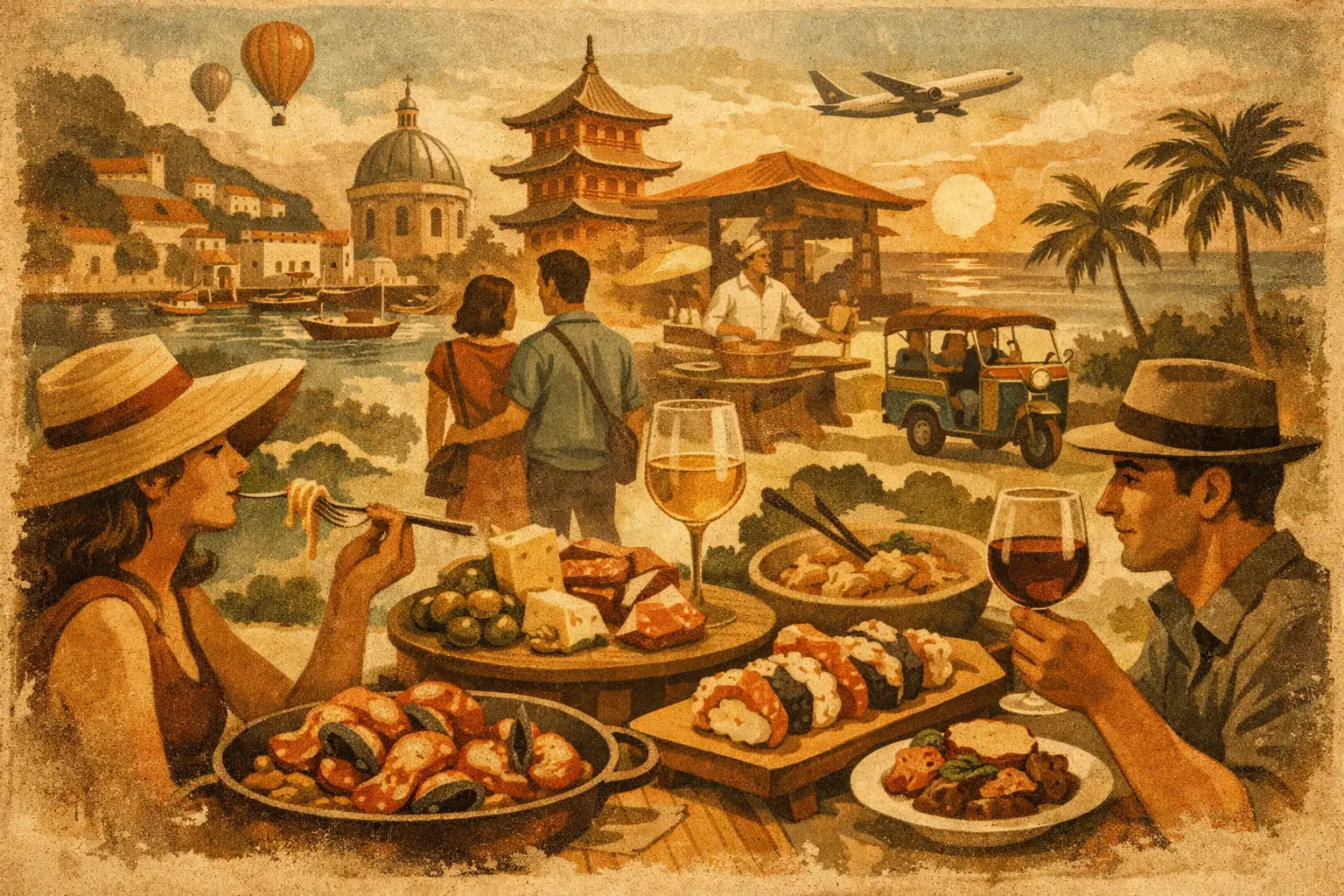
A late-night market always tells the truth about a destination. You hear the sizzle before you see the grill, catch a rhythm in the crowd, and suddenly the whole city feels like it has a soundtrack. That is why food tourism trends 2026 feel so exciting right now. People are no longer chasing only the prettiest restaurant or the most photogenic plate. They want flavor with context, atmosphere with personality, and meals that feel tied to real people and real places.
For travelers who want more than a reservation screenshot, 2026 is shaping up to be a year of deeper culinary connection. The shift is subtle but powerful. Food is still the star, of course, but the story around it matters more than ever. Who made it, where the ingredients came from, what music is playing in the background, what neighborhood you are standing in, and whether the experience feels personal or packaged – all of that now shapes what people remember and share.
Why food tourism trends 2026 feel more personal
A few years ago, culinary travel often looked like a checklist. Hit the famous bakery. Book the Michelin table. Post the tasting menu. Now the energy is different. Travelers still love iconic spots, but there is growing interest in meals that feel lived-in and local.
Part of that comes from content fatigue. People have seen the same highlight reels and now want experiences with texture. A bowl of noodles in a family-run shop, a chef explaining a recipe passed down through generations, or a market tour that ends with a home-style lunch can feel more meaningful than a polished dining room with no emotional pull.
There is also a bigger cultural shift toward intentional travel. When people spend money on a trip, they want moments they can feel, not just consume. Food is becoming one of the best ways to access that feeling because it sits at the intersection of memory, identity, and place.
The biggest food tourism trends 2026 travelers will notice
Neighborhood food scenes are beating formal dining circuits
Fine dining is not disappearing, but it is no longer the only culinary trophy people care about. In 2026, travelers are paying more attention to neighborhood food culture – the corner spots, the market stalls, the bakeries with a morning line, the late-night places locals actually return to.
That does not mean every traveler wants a rough-around-the-edges experience. It means they want credibility. A beautiful restaurant can still win if it feels rooted in its city rather than designed for algorithmic approval. The trade-off is simple: highly curated dining can deliver precision and luxury, but smaller neighborhood experiences often deliver warmth and story.
Culinary travel is getting more multisensory
This feels especially relevant for audiences who love travel as a full-body experience. Meals are no longer standing alone. Travelers want food paired with music, performance, design, and atmosphere.
That could look like jazz with small plates in New Orleans, a chef’s tasting tied to regional wine and live acoustic sets, or a cruise itinerary where a destination dinner is framed through local culture rather than generic entertainment. The meal becomes part of a wider mood. And that mood is what people remember when they get home.
For creator-led travel brands, this trend matters because it rewards storytelling. A plate of food is nice. A plate of food with sound, setting, and human connection becomes a scene.
Hands-on food experiences keep gaining ground
Travelers want to participate, not just observe. Cooking classes, market walks, farm lunches, chocolate workshops, pasta-making sessions, and spice blending experiences continue to rise because they create ownership. Once you have shaped the dumpling, stirred the sauce, or learned why a dish matters in a particular region, the experience sticks.
There is a practical side to this too. Hands-on culinary activities often feel more approachable than elite restaurant culture. Not everyone wants a three-hour tasting menu. Plenty of people would rather spend that time learning, tasting, laughing, and bringing a skill home with them.
Still, it depends on the traveler. Some people want immersive participation. Others want to be guided without doing the work. The best travel experiences in 2026 will make room for both styles.
Cruises are becoming stronger food discovery platforms
Cruise travel is often misunderstood in food conversations, but that is changing. One of the most interesting food tourism trends 2026 is how cruise experiences are becoming more destination-aware with their culinary programming.
The strongest cruise food experiences are moving beyond generic international menus and leaning into regional identity. Think port-inspired dishes, local chef collaborations, shore excursions built around markets and tastings, and onboard storytelling that connects what you eat to where you are sailing. That creates a much richer journey than simply offering variety for variety’s sake.
Of course, not every cruise line handles this equally well. Some still treat food as abundance rather than culture. But when the culinary program is thoughtful, cruising can become a surprisingly powerful gateway into a region’s flavor story.
Night markets and casual social eating are having a big moment
Some of the best travel memories happen standing up, balancing a plate in one hand and a drink in the other, while music floats in from somewhere nearby. Night markets, food halls, pop-ups, and street food clusters fit how many people actually want to travel now – flexibly, socially, and with room for discovery.
These spaces also work well for groups with different tastes. One person wants grilled seafood, another wants noodles, someone else is there for dessert, and everyone still shares the same energy. That communal quality matters. Food tourism is becoming less about formal structure and more about the feeling of being part of something alive.
Regional ingredients are becoming part of the travel narrative
Travelers are showing more curiosity about what grows, swims, or gets produced in a destination. That means ingredients themselves are turning into travel anchors. Olive oil regions, coffee-growing areas, oyster trails, agave landscapes, cacao farms, and island spice traditions are becoming more visible in how people choose trips.
This is where culinary travel gets especially rich. You are not just eating the finished dish. You are understanding the environment that shaped it. The experience becomes more grounded, and often more emotional, because it ties flavor to land and tradition.
What travelers will value most in 2026
The common thread across these shifts is not luxury versus budget, or casual versus formal. It is authenticity with personality. Travelers want to feel welcomed into a place rather than processed through it.
That changes how they evaluate food experiences. They are asking different questions now. Does this feel connected to the destination? Is there a real story here? Would I remember this if I never posted it? Could I picture myself telling a friend about this moment six months later?
That last question matters more than people admit. Shareable travel in 2026 is not only visual. It is retellable. The strongest experiences give people something to say, not just something to show.
For destinations, restaurants, tour operators, and creators, that creates both opportunity and pressure. Surface-level branding is easier to spot now. Travelers can sense when an experience has been built around trend language rather than genuine local character. At the same time, places that communicate their food culture with honesty and warmth are likely to stand out.
Where this trend is heading next
Expect culinary travel to keep blending with culture-first storytelling. More travelers will build itineraries around a food scene rather than just fitting meals between attractions. More creators will frame destinations through sensory detail. More hospitality brands will realize that a meal is not just an amenity – it is one of the clearest ways to express identity.
There is also room for a welcome correction. As food tourism grows, travelers will need to think about respect as much as appetite. Popular local spots can get overwhelmed. Prices can shift. Communities can be flattened into content if visitors only show up to consume and record. The healthiest version of this trend is one where curiosity comes with consideration.
That is what makes 2026 so interesting. The future of food travel is not only about chasing what tastes good. It is about finding experiences that feel vibrant, human, and rooted in place. The best meal on your next trip might still be beautiful, but more importantly, it will have a pulse. So when you plan your next adventure, follow the flavor, but listen for the story too. That is usually where the magic starts.