
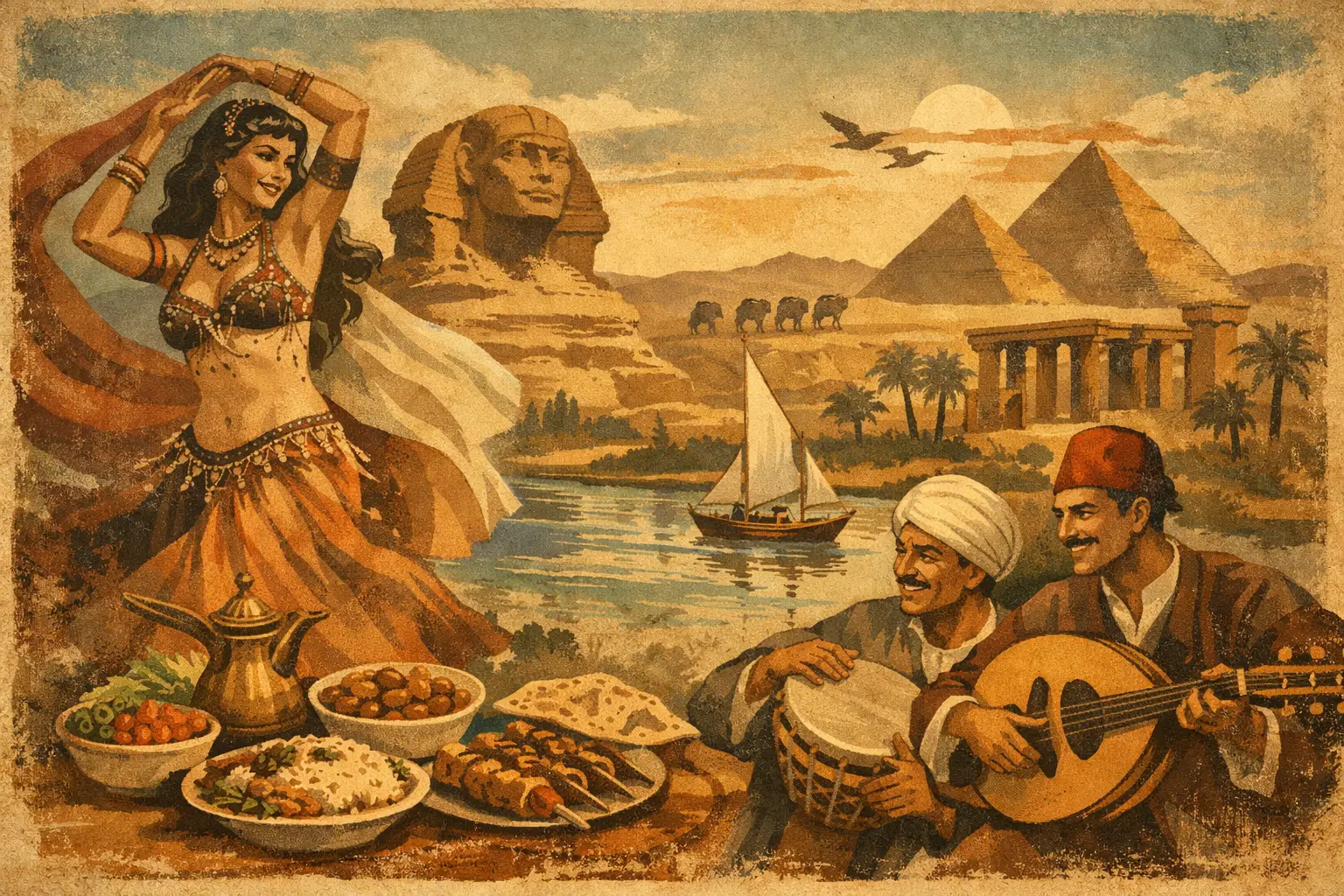
The first thing that stays with you about Egypt may not be a pyramid. It might be the warm scent of cardamom rising from a tiny coffee cup, a felucca gliding across the Nile at sunset, or the sudden pulse of a drummer cutting through an evening crowd. This is a place where the monumental and the everyday share the same frame – and that is exactly what makes it unforgettable.
For travelers who want more than a checklist of famous sites, Egypt offers a full sensory experience. Its history is astonishing, of course, but the real magic comes from feeling how alive that history remains in the food, music, conversations, and movement of daily life.
Egypt Is More Than Its Ancient Wonders
Yes, seeing the Great Pyramids of Giza is a major moment. Few places on earth make you feel the scale of human ambition quite like standing beneath those massive stone forms, with Cairo’s energy buzzing just beyond the horizon. The best approach is to give yourself permission to be impressed. Take the photos, pause for the view, and let the reality of the place sink in.
But Egypt becomes more personal once you look beyond the postcard.
In Cairo, centuries unfold block by block. You can move from grand boulevards and contemporary cafes to narrow lanes where artisans, spice sellers, and families have shaped the rhythm of the neighborhood for generations. The city can be loud, crowded, and gloriously intense. That is not a flaw in the experience. It is part of the soundtrack.
Then there is Luxor, where temple walls and tombs make ancient Egypt feel less like a chapter in a textbook and more like a world still speaking. Karnak’s towering columns create a sense of theatrical scale, while the Valley of the Kings asks for a slower kind of attention. The artwork inside the tombs carries color, ceremony, and storytelling across thousands of years.
Let the Nile Set the Tempo
The Nile is more than a beautiful backdrop. It is the thread that connects so much of the Egyptian experience. A river cruise between Luxor and Aswan can offer a gentler pace after Cairo’s high-energy streets, with palms, villages, and golden desert terrain rolling by from the deck.
This is where luxury travel and cultural curiosity can genuinely work together. A well-designed cruise gives you comfort, memorable meals, and a front-row seat to the river, while daily stops bring you close to temples and local communities. The trade-off is time: organized itineraries make travel easy, but they can move quickly. If you have the flexibility, add a few unplanned hours in each destination for a cafe, a market stroll, or a sunset that deserves your full attention.
Aswan feels especially made for those lingering moments. Its pace is often calmer, its Nile views are spectacular, and Nubian culture brings another essential dimension to the story of Egypt. Brightly painted homes, welcoming hospitality, and distinctive music remind visitors that this country has never been one single experience.
The Flavor of Egypt Deserves Center Stage
Food is one of the fastest ways to feel connected to a place, and Egyptian cuisine is built for that kind of joyful discovery. It is generous, comforting, vibrant, and often far more varied than first-time visitors expect.
Start with koshari, a beloved dish of rice, lentils, pasta, chickpeas, crispy onions, and a tangy tomato sauce. It sounds wonderfully chaotic on paper, and it delivers every time. Ful medames, made with slow-cooked fava beans, is another everyday classic that turns a simple breakfast into something deeply satisfying.
Fresh bread also has a starring role. Warm baladi bread belongs beside dips, grilled meats, vegetables, and nearly any shared table. If you spot molokhia, a savory green soup often served with rice or bread, give it a try. Its texture can surprise newcomers, but travel is more fun when curiosity leads the order.
Dessert brings its own celebration. Basbousa, kunafa, and sweet pastries soaked in syrup are perfect companions to tea or strong Egyptian coffee. The key is not to rush through a meal because there is another landmark waiting. In Egypt, the table is often where the landmark becomes a memory.
Follow the Sound, Not Just the Map
Music belongs in any honest portrait of Egypt. From traditional instruments and wedding celebrations to contemporary pop and the globally influential sounds of Cairo’s streets, rhythm is woven into social life.
You may hear an oud drifting from a restaurant, percussion building at a local gathering, or a singer turning an ordinary evening into a shared event. These moments do not always appear on a standard itinerary, which is why they can feel so special. Ask your guide, hotel team, or local host where people go to hear music. A respectful question can lead to an experience no search result would have suggested.
For a traveler who feels destinations through sound, Egypt offers plenty to listen for. The call and response of a busy market, the soft splash of water against a boat, the gentle clink of tea glasses, and the quick tempo of city traffic all create their own kind of composition.
How to Experience Egypt With Presence
Egypt rewards preparation, but it rewards openness even more. A little planning helps you manage distances, entry times, heat, and transportation. Still, try not to schedule every minute so tightly that the country has no room to surprise you.
Dress respectfully when visiting religious sites and more traditional areas, and keep a light layer handy for air-conditioned interiors or cooler evenings. Hydration matters, especially around outdoor monuments, where the sun can be powerful. It is also wise to pace yourself. Trying to see every temple, museum, and market in one trip can turn wonder into exhaustion.
The best version of an Egypt itinerary usually balances iconic experiences with breathing room. See the pyramids, certainly. Visit the temples. Cruise or sail on the Nile if you can. Then make space for the small scenes: a game of backgammon outside a cafe, a vendor arranging dates in neat rows, a family laughing together by the river.
It also helps to arrive with humility. Egypt is home to more than 100 million people, not a museum constructed for visitors. Be patient in busy places, learn a few greetings, ask before photographing people, and listen when locals share their perspective. Those choices make travel feel less like consumption and more like connection.
The Moments You Will Carry Home
The grand images of Egypt are easy to predict. You will remember the pyramids, the temples, and the river glowing under a wide desert sky. What you cannot predict is which small moment will become the one you replay later.
Maybe it is the first bite of a dish you had never heard of. Maybe it is a song playing through an open doorway. Maybe it is the realization that the past here does not sit quietly behind glass. It lives beside the present, full of movement, color, flavor, and spirit.
Join the adventure with an open appetite, a curious ear, and enough room in your plans to follow the unexpected. Egypt has been inspiring stories for millennia. The beautiful part is that it still knows how to give every visitor one of their own.