
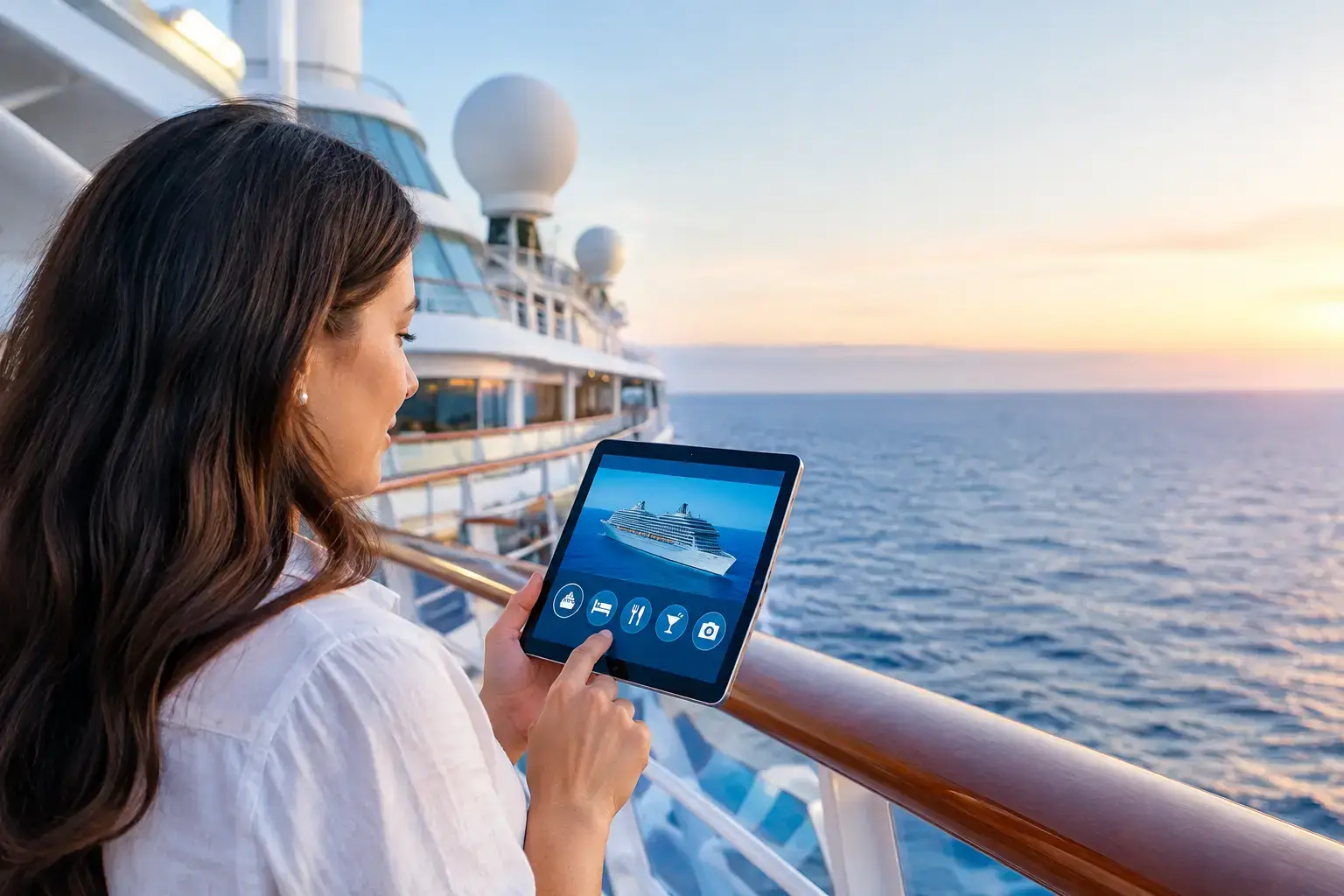
The old cruise ritual was simple: print the documents, find the paper daily planner in your cabin, and hope you made it to dinner before the good reservation times disappeared. Cruise technology trends are rewriting that rhythm, often before you even step aboard. Your phone can now become your room key, dining concierge, theater ticket, shore-excursion guide, and connection back home – all while the ship itself gets smarter behind the scenes.
For travelers who cruise for the ocean views, fabulous food, live music, and the feeling that every port holds a new story, technology should not replace the magic. It should make more room for it. Here is what is changing at sea and why the best upgrades are the ones that help us spend less time in lines and more time enjoying the journey.
Cruise Technology Trends Start Before Embarkation
The cruise experience increasingly begins from the couch. Cruise line apps now handle check-in details, boarding windows, health and travel documentation, luggage information, dining reservations, activity bookings, and reminders. That means the first day can feel less like airport logistics and more like the opening scene of vacation.
For guests, the benefit is clear: a little preparation can protect precious time once you arrive at the terminal. Instead of sorting through paperwork while everyone is ready to board, you can walk on with a plan for that first lunch, sunset sail-away, and evening show.
Still, there is a trade-off. Apps are convenient, but they can turn a getaway into another screen-heavy day if we let them. My advice is to use the app as a tool, not the main attraction. Check your schedule in the morning, book what matters, then put the phone away long enough to hear the band, taste the dessert, and watch the coastline slide by.
A Cabin That Knows the Difference Between Comfort and Clutter
Smart cabins are becoming more common, especially on newer ships. Depending on the vessel, guests may be able to adjust lights, temperature, television, curtains, or room-service preferences through a touchscreen, app, or voice control. Some ships also use wearable bands or digital keys that simplify access to cabins, purchases, and onboard venues.
The most thoughtful use of this technology is not about making a cabin feel futuristic. It is about making it feel personal. After a full day of exploring a colorful port, a room that is cool, quiet, and ready for you feels like a small luxury. For families or groups traveling together, connected features can also make coordination easier without turning every conversation into a text chain.
But smart does not always mean better. A beautiful cabin still needs intuitive controls, reliable Wi-Fi, and a backup option when technology misbehaves. No one wants to troubleshoot a light switch in formalwear. The cruise lines that win here will be the ones that keep the experience simple and human.
Dining Is Getting More Personal
Food is one of the great joys of cruising, and technology is helping ships serve it with more flexibility. Digital menus can highlight dietary needs, ingredients, and availability. Reservation systems can spread demand across popular restaurants. Some venues use mobile ordering, allowing guests to request a coffee, poolside snack, or late-night bite without leaving their favorite lounge chair.
Personalization has real potential here. If a ship understands that a guest prefers vegetarian dishes, has an allergy, or celebrates a birthday during the sailing, the dining team can create a more welcoming experience. The key is keeping the hospitality front and center. A tablet can explain the menu, but it cannot replace the warmth of a server recommending the dish they are genuinely excited about.
For food-loving travelers, use the technology to do a little research early in the cruise. Browse specialty dining options, look at menus, and reserve one meal that feels like an occasion. Then leave space for surprises: the pastry you notice after a morning in port, a regional tasting, or a late-night slice shared after dancing to live music.
Better Connectivity, With a Few Boundaries
Internet at sea has improved dramatically. Satellite connectivity is helping many ships offer faster, more dependable service than cruisers remember from years past. That can make a real difference for sharing photos, checking in with family, managing a little work, or posting the sunset video before the moment has faded.
For creators and social travelers, reliable connection means the cruise does not have to disappear from the conversation until you get home. It makes it easier to share the flavors, sounds, and vivid little details that make each sailing unique. A jazz set in the atrium, a plate of seafood by the window, or a dramatic arrival into port can become part of the adventure in real time.
Yet stronger Wi-Fi comes with a choice. Being able to stay connected does not mean you have to be available all day. Consider setting a check-in window, especially on sea days. You will still have the convenience, but you may also catch the quiet moments that never make it into an itinerary.
The Ship Is Becoming Smarter Behind the Scenes
Some of the biggest cruise technology trends are nearly invisible to guests. Ships use data and sensors to monitor equipment, improve maintenance planning, manage energy use, and reduce waste. Advanced navigation tools can support safer routing and more efficient operations, while systems throughout the ship help crews understand where service is needed most.
This matters because a great cruise is built on the things guests should not have to worry about: a smoothly run ship, clean public spaces, comfortable temperatures, and timely service. Technology can help crew members spend less time chasing operational issues and more time creating the kind of personal interactions people remember.
It also matters for the places ships visit. Cruise lines are investing in cleaner energy options, shore power capability where ports support it, more efficient ship designs, and tools that reduce food waste and water use. Progress is not one-size-fits-all, and the environmental impact of cruising remains a serious conversation. Travelers should welcome innovation while also asking how a ship operates, where it connects to shore power, and how a line supports destinations beyond the port gate.
Port Days May Feel More Connected to Place
Technology is changing shore exploration, too. Location-aware maps, digital excursion tickets, translated information, and real-time updates can make a port day feel less intimidating, especially in a new country. Some tools can help guests navigate back to the ship, find meeting points, or adjust plans when weather changes.
The best version of this is a confidence boost, not a substitute for curiosity. Use the map to find your way, then look up. Follow the scent of a neighborhood bakery. Ask the musician on the square what song they are playing. Give yourself permission to step beyond the most photographed corner of town when time and safety allow.
For independently minded travelers, technology can make exploration easier, but it cannot guarantee a meaningful experience. Local guides, small businesses, cultural etiquette, and enough time to wander still matter more than any app notification.
Where Cruise Technology Should Stay Human
With more personalization comes more data. Cruise guests should pay attention to privacy settings, wearable-device policies, and how information is used. Convenience is valuable, but it is fair to want clear answers about what is collected and why.
There is also an accessibility opportunity worth celebrating. Digital wayfinding, captioned entertainment, translation features, touch-free entry, and flexible communication tools can make cruising more comfortable for more people. As these systems develop, the strongest designs will be those that work for every generation, not just the person who always has the latest phone.
Technology should never become the story at the expense of the people, music, flavors, and places that make travel worth remembering. Let it handle the reservations and directions. Then use the extra time to join the adventure with your eyes up, your appetite ready, and a little room in the schedule for the unexpected.
Leave a Reply