
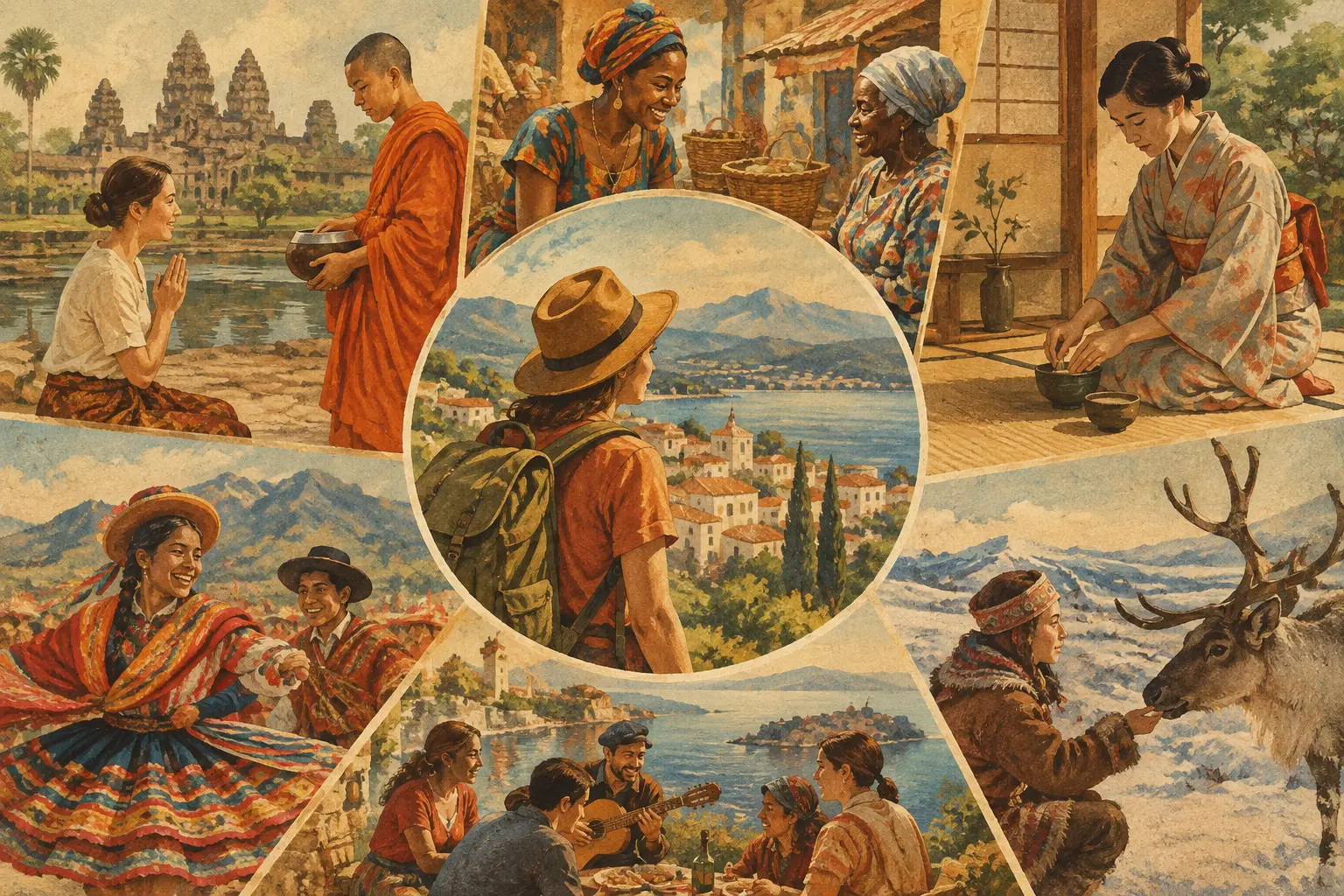
A destination can be beautiful from a ship deck, a hotel balcony, or the window of a tour bus. But the moments that tend to follow you home are usually smaller: a percussionist teaching you a rhythm between songs, a market vendor explaining the spice blend in her family recipe, or a stranger inviting you into a neighborhood celebration. These cultural immersion travel examples are about moving past the postcard and getting close enough to feel a place’s everyday pulse.
That does not mean you need to give up comfort, book an extreme itinerary, or pretend you are a local after three days. Meaningful travel can absolutely include a gorgeous cruise cabin, a great meal, and a little room to breathe. The difference is intention. You make space for local voices, choose experiences with real context, and arrive curious enough to listen.
What Cultural Immersion Really Looks Like
Cultural immersion is not checking off landmarks as quickly as possible. It is participating with respect in the food, music, language, history, and daily rhythms that give a destination its character. Sometimes that means joining a cooking class in someone’s home. Other times, it means sitting in a small music venue, ordering what the locals order, and staying long enough for the conversation to begin.
The best experiences are rarely scripted to the last second. They leave room for surprise, while still respecting the people sharing their traditions. A cultural experience should feel like an invitation, not a performance arranged solely for visitors. That distinction matters, especially when choosing excursions, guides, workshops, and community visits.
8 Cultural Immersion Travel Examples to Try
1. Follow the Music Beyond the Main Stage
Music is one of the fastest ways to understand the emotional life of a place. In New Orleans, that might mean catching a brass band in the street before finding a jazz set in a smaller club. In Havana, it could be hearing son cubano played in an intimate venue where the crowd sings along. In Nashville, look beyond the big-ticket concerts for a songwriter round where the story behind the song is part of the show.
The key is to seek out spaces where music is lived, not just displayed. Ask your hotel host, bartender, or local guide where they go for live music. Show up ready to support the artists, follow venue etiquette, and let the night unfold. You may not understand every lyric, but you will understand the feeling.
2. Learn a Dish From the People Who Make It
A restaurant meal can introduce you to a destination. Cooking with a local can bring you into its kitchen, memories, and family traditions. Think handmade pasta in a small Italian town, jerk seasoning in Jamaica, mole preparation in Oaxaca, or dumpling folding in a neighborhood home in Taipei.
The meal matters, of course, but the conversation around it is often the real souvenir. You learn why a recipe uses a particular herb, how a holiday table is set, and which dish sparks the strongest debate among relatives. Come hungry, ask thoughtful questions, and do not rush away once the plates are cleared.
3. Spend Time in a Neighborhood Market
Markets make culture visible, audible, and delicious. You hear vendors calling out prices, catch the fragrance of fresh fruit and grilled food, and see what people are buying for dinner that night. A guided market walk can be especially helpful in a new city because a local guide can explain ingredients, customs, and the polite way to interact.
In Barcelona, that may mean tasting seasonal produce and learning the rhythm of a Catalan food market. In Istanbul, it might be tea, olives, sweets, and spices layered into one colorful morning. In coastal ports, look for fish markets and ask which catch is local and how it is typically prepared. Buy something small, practice a greeting, and remember that the market is a workplace before it is a photo opportunity.
4. Take a Class With a Local Artist
A hands-on art class gives you a reason to slow down. It could be block printing in India, pottery in Japan, weaving in Peru, or mask making in Venice. You leave with more than an object in your suitcase. You leave with a better sense of the skill, patience, and history behind it.
This is also where choosing the right experience matters. Look for workshops led by working artists or community studios, not generic souvenir stops. A good host will share the cultural background of the craft and welcome your curiosity without turning a living tradition into a costume. Your first attempt may be imperfect, but that is part of the joy.
5. Join a Food Tour That Has a Point of View
Not every food tour is created equal. The memorable ones connect bites to a city’s migration stories, working-class neighborhoods, agricultural traditions, and changing identity. A guide in Los Angeles might trace the flavors of Mexican, Korean, and Armenian communities. In Lisbon, a walk through old streets can reveal how sea trade, family bakeries, and local rituals shaped the menu.
Go beyond asking, “What tastes good?” Ask, “Who brought this dish here?” and “When do people usually eat it?” Food becomes richer when it has a story attached. It also helps to book early in your visit. Once you know what to order and why it matters, every meal afterward becomes more interesting.
6. Choose a Shore Excursion With Real Community Connection
Cruise travel can open the door to vivid cultural encounters, especially when a port day is planned with care. Instead of defaulting to the largest bus tour, consider a smaller experience centered on a local guide, family-run business, historic district, or regional food tradition. A few well-chosen hours can be more meaningful than racing between five photo stops.
For example, in the Caribbean, that might mean learning the roots of local rum, tasting island-grown ingredients, and hearing music shaped by African, European, and Indigenous influences. In Alaska, it could mean listening to a Native cultural educator share the living traditions and contemporary realities of the region. The goal is not to collect culture in a single afternoon. It is to leave with greater appreciation and a reason to keep learning.
7. Attend a Festival, but Respect Its Purpose
Festivals are full of color, sound, movement, and delicious energy. Carnival celebrations, Lunar New Year events, Día de los Muertos gatherings, and regional harvest festivals can be extraordinary windows into a community. They can also be crowded, expensive, and emotionally meaningful to the people taking part.
Before you go, learn what the event represents. Dress appropriately, follow photography rules, and be mindful of spaces that are religious, ceremonial, or reserved for residents. If a festival has become heavily touristed, balance the big public celebration with a smaller neighborhood event, museum visit, or conversation with a local guide. Respect makes the experience deeper, not less fun.
8. Build in Time for Ordinary Conversation
The most powerful immersion does not always come with a ticket. It can happen over coffee at a neighborhood café, during a walking tour, in the back seat of a taxi, or while sharing a table at a casual lunch spot. These conversations are not something to force, but they are easier to find when your schedule is not packed from sunrise to midnight.
Learn a few basic phrases, ask open-ended questions, and stay humble. People are not there to represent their entire country for you. Still, when someone chooses to share a recommendation, a family memory, or an honest perspective on their city, listen closely. Those exchanges add the human texture no guidebook can fully capture.
How to Make Immersion Feel Respectful, Not Performative
The line between cultural connection and cultural consumption can be thin. A good rule is to spend your money in ways that support local people, follow the lead of hosts, and avoid experiences that make communities feel like attractions. If you are visiting a sacred site, a residential neighborhood, or an Indigenous community, the expectations may be different from a typical sightseeing stop. It depends on the place, and that is exactly why research and humility matter.
Try not to chase the idea of an “authentic” experience as if one perfect version of a culture exists. Cities evolve. Traditions adapt. Locals enjoy modern life, global influences, and tourist-friendly spaces too. The goal is not to find a frozen-in-time version of a destination. It is to encounter people and places with attention, generosity, and genuine interest.
A few choices can change the whole tone of a trip: book local guides when possible, ask before photographing people, learn the basic etiquette around tipping and greetings, and give yourself enough time to be present. Put the phone down for part of the experience, then capture the moments that truly deserve to be remembered.
Let the Destination Change the Playlist
The best trips have a soundtrack. Maybe it is a steelpan rhythm that stays in your head after a Caribbean port day, a soulful street performer in Paris, or the clatter of plates and laughter at a late-night food stall. Bring home the flavors, photos, and stories, but also bring home a little more curiosity than you left with.
Join the adventure with an open appetite, an open ear, and a willingness to let the unexpected become the highlight. That is where travel starts to feel less like a checklist and more like a connection.
Leave a Reply