
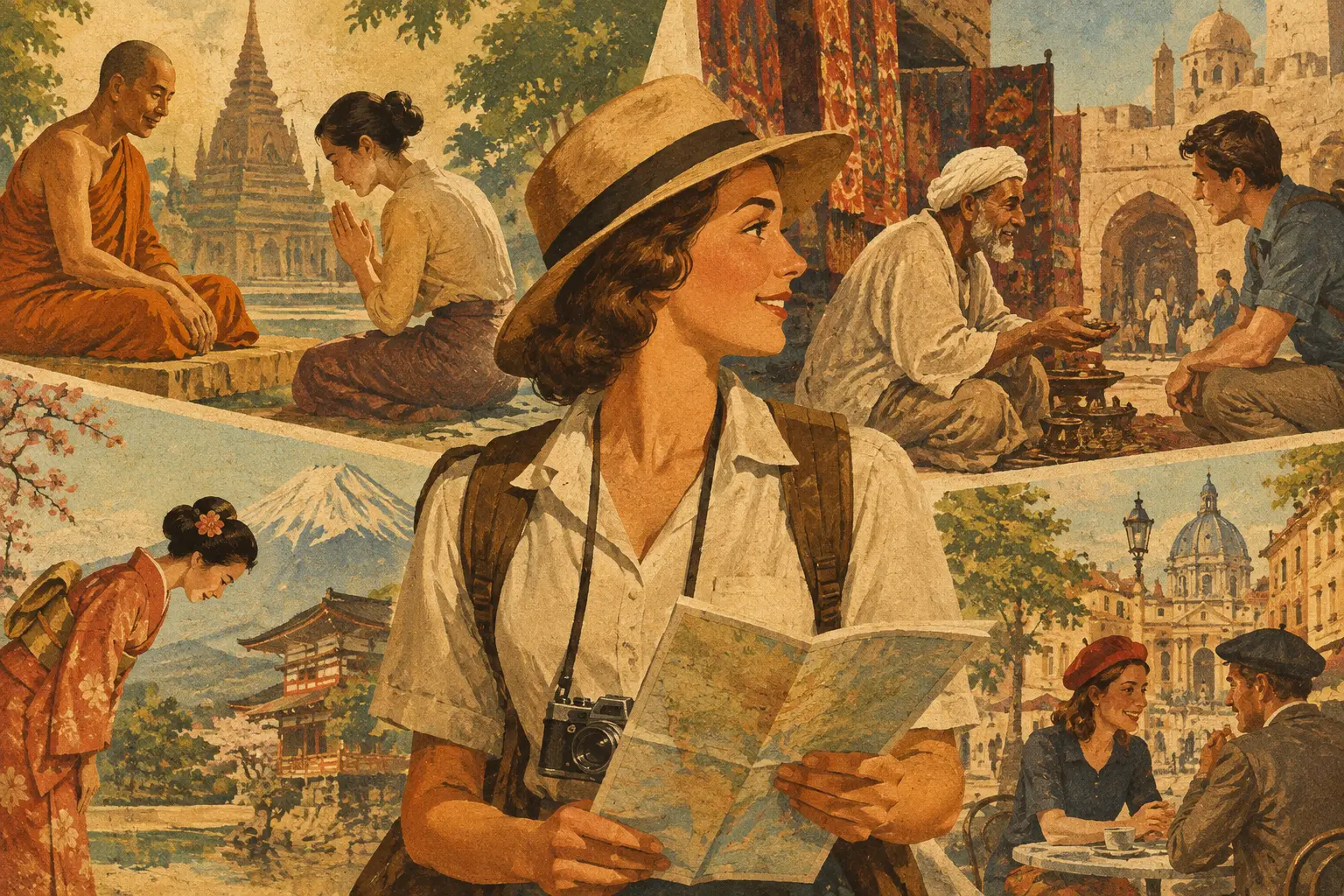
The best travel moments rarely arrive on a schedule. They happen when a shopkeeper laughs at your attempt to say hello, when a shared meal turns into a story, or when music drifting from a plaza makes you stop walking and simply listen. A good cultural etiquette guide helps create more of those moments – not by making you nervous about every move, but by helping you show up with genuine curiosity and respect.
For travelers who love great food, local rhythm, breathtaking views, and the feeling of being welcomed into a place, etiquette is not a set of stiff rules. It is part of the experience. It tells people, without a big speech, that you see their home as more than a backdrop for your vacation photos.
Start With Curiosity, Not Confidence
Travel can make us feel like we need to have all the answers before we arrive. The truth is, nobody expects a visitor to understand every custom perfectly. What people often notice is your attitude. Are you paying attention? Are you willing to learn? Can you accept a correction without getting defensive?
Before visiting a destination, learn a few basics: how people greet one another, what clothing is appropriate in religious or formal spaces, whether tipping is customary, and how public behavior is generally perceived. A little preparation goes a long way, especially when it saves you from treating a meaningful tradition like a novelty.
Language is one of the warmest places to begin. Learn hello, thank you, excuse me, and a polite way to ask for help. Your accent does not need to be perfect. A sincere attempt often opens the door to a smile, a recommendation, or an impromptu mini-lesson that becomes part of the memory.
There is a useful balance here. Do your homework, but do not turn every interaction into a performance of how informed you are. Listen more than you explain. When someone offers context about their city, family recipe, neighborhood, or history, let that be the center of the conversation.
A Cultural Etiquette Guide for Everyday Moments
Many cultural misunderstandings happen in ordinary situations: entering a home, ordering lunch, stepping into a market, or waiting in line. Those small moments matter because they are where local life is actually happening.
Greetings Set the Tone
A handshake may be common in one place, while a bow, cheek kiss, nod, or verbal greeting is more appropriate somewhere else. Watch how locals greet one another, particularly across different ages and genders, then follow their lead. If someone extends a hand, respond. If they keep a little more physical distance, respect it.
Names deserve attention, too. In some cultures, using a first name right away can feel overly familiar. In others, titles communicate respect. When you are unsure, use the name and form of address a person gives you. This sounds simple, but it signals that you are meeting someone on their terms rather than forcing your own habits into the exchange.
Dress for the Place You Are Entering
Travel style can be expressive and fun, but context matters. Beachwear may be completely normal near the water and feel disrespectful a few blocks away in a temple, church, mosque, shrine, or family-owned restaurant. Carrying a light layer, scarf, or more modest option is an easy way to stay ready for whatever the day brings.
This is not about erasing your personality. It is about recognizing that certain spaces hold spiritual, historical, or community significance. Dressing with care says, “I understand this place is not here solely for me.”
Be Thoughtful With Volume and Space
Americans often travel with a naturally friendly, energetic style. That warmth can be wonderful, especially when it comes with awareness. In some places, public conversation is lively and loud; in others, trains, restaurants, residential streets, and sacred sites are quieter spaces.
Notice the room. If everyone around you is speaking softly, lower your voice. If people are standing close together in a busy market, do not assume personal space works exactly as it does at home. Observing first is one of the most reliable travel skills you can carry.
Let Food Be a Conversation, Not a Checklist
A meal can reveal more about a destination than a dozen landmarks. It carries migration, celebration, climate, family history, and pride. That is why food etiquette is about more than knowing which fork to use.
When you are invited to share a meal, arrive on time unless the local custom suggests a more relaxed approach. Follow the host’s lead before eating, especially if there is a toast, blessing, or moment of welcome. In many settings, it is polite to try what is offered, but dietary needs are real. Explain them graciously and early, without making the table feel like an inconvenience.
At markets and small food stalls, remember that photographing a beautiful dish is different from photographing the person who made it. Ask first. A quick smile and gesture toward your phone can work when language is limited. If the answer is no, enjoy the food with your eyes and taste buds instead of treating that answer as a missed piece of content.
Also, resist the urge to label unfamiliar food as “weird.” If something is new to you, say it is new to you. That tiny shift keeps your experience personal without judging a dish that may be deeply loved by the people around you.
Photograph People With Permission
Travel is visual. We want to capture the colorful street, the chef at work, the dancers in motion, and the once-in-a-lifetime view from the ship or shoreline. But a camera changes an interaction. It can turn a person into scenery if we are not careful.
Ask before taking a close photo of an individual, vendor, performer, child, or religious participant. This is especially important in communities where photography carries spiritual, political, or personal concerns. A person may be dressed beautifully for a ceremony, but that does not automatically mean the ceremony is available for public consumption.
The same thoughtfulness applies after the photo is taken. Consider what you share and how you caption it. Avoid reducing a neighborhood to poverty, chaos, or “hidden gem” language that makes local residents disappear from their own story. Share what you learned, what you tasted, or how a moment made you feel – without claiming to define an entire culture after a short visit.
When a Photo Is Not the Right Move
There are moments best held without a screen: places of worship during active prayer, memorials, difficult community situations, and intimate family gatherings. If you feel unsure, pause. A memory does not become less real because it never reaches your camera roll.
Enjoy Music Without Taking It Out of Context
Music is one of the fastest ways to feel connected while traveling. A brass band in New Orleans, a percussion circle in the Caribbean, a late-night jazz set, or a local singer in a small café can tell you something powerful about a place.
Bring your enthusiasm, but remember that music may carry histories and meanings you do not immediately know. If you join a dance floor, watch the rhythm and personal boundaries before jumping in. If you hear a song that moves you, ask about it. Musicians and locals are often delighted to share the story behind a genre, instrument, lyric, or tradition.
Supporting artists matters, too. Attend performances when you can, respect house rules, and avoid recording an entire set unless the venue or performers clearly welcome it. Applause, attention, and a genuine thank-you are part of being a good audience member anywhere.
Respect the Crew, Guides, and People Who Make Travel Happen
On a cruise, at a resort, during an excursion, or inside a family-run guesthouse, hospitality workers are often the people who make the trip feel effortless. That does not mean their work is effortless. Greet them, learn names when appropriate, be clear and patient with requests, and remember that friendliness is not an invitation to cross personal boundaries.
The same applies to local guides. A guide is not just there to point at landmarks. They may be sharing complicated history, personal experience, and knowledge built over a lifetime. Ask thoughtful questions. Tip according to local norms and the service provided. If you need to raise a concern, do it directly and respectfully rather than venting publicly before giving someone a fair chance to address it.
When You Make a Mistake, Keep It Graceful
You will eventually get something wrong. Maybe you use the wrong gesture, step where you should not, mispronounce a word, or wear shoes into a space where they should have come off. It happens.
The best response is usually brief: apologize, correct the behavior, and move forward. Do not make the moment bigger by demanding reassurance or turning it into a dramatic story about your embarrassment. The goal is not perfection. The goal is consideration.
That mindset makes travel feel lighter. You can be open, joyful, and fully yourself while still leaving room for the customs of the people welcoming you.
The next time a destination surprises you, let the surprise be an invitation. Taste slowly, listen closely, ask kindly, and leave space for people to tell their own stories. That is where the real adventure begins – and it is the kind of travel memory worth carrying long after the music fades.
Leave a Reply