
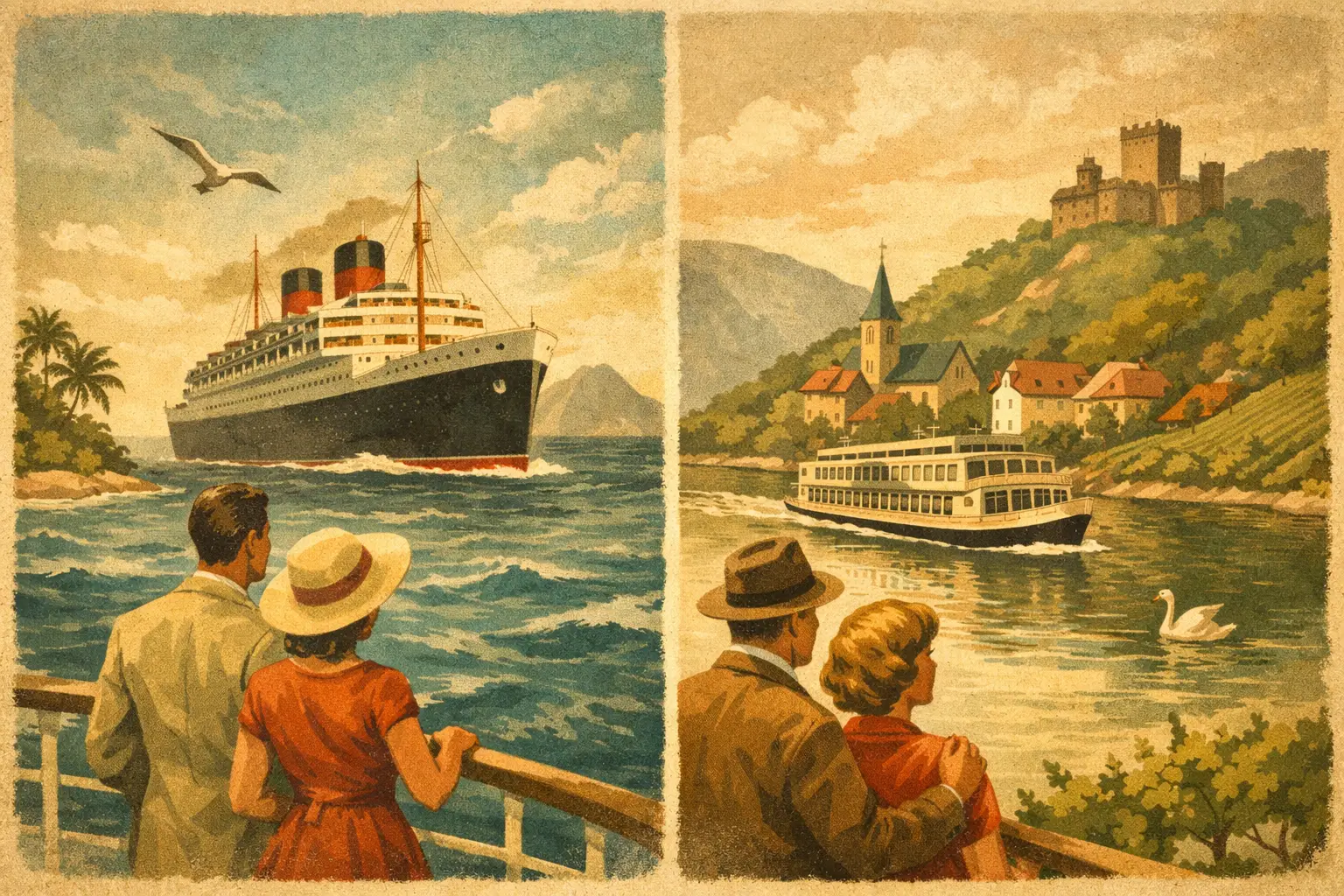
A cruise can be a floating resort with a show-stopping theater, a late-night band, and a sea view that seems to go on forever. Or it can feel like a moving window into vineyards, medieval towns, and café-lined riverbanks. That is the real choice behind ocean cruises versus river cruises: not simply ship size or itinerary, but the kind of story you want to bring home.
For travelers who love culture, great food, lively entertainment, and the feeling that every day has its own soundtrack, both can be unforgettable. They just create their magic in very different ways.
Ocean cruises versus river cruises: the big difference
Ocean cruises travel across open water and typically call on coastal cities, islands, and beach destinations. Think Caribbean sunsets, Mediterranean ports, Alaska glaciers, or the energy of a private island day. The ships range from intimate luxury vessels to spectacular floating resorts carrying thousands of guests.
River cruises follow inland waterways, often stopping right in the heart of historic destinations. A Danube sailing may connect Budapest, Vienna, and smaller Austrian towns. A Rhine itinerary can pair storybook castles with wine country. In the United States, river cruising can bring travelers through the Mississippi River region, New England, or the Pacific Northwest with a strong sense of local history.
The simplest way to picture it is this: ocean cruising is often about the ship and the sea as much as the destinations. River cruising is usually about being close to the places you visit, with the ship serving as a comfortable, stylish home between experiences.
The onboard vibe: big-stage energy or intimate evenings?
This is where your travel personality matters most.
On an ocean cruise, the ship can be an entire entertainment district. Depending on the cruise line, you may find Broadway-style productions, live bands, DJs, comedy shows, casinos, cooking classes, waterslides, spas, sports courts, and multiple lounges with completely different moods. One evening might start with sushi, continue with a piano bar, and end with dancing under the stars. For travelers who like options and enjoy meeting people from every corner of the country and world, that energy is part of the fun.
Ocean ships also tend to offer more dining variety. You might choose between a steakhouse, Italian restaurant, seafood spot, buffet, café, cocktail bar, and casual poolside grill – sometimes all in one day. Food can become its own little adventure, especially on lines that highlight chef partnerships or destination-inspired menus.
River ships are smaller, calmer, and more social in a low-key way. There may be a lounge with live piano, a local music performance, a wine tasting, or a themed dinner rather than a packed schedule of simultaneous events. The atmosphere often makes it easier to recognize fellow travelers, trade stories after an excursion, and enjoy an unhurried nightcap as the lights of a riverside town drift by.
Neither approach is automatically more luxurious. Luxury can mean champagne in a grand ocean-suite lounge, but it can also mean stepping off a river ship and walking into a centuries-old town before the crowds arrive. The better fit depends on whether your ideal evening calls for applause and a full dance floor or a glass of wine and a conversation that lasts longer than planned.
Destination access changes the entire trip
An ocean cruise can cover a remarkable amount of ground. You could wake up in a new Caribbean island, spend a day snorkeling or exploring colorful markets, then sail overnight toward the next port. That movement creates a wonderful feeling of escape. Sea days also give you permission to slow down, enjoy the ship, and let the horizon do its thing.
There is a trade-off. Many ocean ports require a drive, shuttle, or organized tour to reach the city center or a major attraction. In some destinations, several ships may arrive at once, which can make popular areas feel busy. Smart planning helps: book a smaller-group excursion, explore beyond the most obvious sights, or choose an itinerary with longer port stays.
River cruising has a different advantage: proximity. Ships often dock within walking distance of town centers, so a morning bakery stop, a historic square, or a local market can be right outside. You spend less time getting from ship to shore and more time soaking up the everyday texture of a place.
That close access is especially appealing to culturally curious travelers. Imagine hearing a local ensemble perform in Vienna after seeing the city’s grand concert halls, tasting regional cheese in France, or strolling through a festive market along the Rhine. River itineraries tend to make those smaller, beautifully specific moments easy to reach.
Still, river routes are naturally more limited by geography. They cannot offer the tropical beaches of the Caribbean, the dramatic scale of Alaska, or the vast coastal variety of a Mediterranean sailing. If your dream trip includes ocean air, island hopping, and that thrilling moment when land disappears behind the ship, an ocean cruise has a pull all its own.
Pace, planning, and the kind of traveler you are
Ocean cruises often suit groups with different interests. One person can spend the morning at the spa, another can join a trivia game, and someone else can claim a pool chair with a book. Families, multigenerational groups, and friends celebrating a milestone may appreciate that flexibility. There is usually enough happening that nobody has to enjoy the day in exactly the same way.
River cruises generally have a more coordinated rhythm. Many guests take the included or optional guided excursions, return for meals around similar times, and gather in the lounge later in the day. That can feel wonderfully effortless for couples, solo travelers, and anyone who would rather spend less energy comparing dozens of activity choices.
Mobility deserves an honest mention, too. River destinations can involve cobblestones, hills, walking tours, and historic buildings without elevators. Ocean cruises can also require walking through large ships and navigating substantial ports, but they often provide more accessible onboard amenities and a wider range of excursion intensity. The right choice is personal, so review a specific itinerary rather than assuming one style is easier.
Weather and water conditions are another part of the equation. Ocean voyages can encounter rough seas, though modern ships have stabilizers and many travelers are comfortable with medication or motion-sickness remedies. River cruising tends to feel smoother, but water levels can affect routes in very dry or rainy seasons. Travel always has a little improvisation in it, and that is worth embracing with the right expectations.
What do ocean and river cruises cost?
Comparing prices can be tricky because the fare structure is different. Ocean cruises may advertise a lower starting price, especially for popular destinations and larger ships. However, the final cost can rise once you add specialty dining, drink packages, Wi-Fi, gratuities, excursions, and transportation to the departure port.
River cruises often look more expensive at first glance, but many include more in the base fare, such as guided shore experiences, Wi-Fi, beer and wine with meals, or transfers. In other words, river cruising can feel more inclusive, while ocean cruising can give you more room to tailor the trip to your budget and priorities.
The best comparison is not the headline fare. Price out the full experience you actually want. If you love premium restaurants, cocktails, spa time, and private excursions, build those into an ocean-cruise estimate. If you prefer a polished itinerary with cultural tours already arranged, look carefully at what the river fare includes.
Choose the voyage that matches your rhythm
Choose an ocean cruise if you want variety, larger-than-life entertainment, broad destination choices, and plenty of time to enjoy the ship itself. It is a great fit for beach lovers, families, celebratory groups, and travelers who see a sea day as a feature, not a gap between ports.
Choose a river cruise if you want a more intimate ship, destination-focused days, easy access to historic town centers, and a quieter evening pace. It is ideal for travelers who want food, music, art, architecture, and local stories to take center stage.
And if you are torn, that may be the best sign of all. Your first cruise does not have to define every cruise after it. Start with the journey that feels most exciting right now, then keep the other one waiting for its moment. Whether the soundtrack is waves against the hull or a street musician beside a European square, the right voyage is the one that makes you feel fully present in the adventure.