
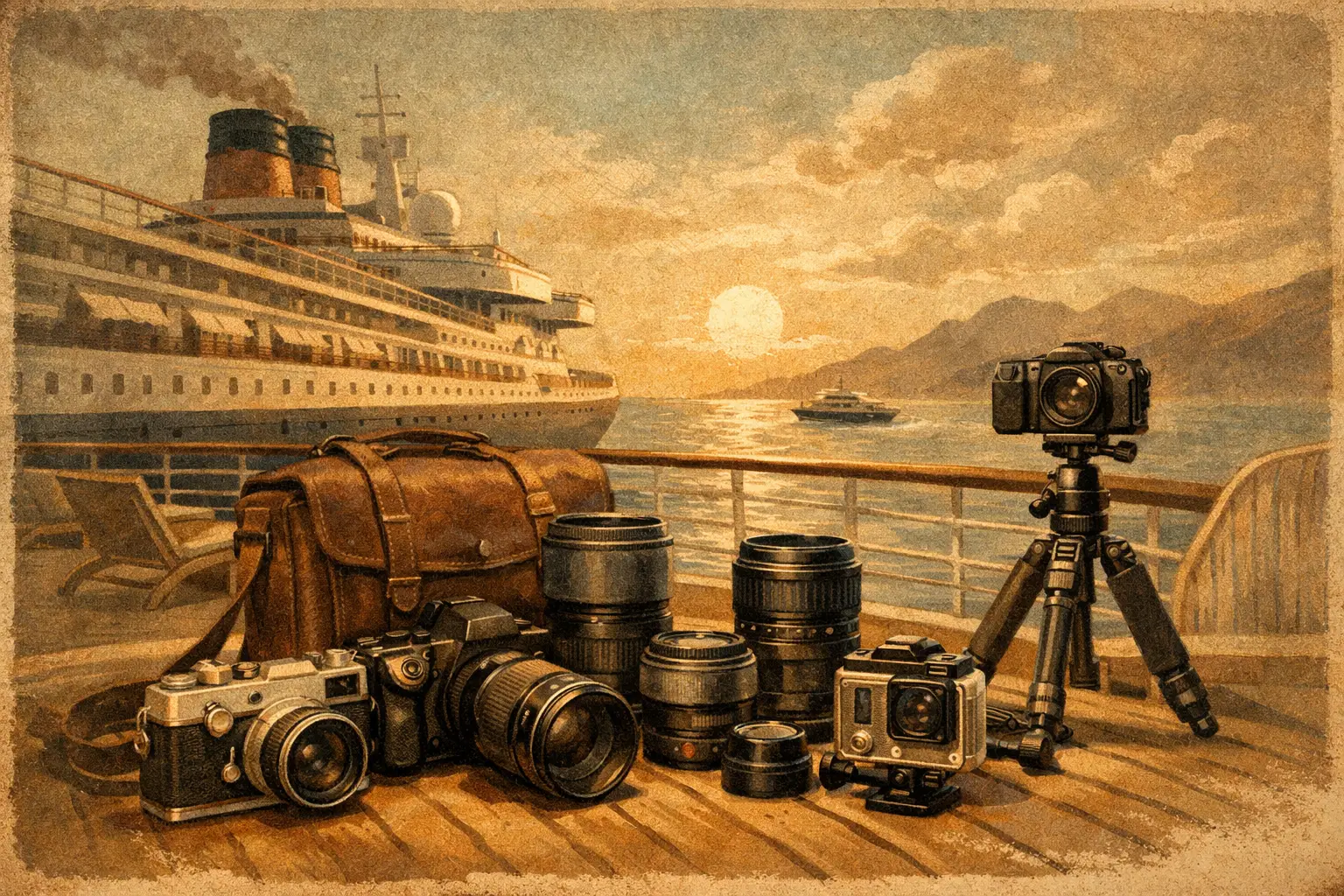
A cruise ship at blue hour gives you about ten minutes to get the shot: warm deck lights, a deepening sky, a cocktail catching the last color of sunset, and music drifting from somewhere nearby. That is why this luxury cruise camera gear review is less about carrying the biggest kit and more about choosing gear that keeps you present for the moment while ready to tell the story.
On a luxury sailing, the visual opportunities are everywhere. There are sweeping sail-aways, elegant dining rooms, colorful port markets, live performances, quiet balcony mornings, and the kind of food presentation that deserves more than a quick snapshot. But ships also bring changing light, wind, salt air, compact cabins, and formal spaces where an oversized camera setup can feel like a distraction. The best gear earns its place in your bag by being versatile, polished, and easy to use.
Luxury Cruise Camera Gear Review: What Matters Most
Before comparing cameras, think about the stories you want to bring home. If your goal is a beautiful personal travel journal, a phone plus a small camera may be all you need. If you create videos for YouTube, Instagram, or a newsletter community, reliable audio and stabilization become just as meaningful as image quality. If food, music, and destination culture are part of your travel rhythm, you need a kit that moves easily from a dim lounge to a sunlit shore excursion.
For most luxury cruise travelers, five qualities matter more than chasing every new specification: strong low-light performance, dependable stabilization, weather awareness, natural color, and a size you will actually carry. A technically brilliant camera left in the cabin cannot capture the saxophonist in the lounge or the first plates arriving at the chef’s table.
There is also a quiet luxury to traveling light. You should be able to step into an elegant dining room, walk a historic port, or settle into a poolside afternoon without feeling like a production crew of one.
The Best Camera Type for Life at Sea
Your phone is the camera you will use most
A current flagship smartphone is the starting point for nearly every traveler. It is fast, discreet, water resistant, and exceptional for spontaneous moments: a sail-away selfie, a quick video of a live band, a room reveal, or a plate of handmade pasta arriving with a flourish. Computational photography also handles bright deck skies and shadowy interiors surprisingly well.
The trade-off is that phones can struggle with distant wildlife, dramatic stage lighting, and the creamy background separation that makes portraits and food images feel more cinematic. They can also become awkward when you need cleaner audio or longer filming sessions. Bring a slim power bank and keep it in a small day bag. A phone shooting photos, maps, restaurant notes, and video clips can drain faster than expected on a long port day.
A premium compact is the easy upgrade
For travelers who want richer images without a shoulder bag, a premium compact camera is the sweet spot. Models in the Sony RX100 series, Canon PowerShot G7 X line, and similar compact cameras offer a larger sensor than a phone, useful zoom range, and enough manual control to grow with your creativity.
This is a particularly smart choice for a luxury cruise because it looks unobtrusive. It fits in a jacket pocket or small crossbody, handles a sunset better than most phones, and lets you capture a plated meal without making the table feel like a studio set. Look for a fast lens, ideally f/1.8 or close to it, plus dependable video stabilization.
The compromise is reach. A compact is wonderful for deck scenes, city walks, and close food details, but it will not replace a long lens when dolphins appear off the bow or when you want a close frame of a performer from the back of a theater.
Mirrorless cameras give creators more room to play
A mirrorless camera is worth bringing when photography or video is central to your trip. Full-frame options such as the Sony A7C series, Canon EOS R8, or Nikon Zf offer beautiful low-light footage and strong portrait quality. APS-C models, including the Fujifilm X-S20, Sony a6700, and Canon EOS R10, are lighter choices with plenty of creative range.
For cruise storytelling, the body matters less than the lens you pair with it. A lightweight 24-70mm equivalent zoom is the most practical single-lens choice. It can capture a broad ocean view, a couple at dinner, and a close detail of a chef finishing a dish. On APS-C systems, a 16-55mm or 18-50mm equivalent zoom covers much of the same ground.
If you love low-light lounges, portraits, or food photography, add one small prime lens. A 35mm or 50mm equivalent with a wide aperture gives images a warm, intimate feel that suits candlelit dinners and live music. It also keeps the kit simple. Two lenses are plenty for most sailings; more than that can turn a vacation into luggage management.
Video Gear That Keeps the Experience Feeling Alive
Cruise footage becomes memorable when it includes movement and sound, not only scenic views. A small gimbal can make a walk through the atrium or along a waterfront promenade feel elegant, but it is not essential. Modern cameras and phones have excellent stabilization, and a gimbal takes time to balance, charge, and carry. Use one if smooth walking sequences are a core part of your content. Skip it if you prefer quick, candid clips.
An action camera is more useful than many people expect. A GoPro HERO, DJI Osmo Action, or similar model is ideal for pool decks, snorkeling, tender rides, rain, and windy open-air moments. Its wide perspective also works well for room tours and energetic dance-floor clips. Just remember that action cameras need good light to look their best. At night, use your phone or mirrorless camera instead.
Audio deserves a place in any serious luxury cruise camera gear review. The ocean, wind, and crowd noise can swallow a spoken introduction in seconds. A compact wireless microphone system, such as DJI Mic or Rode Wireless Micro, makes a major difference for room tours, port reflections, and creator-led videos. Add a small windscreen, often called a deadcat, for outdoor decks. It may not be glamorous, but it can save a clip that would otherwise sound like a hurricane.
For atmospheric storytelling, record a few moments without speaking: waves against the hull, a piano in the lounge, the clink of glasses at dinner, a market vendor greeting visitors. Those small sounds can carry viewers right into the experience.
Accessories That Actually Deserve Cabin Space
Do not overpack accessories, but do bring the pieces that prevent avoidable problems. A small microfiber cloth is essential because sea spray and fingerprints show up quickly against bright skies. Keep one in your day bag, not buried in your cabin. A compact weather-resistant pouch gives your camera protection during surprise rain in port and from mist on open decks.
A spare battery is more useful than a heavy charger brick, especially if you shoot video. For mirrorless cameras, bring at least two batteries beyond the one in the camera. For a phone, bring a power bank that can recharge it fully once or twice. Check your cruise line’s current battery and charging policies before packing, as rules can vary.
A mini tripod is another high-value addition. It is perfect for a balcony time-lapse, hands-free talking clip, or a couple’s portrait at golden hour. Choose a compact model with rubberized feet and avoid setting it up where it could block walkways or disturb other guests. Luxury travel content should feel considerate as well as beautiful.
Memory cards are easy to overlook until they are full halfway through a sea day. Carry two or three quality cards rather than one enormous card, and back up your favorite footage when possible. A compact SSD and phone-compatible card reader are helpful for creators, though casual travelers can simply clear space before boarding and shoot more selectively.
A Thoughtful Packing Setup for Different Travelers
The best kit is personal. A relaxed traveler might carry a phone, power bank, microfiber cloth, and small action camera for water days. A photo-minded cruiser could add a premium compact or mirrorless body with one versatile zoom. A creator documenting the full experience may want a mirrorless camera, fast prime lens, action camera, wireless mic, mini tripod, extra batteries, and a compact backup drive.
Notice what is missing: a giant tripod, several specialty lenses, and a bulky lighting setup. Ships are already full of gorgeous ambient light, designed interiors, and interesting human moments. Your job is to notice them, not overpower them.
How to Capture Luxury Without Making It Look Staged
The most shareable cruise images usually reveal a feeling rather than a price tag. Frame the anticipation of a covered dinner table before guests arrive. Capture the server’s final garnish, a friend’s laughter during a tasting, the light sliding across the wake, or the first colorful glimpse of a new port. Those details make a sailing feel lived in.
Shoot wide to establish the scene, then move closer for texture. In a dining room, start with the room’s glow, then photograph the menu typography, the pour of a sauce, and the expression of the person taking the first bite. During a show, respect the ship’s photography rules and let a short clip of applause tell the story if cameras are not permitted.
Most of all, put the camera down now and then. You cannot tell an emotionally rich story about a journey you never paused to enjoy. Pack the gear that supports your curiosity, leave room for surprise, and join the adventure with your eyes open before you raise the lens.