
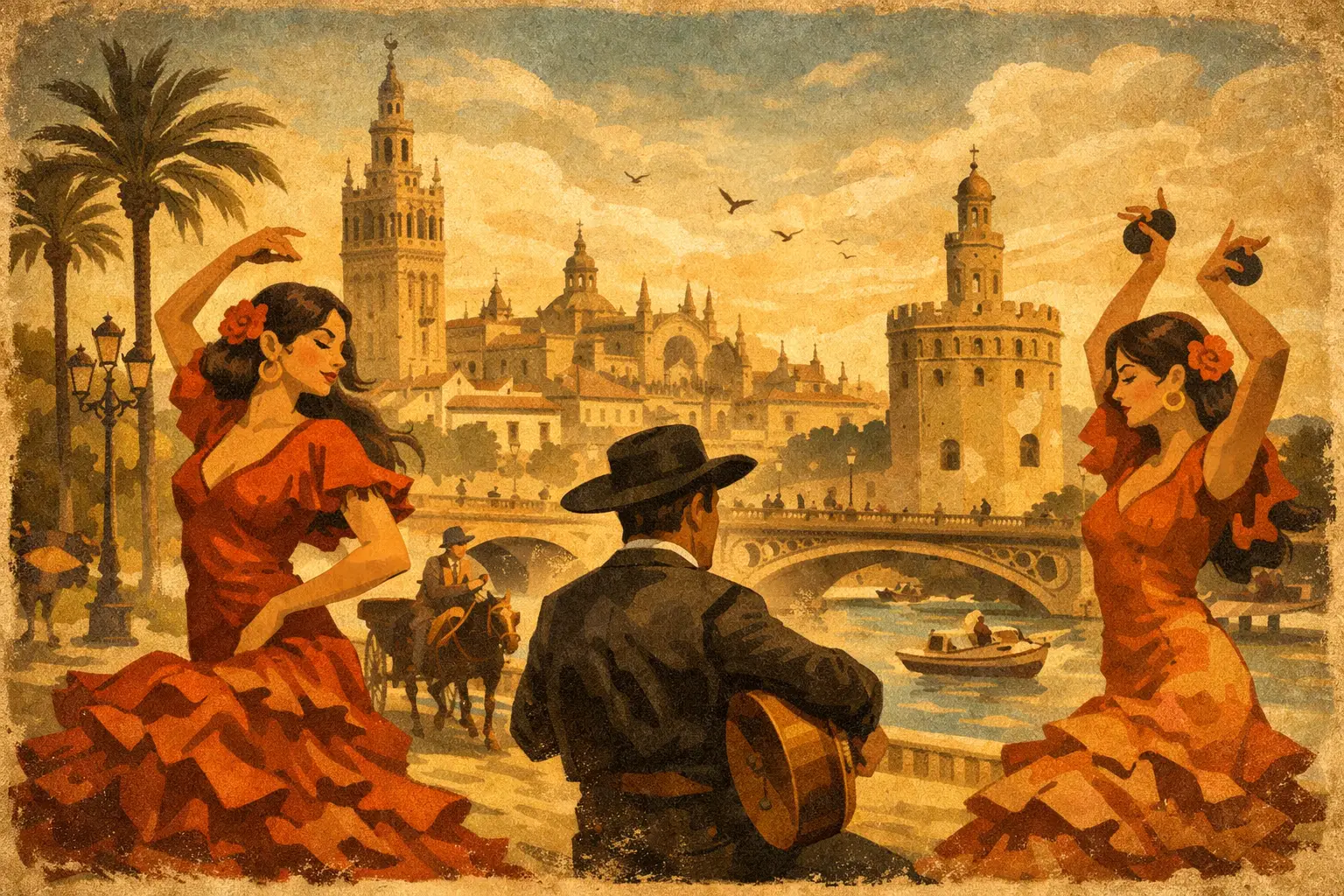
The first thing Seville gives you is a feeling. It might arrive in the shade of an orange tree, with the sound of a guitar drifting from somewhere you cannot quite see. It might be the heat rising from an old stone street or the sudden flash of a flamenco skirt in a dimly lit room. This is a city that does not rush to impress you. It pulls you in slowly, then has you replaying its moments long after you have gone home.
For travelers who want more than a checklist, Seville is a beautiful place to follow your senses. Come for the grand palaces and famous landmarks, absolutely. But leave room for long lunches, late dinners, neighborhood music, and the kind of aimless walk that turns into the best story of the trip.
Why Seville Feels So Alive
Seville is the capital of Andalusia, and its personality is impossible to separate from the region’s layered history. Roman roots, Moorish artistry, Catholic tradition, and centuries of trade all show up in the city’s architecture, food, and daily rhythm. Yet it never feels like a museum behind glass. The past is part of the scenery while real life keeps moving around it.
The city has a cinematic quality, especially in the golden hours before sunset. Whitewashed walls pick up a warm glow. Balconies spill over with flowers. Locals fill the sidewalks as temperatures cool, and dinner becomes less of a reservation and more of an evening plan. In Seville, a meal can easily begin late and still feel completely natural.
That rhythm is one of the reasons the city is so memorable. You do not need to pack every hour to feel like you experienced it. In fact, trying to race through Seville can make you miss its best notes. The magic often happens in the pauses: a cold drink on a plaza, a conversation at a bar, a singer warming up before flamenco begins.
The Landmarks That Earn Their Reputation
Some places are famous because they photograph well. Seville’s best-known landmarks photograph beautifully, but they also reward anyone willing to slow down and look closer.
The Real Alcázar is a perfect example. Its courtyards, tilework, carved arches, and gardens feel almost unreal in their detail. The Moorish influence is everywhere, and every room seems to offer another pattern, color, or quiet perspective. It is easy to understand why this palace has captured imaginations for generations. Go early if you can, not just for shorter lines but for a more peaceful experience of its intimate spaces.
Nearby, Seville Cathedral makes an entirely different statement. It is vast, dramatic, and full of weighty grandeur. Climbing La Giralda, the former minaret turned bell tower, gives you a sweeping view across the city rooftops. The climb is a series of ramps rather than a traditional staircase, making the journey feel like a gradual reveal. At the top, Seville stretches out in every direction, with its domes, courtyards, and palm trees under that famous Andalusian sky.
Then there is Plaza de España, a place that somehow feels both monumental and playful. Curved buildings embrace a broad plaza, ceramic tiles celebrate Spain’s provinces, and boats glide through the canal. It can be busy, especially in the middle of the day, but the scale makes it worth seeing. Arrive in the morning or closer to sunset when the light brings out the warm tones of the brick and tile.
Let the Neighborhoods Set the Pace
The most intimate version of Seville appears once you step away from the biggest sights. Santa Cruz, the old Jewish quarter, is a maze in the best sense. Narrow passageways open unexpectedly onto little plazas, fountains, and tucked-away cafes. It is popular for a reason, so it can feel crowded, but an early walk there is still wonderfully atmospheric.
Across the Guadalquivir River, Triana has a different energy. Historically associated with ceramic makers, sailors, and flamenco artists, this neighborhood feels proud, social, and slightly more lived-in. Its colorful facades and river views make it a wonderful place to wander before dinner. Pop into a ceramics shop, take your time along Calle Betis, and watch the city lights begin to flicker across the water.
For a more local-feeling afternoon, the Alameda de Hércules offers a relaxed, creative scene with restaurants, bars, and people out enjoying the day. This is where Seville feels less formal and more spontaneous. You may find a lively terrace, a small performance, or simply the pleasure of sitting among people who have nowhere else they need to be.
Flamenco Is More Than a Performance
You can visit Seville without seeing flamenco, but you would miss one of the city’s deepest emotional languages. Flamenco is not background entertainment here. At its best, it is an intense conversation between singing, guitar, rhythm, movement, and feeling.
A great flamenco experience can be surprisingly intimate. The room may be small. The performer may be close enough for you to see every expression and hear the sharp punctuation of shoes against the floor. The singing can sound raw, even mournful, before the guitar brings warmth or speed back into the room. You do not need to understand every word to understand the emotion.
There is a trade-off worth considering. A polished theater show can be visually spectacular and easy for first-time visitors to enjoy. A smaller tablao may feel more personal and less produced. Neither is automatically better. It depends on whether you want a big night out or an up-close encounter with the art form. Either way, go in ready to listen, not just take photos.
A Seville Food Story Happens One Plate at a Time
Seville’s food culture makes a strong case for keeping your plans flexible. Tapas are not just small plates to check off a menu. They are an invitation to stay longer, share more, and let the night evolve naturally.
Start with jamón ibérico, especially if you have never tasted the silky, rich version sliced fresh at a good bar. Try espinacas con garbanzos, a comforting dish of spinach and chickpeas seasoned with garlic, cumin, and paprika. Salmorejo, a chilled tomato soup with a velvety texture, is a welcome answer to a warm afternoon. And if you see carrillada, slow-cooked pork cheek, it is usually worth ordering.
The best approach is to avoid treating every meal like a mission. Choose a busy bar, stand at the counter if there is room, and order a couple of things at a time. Notice what locals are eating. Let one plate lead to the next. A glass of sherry from nearby Jerez belongs in the conversation too, especially for travelers curious about a flavor that feels tied to this part of Spain.
Save space for something sweet. Seville’s pastry counters can tempt you with flaky, sugar-dusted treats, while an afternoon coffee provides a welcome reset between sightseeing and evening plans. This is not a city that asks you to be efficient with food. It asks you to enjoy it.
The Practical Side of a Dreamy City
Seville is highly walkable, which is part of its charm, but the weather matters. Summers can be intensely hot, especially from midday through late afternoon. If you are visiting in the warmer months, build your day around the sun: explore early, rest when the heat peaks, then return outside as the city comes alive at night.
Spring and fall offer especially pleasant conditions, though spring brings larger crowds during major celebrations like Semana Santa and Feria de Abril. Those events can be extraordinary if you want color, tradition, music, and energy. They can also mean higher demand and a city operating on a very particular schedule. For some travelers, that is the dream. For others, a quieter week will offer more room to wander.
Comfortable shoes are nonnegotiable on Seville’s cobblestones. So is a willingness to adjust your timing. Shops may close in the afternoon, dinners begin later than many Americans expect, and the city’s most beautiful moments are often after the daytime crowds thin out. Rather than fighting that rhythm, join it.
Let Seville Give You a Memory, Not Just an Itinerary
The real joy of Seville is that it makes culture feel physical. You hear it in handclaps and guitar strings. You taste it in olive oil, sherry, and a late-night plate passed across a table. You see it in painted tiles, river reflections, and a woman dressed for an evening stroll.
Give yourself permission to leave an hour unplanned. Follow the music down a side street. Choose the restaurant with laughter spilling from the doorway. Sit in a plaza until the light changes. Seville has a way of meeting curious travelers halfway, and that is where the adventure becomes personal. Join the feeling, carry the rhythm with you, and let the city stay in your heart long after the last flamenco note fades.