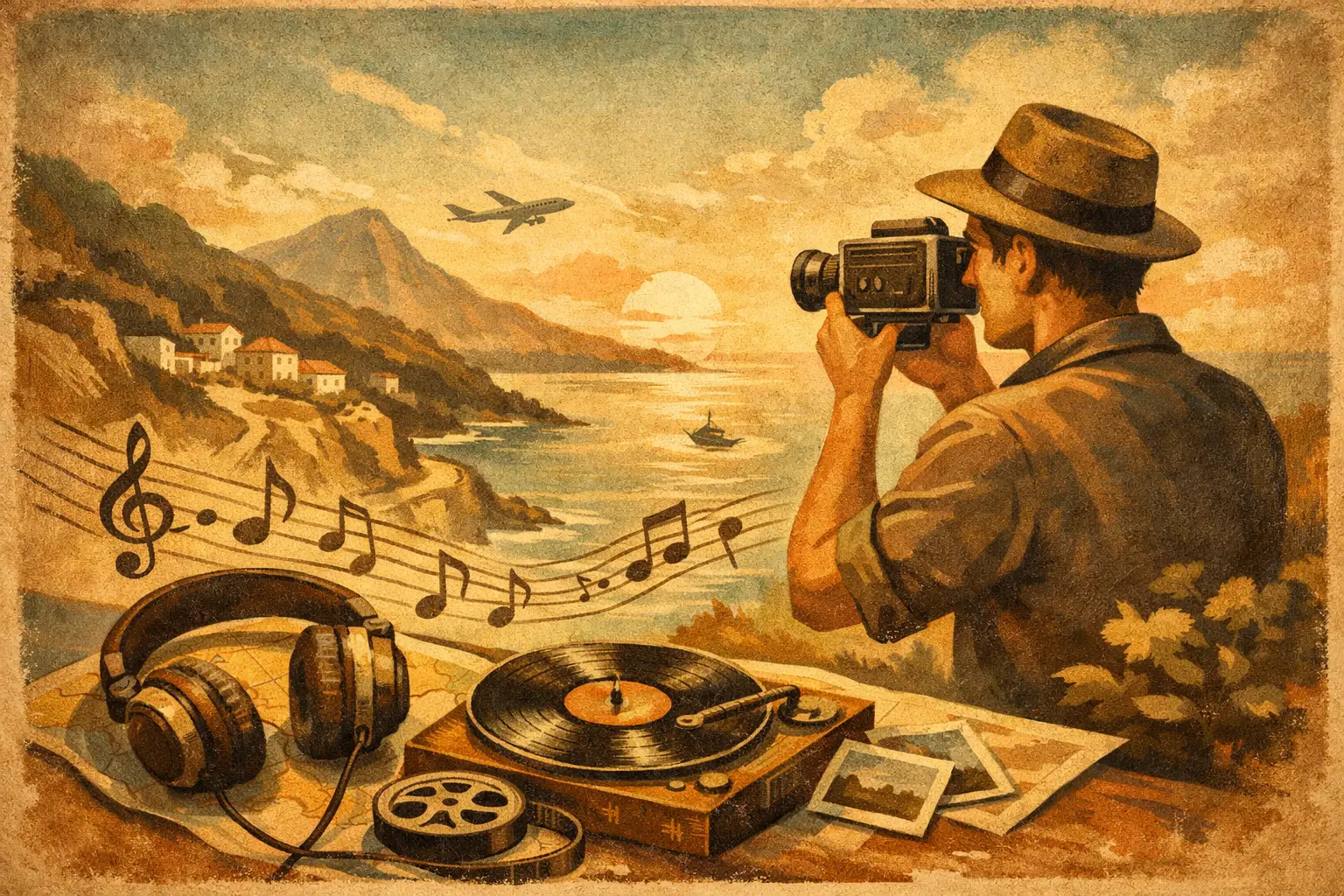
A sunrise at sea can be beautiful on its own. Add the right warm, rising track as the horizon opens, and suddenly it feels like a beginning. That is the real answer to “can music improve travel videos?” Yes, but not because music simply makes footage more exciting. It gives images emotional direction. It tells viewers whether a destination feels playful, peaceful, glamorous, mysterious, or deeply personal.
For travel creators, music is not background decoration. It is part of the storytelling. A great soundtrack can connect a lively market, a quiet coastal walk, a beautiful meal, and a breathtaking cruise departure into one experience people can feel from their screens.
How Music Can Improve Travel Videos
Travel footage often arrives full of visual variety. One moment you are walking through a colorful neighborhood, the next you are tasting something unforgettable, then watching city lights fade from a ship deck. Without an emotional thread, even gorgeous clips can feel like a highlight reel instead of a journey.
Music provides that thread. Rhythm creates momentum, melody adds atmosphere, and changes in a song can help a video move naturally from one chapter to the next. A light acoustic groove may make a morning café feel intimate. A bright, percussion-driven track can bring real energy to a street festival. A slower instrumental piece can give viewers room to take in a mountain view or a sunset over the water.
The key is that the music should support the feeling already present in the scene. If a clip is calm and reflective, an oversized party anthem may pull viewers out of the moment. If you are sharing a joyful food crawl with friends, a somber piano track can make the energy feel oddly disconnected. The best choices make the audience feel that the sound and image belong together.
Music Creates a Sense of Place
A soundtrack can also make a destination feel more specific. That does not mean every video needs an obvious musical stereotype. In fact, relying on clichés can flatten a culture into a postcard. Instead, think about the qualities of the place and moment: the pace, texture, color, warmth, and movement.
For a bustling port city, you might choose a track with a confident beat and bright instrumentation. For a luxurious evening onboard, a smooth, polished groove may fit the mood. For a historic district, a cinematic instrumental arrangement can add a sense of wonder without pretending to define the local culture.
When possible, leave room for the destination’s real sounds, too. Street musicians, waves against the shore, laughter around a table, a train arriving, or the soft hum of a ship at night can make a video feel lived-in. Music does not have to replace natural sound. Often, the most memorable edit lets them work together.
Choose Music for the Story, Not Just the Trend
It is tempting to start with whatever song is popular on social media. Trends can help a short video feel timely, and they may give viewers a familiar entry point. But a trending sound is only useful when it genuinely fits the story you are telling.
A travel video has a longer shelf life than a quick trend. You may want someone to watch your Lisbon food adventure, Caribbean cruise day, or hidden-gem city guide months from now and still feel transported. A carefully selected track can do that. A trend used only because it is popular may date the video fast.
Start by asking one simple question: What should viewers feel when this video ends? Maybe you want them to feel energized enough to plan their own trip. Maybe you want them to feel calm, curious, hungry, or grateful for the chance to see somewhere new. Pick music that leads toward that emotional destination.
Then consider pace. Fast cuts pair naturally with upbeat music, but not every travel video needs to move at full speed. Slower pacing can be powerful when you are showing a meaningful meal, a scenic sailing, or a quiet moment of discovery. Let the destination breathe. Sometimes the strongest choice is a track that gives a beautiful shot an extra second or two to land.
Match Key Moments to the Beat
You do not need to be a professional editor to make music feel intentional. One of the easiest techniques is cutting major visual changes on the beat. Try bringing in a wide destination reveal when the chorus begins, switching from a cabin tour to the open deck on a musical lift, or showing the first bite of a standout dish on a playful beat drop.
This small bit of timing makes a video feel more polished because the audience senses the rhythm, even if they cannot explain why the edit feels satisfying. It also helps create anticipation. When the music builds, viewers expect something to happen. Give them a reveal worth waiting for.
Do not force every cut onto the beat, though. A constant pattern can become predictable. Mix rhythmic edits with longer shots, especially when the landscape or human moment deserves attention. Travel is not only about movement. It is also about noticing.
Let Music Support Your On-Camera Personality
Personality-led travel content works because viewers are not just visiting a place through a camera. They are experiencing it with a host. Your reaction to a new flavor, your excitement before stepping ashore, and your honest pause in front of an incredible view are all part of the story.
Music should make that personality clearer, not compete with it. If you are speaking to the camera, lower the track enough that every word is easy to understand. If the moment is funny or spontaneous, choose something that complements the humor without turning it into a cartoon. If you are sharing something sincere, do not be afraid of a softer score and a little quiet.
At Musical Smile Guy, the most engaging travel stories live where music, culture, and food meet. The soundtrack can be the bridge between them. It can carry us from the excitement of arriving in a new destination to the simple joy of sharing a meal, all while keeping the creator’s point of view front and center.
The Trade-Off: Great Music Still Needs Permission
The perfect song is not always the song you can use. Copyright matters, especially when videos are part of a growing creator brand. A popular commercial song may work within certain platform libraries or personal posts, but usage rules can vary by platform, account type, region, and whether content is monetized.
Using licensed music, royalty-free music, or tracks from a platform’s approved library helps protect your work and keeps a video from being muted, restricted, or claimed later. It also gives you more freedom to reuse your content across YouTube, Instagram, newsletters, and future projects.
This does not mean approved music has to sound generic. Build a small collection of tracks that fit your recurring travel moods: uplifting arrival, sophisticated dining, playful exploration, reflective scenery, and celebratory nightlife. Over time, those choices can become part of your recognizable style.
When Less Music Makes a Video Better
Music is powerful precisely because it is not needed every second. A quiet pause before a first look at the ocean can create anticipation. The crackle of a local dish being prepared can be more delicious than any song. The cheers at a live performance or the natural rhythm of a city street may already have all the sound your scene needs.
Use music like seasoning in a memorable meal. It should bring out what is already there, not cover every flavor. If viewers can hear the world you are exploring, the video often feels more immediate and more honest.
The next time you edit a travel video, play it once without music and notice the emotional high points. Then choose a soundtrack that lifts those moments rather than overwhelms them. When the music, the destination, and your own sense of wonder move together, viewers will not just watch the trip. They will want to join the adventure.