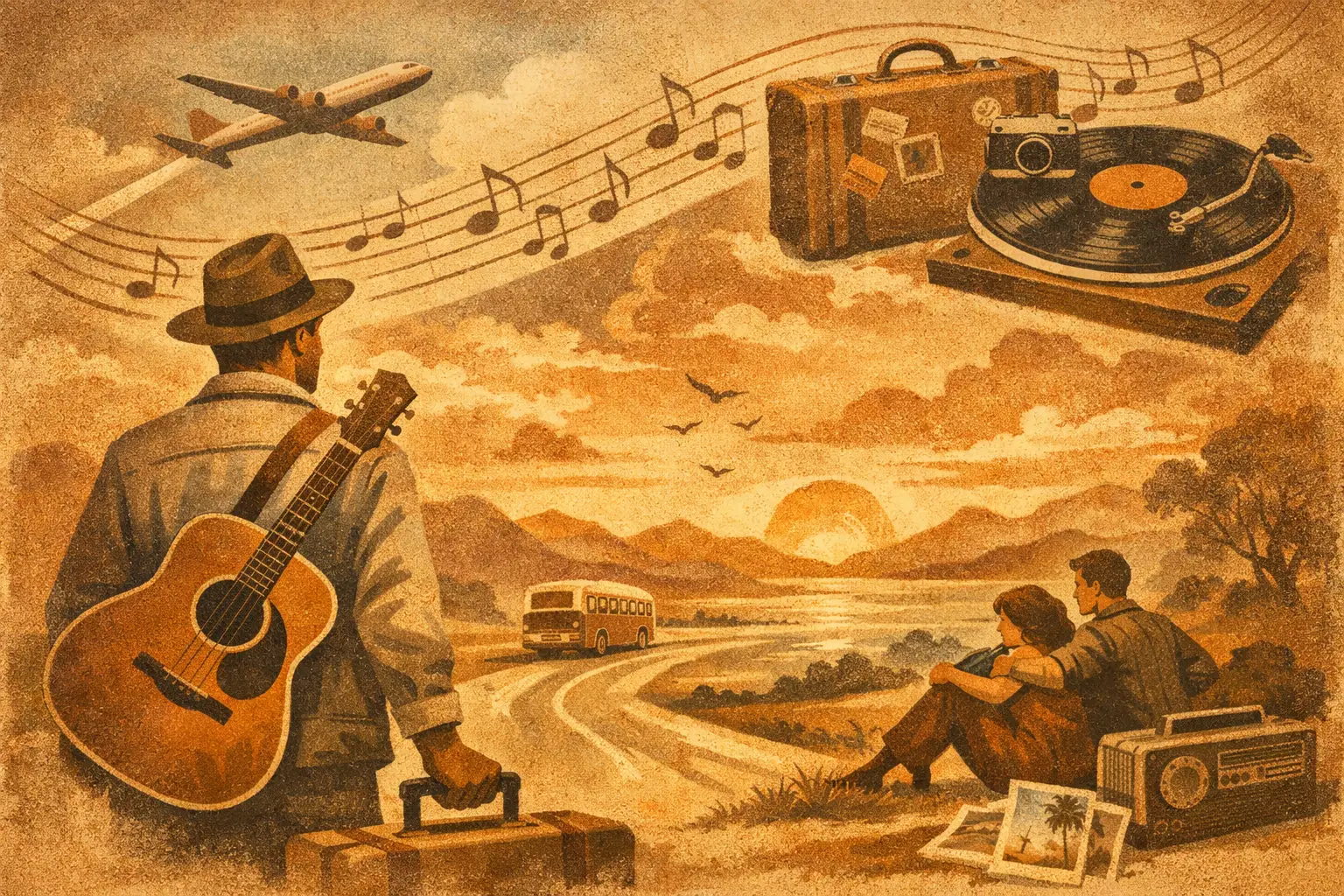
A ship pulls away from port as a brass band fades into the salt air. Somewhere below deck, a kitchen is prepping spices that will show up on tonight’s menu. On shore, a street musician is setting the rhythm for a neighborhood you have never seen before. That is where music travel storytelling begins: not with a checklist of attractions, but with the feeling that a place has its own soundtrack.
Travel becomes memorable when we can recall more than what we saw. We remember the song playing during a sunset sail, the clatter of plates at a family-run restaurant, the pulse of a city after dark, and the laugh we shared when plans changed for the better. Music gives those moments emotional shape. It turns a beautiful view into a scene and a meal into a memory worth retelling.
Why Music Travel Storytelling Feels So Personal
A destination can be photographed a thousand times, but no two people experience it in exactly the same way. Music is part of what makes that difference visible. The same coastal road feels completely different with a quiet acoustic track, a local radio station, or the natural sound of waves against the shore.
That does not mean every travel story needs background music added after the fact. Sometimes the most powerful sound is already there: a train arriving in a historic station, a crowd singing along at an outdoor festival, or forks tapping plates during a long lunch. The goal is not to force a mood. It is to notice the mood that already exists and let it lead the story.
For travelers who want more than logistics, this is the real joy. You are not just learning where to go. You are getting a sense of how a place moves, celebrates, eats, and welcomes people. A great story says, “Come with me,” then gives you enough texture to imagine yourself there.
Start With a Moment, Not the Map
The strongest travel stories rarely open with an itinerary. They open with a moment that has energy. Maybe it is the first bite of a dish you cannot pronounce yet. Maybe it is stepping onto a cruise deck before sunrise, coffee in hand, as the next island appears on the horizon. Maybe it is hearing a familiar song in an unfamiliar city and suddenly feeling completely at home.
That moment creates a natural entry point because it gives the audience something human to hold onto. Instead of saying a destination has “great culture,” show the local singer whose voice stopped you in your tracks. Instead of calling a meal unforgettable, describe the heat of the peppers, the music drifting from the next table, and the reaction around the table when everyone takes that first bite.
Details do the heavy lifting. A story becomes vivid when it includes the color of the market awnings, the sway of the boat, the bass coming through an open doorway, or the smell of grilled seafood near the harbor. These are not decorations. They are the proof that you were present.
Let the Destination Set the Tempo
Every trip has a rhythm. Some places invite you to slow down with a long meal and a wandering afternoon. Others move fast, with late-night energy, packed sidewalks, and music spilling into the street. Good storytelling pays attention to that tempo instead of treating every destination the same.
On a luxury cruise, for example, the pace can shift by the hour. One minute, you are dressed for an elegant dinner with live music in the background. The next, you are barefoot at a beach bar, listening to a local band while the sky turns orange. Both experiences belong in the same story because contrast is part of the adventure.
There is a trade-off, though. Trying to capture every sound, meal, and scenic moment can pull you away from actually enjoying the trip. The best creators know when to put the camera down. Capture the opening note, the first look, the big reaction, and the small detail that makes the scene unique. Then give yourself room to live the rest of it.
Build a Soundtrack With Intention
A travel soundtrack should support the story, not overpower it. If you are sharing a joyful market morning, upbeat music may fit. If you are reflecting on a quiet view from the balcony, the natural sounds of wind and water may say more than any song could.
Local music deserves special care. It can add context and celebration, but it should never be used as a shortcut for authenticity. Learn a little about the artist, genre, or tradition when you can. Listen with curiosity. If a performer welcomes you into a moment, honor that moment by giving it space rather than reducing it to a quick backdrop.
The same goes for food. A plate of local cuisine is not just visual content. It carries history, family traditions, ingredients shaped by the region, and often a story from the person who made it. When music, food, and place come together naturally, the result feels alive rather than staged.
Make Room for Surprise
The itinerary gets you there. Surprise is what makes people lean in.
Maybe the rain changes your beach plan and leads you to a tiny café with the best live set of the trip. Maybe you take a wrong turn and find a record store, a mural-filled alley, or a food stall with a line of locals. Maybe a conversation with a fellow traveler introduces you to a song that becomes permanently attached to that destination in your mind.
Those unplanned moments are often more relatable than the polished highlights. They remind your audience that travel is not a performance. It is a real experience, full of missed turns, lucky breaks, and stories that could not have been scheduled.
This is especially valuable for personality-led content. Viewers may come for breathtaking landscapes and cruise inspiration, but they stay for perspective. They want to know what made you smile, what surprised you, what you ordered twice, and what song you kept humming after you left.
Share the Feeling Without Pretending It Is Universal
Travel content can be aspirational without claiming that one experience is the only way to see a place. A rooftop dinner may be a dream for one traveler; a neighborhood bakery and a park bench may be the perfect afternoon for another. The beauty of storytelling is that it invites people into your point of view while leaving room for theirs.
Be specific about what moved you. Say that the jazz club made you feel energized, that the local dessert was richer than you expected, or that an early port arrival gave you a rare moment of calm. Personal language builds trust because it does not pretend to be an objective ranking of an entire city or culture.
That approach also makes a story more useful. Instead of simply telling someone they “must” visit, you can help them imagine whether the experience fits their travel style. Love late-night music? Stay out for the final set. Prefer quiet mornings? Explore before the crowds arrive and let the city wake up around you. It depends on the traveler, and that is exactly the point.
Turn Travel Content Into an Invitation
The most shareable travel stories leave the audience with a feeling they want to pass along. It could be joy, nostalgia, curiosity, hunger, or the sudden urge to book the trip they have been putting off. The secret is not perfection. It is generosity.
Give people the atmosphere, not just the highlight reel. Let them hear the crowd, see the first bite, and feel the anticipation before a new destination comes into view. At Musical Smile Guy, that spirit is all about bringing music, travel, and flavor together so the adventure feels less like a distant fantasy and more like an open invitation.
On your next trip, listen for the sound that belongs to the place and pay attention to the moment that makes you pause. Capture it if you can, savor it if you cannot, and tell the story in a way that makes someone else want to join the adventure.