
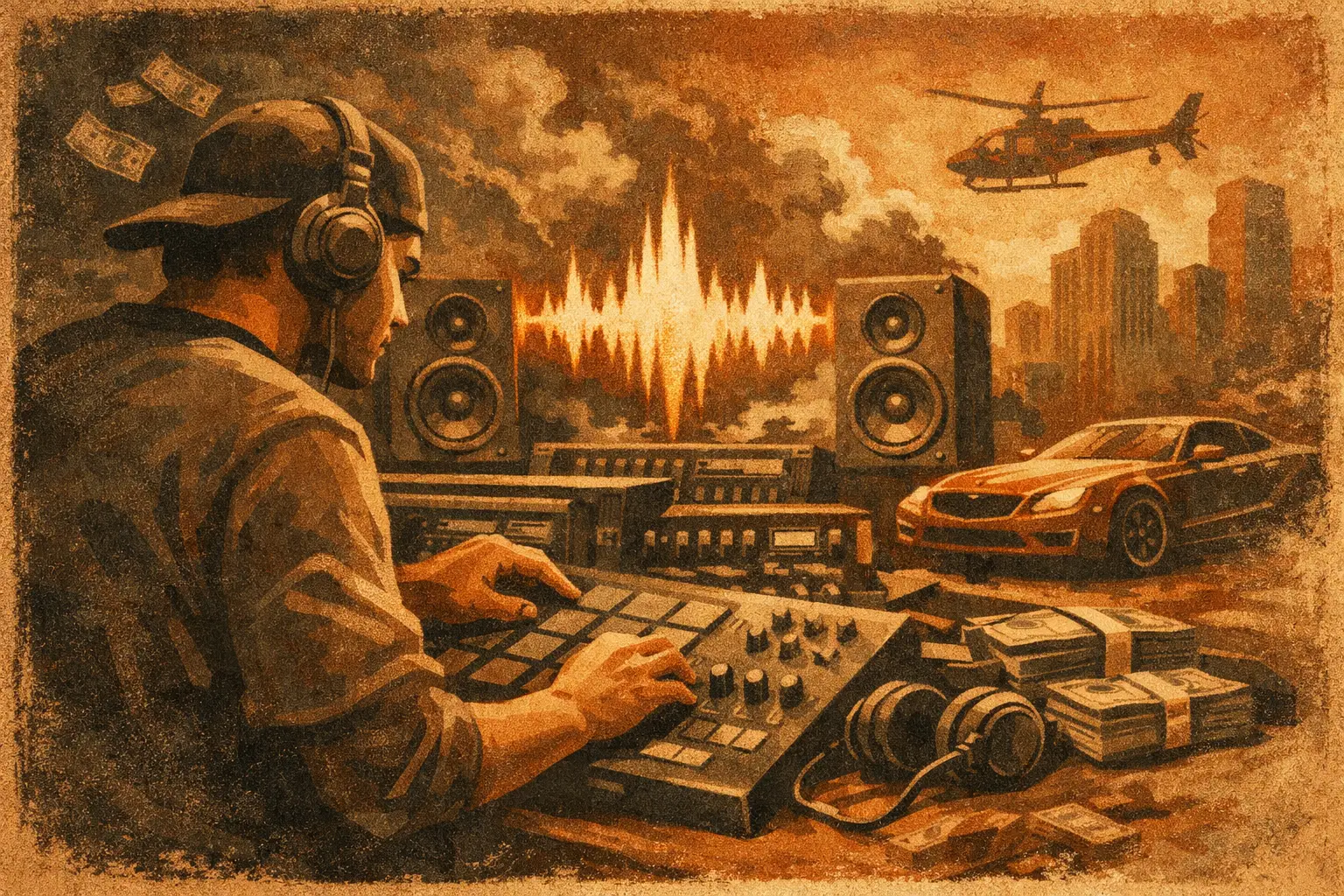
A great trap beat feels like a city at midnight – headlights flickering off wet pavement, bass rolling through the block, and just enough space in the rhythm to let attitude breathe. You hear it in clubs, on playlists, in workout mixes, in car speakers, and behind some of the most memorable moments in modern hip-hop and pop. Even if you do not make music yourself, chances are you know the feeling the second a trap beat drops.
That feeling did not happen by accident. Trap has a specific sonic language, but the reason it lasts goes beyond drum patterns and 808s. It carries tension, swagger, motion, and mood all at once. For anyone who loves music as part of a lifestyle – the kind of soundtrack that changes how a place feels, whether you are walking through Atlanta, driving the Vegas strip, or watching a skyline from a cruise deck after dark – trap has become one of the defining sounds of the era.
What a trap beat actually is
At its core, a trap beat is built around hard-hitting drums, deep 808 bass, fast hi-hat patterns, and a mood that leans dark, hypnotic, or aggressive. The tempo often sits in a range that feels steady but urgent, which gives artists room to rap, glide, or switch flows without losing momentum.
The style grew out of Southern hip-hop, especially Atlanta, and it became huge because it was both regional and flexible. That combination matters. Some genres are tied so tightly to one scene that they stay there. Trap traveled because its DNA is simple enough to recognize and open enough to evolve.
You can hear that evolution everywhere. One track might feel gritty and street-centered. Another might sound glossy, cinematic, and built for a fashion runway or a high-energy travel recap. The bones are familiar, but the presentation changes depending on the artist, producer, and moment.
Why a trap beat feels physical
One reason trap works so well is that it does not just ask you to listen. It asks you to feel it in your chest. The 808 is a huge part of that story.
Unlike a traditional bassline that mostly supports the harmony, the 808 in trap often becomes the emotional engine of the track. It can slide, punch, growl, or stretch out under the drums in a way that makes the whole beat feel alive. When it is mixed well, it creates that satisfying tension between control and chaos.
Then come the drums. The kick usually lands with purpose, the snare or clap cuts through sharply, and the hi-hats do a lot of expressive work. Those rattling hat rolls and quick stutters give trap its sense of movement. They create anticipation, almost like the music is inhaling and exhaling in short bursts.
That physicality is why trap crosses so easily into lifestyle spaces. It fits nightlife, fashion, sports, travel montages, luxury visuals, and food content with a little edge. It can make a rooftop dinner feel cooler, a city walk feel more cinematic, and a quick reel feel bigger than it is.
The mood is just as important as the drums
A lot of people reduce trap to percussion, but that misses half the picture. The melody matters just as much.
Many trap instrumentals use sparse piano lines, eerie bells, ambient pads, string stabs, or synth textures that feel cold, moody, or dramatic. These sounds leave room. That space is important because trap is not usually trying to overwhelm you with harmonic complexity. It is trying to create atmosphere.
Think about the difference between a crowded arrangement and a beat that gives one haunting melody room to linger. Trap often chooses the second option. That restraint is part of its power. It lets the artist’s voice carry emotion while the instrumental sets the scene.
The trade-off is that minimalism can go stale fast if the producer does not add enough detail. A basic loop with generic drums might technically be trap, but it will not stay with you. The best trap beats have tiny decisions that keep them alive – a subtle pause before the snare, a pitch bend in the 808, a texture tucked behind the main melody, or a switch in the hi-hat pattern that hits right when you need it.
How trap beat structure creates momentum
Trap is often built for repeat listens, and structure plays a big role in that. Producers know how to stretch tension without draining energy.
The intro usually establishes mood quickly. Then the beat opens up, often with a clean drop into the drums and bass. Verses leave enough breathing room for vocals, while hooks may add layers, countermelodies, or stronger rhythmic emphasis. It is a format designed to support performance.
That is one reason trap works so well across platforms. In a full song, it gives artists space to build a narrative. In short-form content, it gets to the point fast. You can use a few seconds of a trap rhythm and immediately signal confidence, motion, and vibe.
Still, there is a balancing act. If every section hits with the exact same intensity, the track can feel flat. If the producer changes too much, it can lose the hypnotic pull that makes trap addictive. The sweet spot is repetition with just enough surprise.
Why trap beat culture spread far beyond hip-hop
Trap started in a very specific cultural context, but it did not stay boxed in. That is part of what makes it such a fascinating sound.
Pop artists borrowed trap drums. R&B artists used trap textures to make songs moodier and more modern. Electronic producers pulled in trap’s drops and low end. Even global music scenes absorbed pieces of the style and mixed them with local sounds. What began as a regional force turned into a global language.
There is a lesson in that. When a genre carries a strong emotional signal, people find ways to adapt it. Trap signals intensity, cool, danger, confidence, and modernity. That emotional package works in a lot of settings.
For audiences who connect with culture through experiences, this matters because music changes how we remember places. A trap-heavy soundtrack can shape the emotional color of a destination just as much as food, lighting, or architecture. A late-night city scene scored with soft jazz feels one way. The same scene under a trap beat feels sharper, faster, and more charged.
The difference between formula and style
Because trap is so popular, it is easy to copy the surface. Deep 808, rattling hats, dark melody – done. But people can hear the difference between a beat that checks boxes and one that actually says something.
Style comes from choice. Maybe the drums are stripped down and elegant instead of chaotic. Maybe the melody leans soulful instead of sinister. Maybe the bass glides in a way that feels melodic rather than purely percussive. These choices give a beat identity.
That is also why not every trap beat needs to be hard in the same way. Some are made for the club. Some are built for introspection. Some sound expensive and polished. Others feel raw and unfiltered. The genre is wider than its stereotypes.
If you are just listening for fun, that variety keeps trap fresh. If you create content, it gives you options. The right beat can frame a luxury hotel tour, an urban food run, a night drive, or a behind-the-scenes moment differently without losing the genre’s signature energy.
Why the best trap beats still feel current
Genres rise, peak, and fade all the time, but trap has stuck around because it knows how to adapt without losing its core. The core is rhythm, bass, and mood. Around that center, producers keep experimenting.
Some bring in orchestral elements. Some pull from soul, gospel, house, or Latin music. Some make trap beats so minimal they almost feel meditative. Others stack sounds until the whole thing feels huge and cinematic. The best ones understand the assignment but refuse to sound interchangeable.
That staying power says something bigger about where music lives now. We do not hear songs in one setting anymore. We hear them at dinner, in airport lounges, on headphones during a sunrise walk, in reels, in clubs, in vlogs, in gym sessions, and on road trips. Trap survives because it can move through all of those spaces and still feel natural.
For a brand like Musical Smile Guy, that cross-scene energy makes sense. Music is never just background. It shapes the memory. It adds flavor to the destination. It turns a visual into a mood.
So what makes a trap beat hit?
It is the combination. The low end gives it weight. The drums give it motion. The melody gives it atmosphere. The space gives it confidence. And the culture behind it gives it meaning.
When all of that clicks, a trap beat does more than sound good. It places you somewhere. Maybe that somewhere is a packed club, a neon-lit street, a late-night flight, or the quiet moment before the night really starts. Either way, the best tracks do what great travel, food, and storytelling do – they transport you.
Next time one comes on, pay attention to what it changes around you. That shift in energy is the whole magic.