You can learn a lot about a place by listening before you look. Walk through Brooklyn, Atlanta, Los Angeles, Houston, or Miami with hip-hop music in your headphones, and the streets start telling on themselves. The rhythm, slang, confidence, tension, humor, and style all carry the feeling of real people making something unforgettable out of where they stand.
That is part of what makes hip-hop so magnetic. It is not just a genre you put on in the background while you get dressed or head to brunch. It is a living cultural language. It travels well, changes shape, and still manages to hold onto its roots. For anyone who loves culture, movement, and the energy of a city revealing itself one block at a time, hip-hop has always been more than music.
What hip-hop music really carries
At its best, hip-hop music feels like a postcard and a protest at the same time. It captures local detail with sharp precision, then turns those details into something global. A single verse can tell you what a neighborhood values, what it fears, how it celebrates, and how it survives.
That storytelling power is one reason the genre stays so relevant. Pop music often aims for universality by sanding down specifics. Hip-hop usually does the opposite. It gets more specific, more regional, more personal. Ironically, that honesty is exactly what makes it travel.
You hear it in the accents. You hear it in the production choices. New York hits differently than Atlanta. Houston rides differently than Detroit. The Bay has its own bounce. Chicago has its own edge. Even when artists cross into the mainstream, the strongest ones tend to bring their city with them instead of leaving it behind.
For listeners, that creates a richer experience. You are not just consuming a beat. You are stepping into a world.
The sound of place, memory, and movement
If you love travel, this part feels especially exciting. Some genres create mood. Hip-hop creates geography. It can make a rooftop feel cinematic, a late-night drive feel legendary, or a neighborhood restaurant feel like the center of the universe.
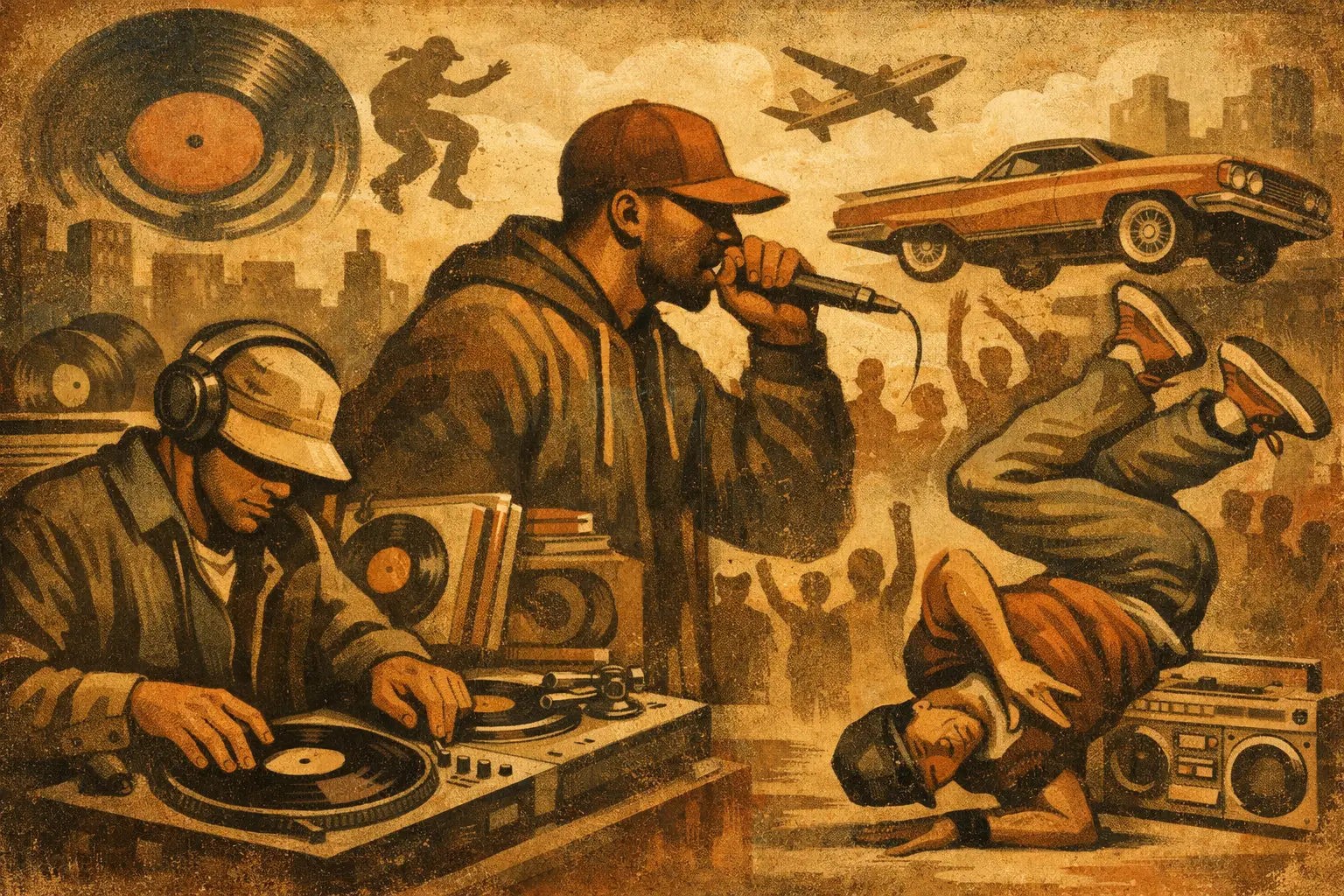
Think about how often hip-hop is tied to movement. Car culture. Block parties. Club scenes. Fashion districts. Summer streets. Airports. Tour buses. Corner stores. Luxury penthouses. Tiny apartments with giant dreams. The genre has always known how to put you somewhere.
That sense of place is why hip-hop pairs so naturally with food and travel storytelling too. Cities are not just skylines. They are soundtracks and flavors. They are what people wear, what they say, where they gather, what they order after midnight, and what they remember years later. Hip-hop has a way of pulling all of that into one frame.
When I think about culture-rich travel, I do not just think about landmarks. I think about the songs locals claim, the venues that shaped scenes, the neighborhoods that inspired artists, and the everyday spots where style and storytelling happen in real time. That is where a city starts feeling alive.
Why hip-hop music keeps evolving
One of the smartest things about hip-hop is that it never stands still for long. The genre is built to absorb influence. Soul, funk, jazz, dancehall, house, gospel, trap, drill, Afrobeat, Latin sounds, and electronic textures have all found room inside it. That openness keeps it fresh, but it also creates constant debate.
And honestly, the debate is part of the culture.
People argue about what counts as real hip-hop, which era had the strongest lyricism, whether commercial success helps or hurts the art, and how much experimentation is too much. Those conversations can get heated, but they are also a sign of a genre that people still care about deeply.
It depends on what you value most. If you come to hip-hop for bars, you may feel disconnected from songs built more around mood and repetition. If you love production and atmosphere, you may be open to styles that older fans dismiss too quickly. Neither side is automatically wrong. The genre is big enough to hold complexity.
That flexibility is also why hip-hop keeps reaching new audiences. It can be intimate or flashy, politically charged or playfully absurd, polished or raw. It can soundtrack a luxury lifestyle campaign one minute and a neighborhood cypher the next. Few genres move that fluidly.
Hip-hop and the business of influence
Hip-hop did not just influence music. It reshaped the whole presentation of modern culture. Fashion, advertising, sports, social media, food branding, and travel aesthetics all carry its fingerprints.
You see it in sneaker culture and streetwear, of course, but also in the way people build personal brands now. Confidence, point of view, visual identity, and storytelling all matter. Hip-hop helped make that approach mainstream. Artists were not only selling records. They were selling worlds people wanted to step into.
That idea feels especially current now that so much lifestyle content is creator-led. Audiences do not only want recommendations. They want perspective. They want a host with taste, energy, and a clear lens on culture. In that sense, hip-hop was ahead of the curve. It understood early that personality is part of the art.
Still, there is a trade-off here. Once a genre becomes a major cultural engine, it risks getting flattened into image. Brands borrow the style without respecting the history. People celebrate the swagger while ignoring the social conditions that produced it. That is where listening more carefully matters.
Hip-hop is fun, stylish, and endlessly quotable. It is also rooted in resourcefulness, resistance, identity, and community-building. If you only take the surface, you miss the engine underneath.
The local scene still matters most
Streaming made music global, but local scenes still matter in a big way. In fact, the most exciting hip-hop often starts with a city talking to itself before the rest of the world catches on.
That is why small venues, regional DJs, local food spots, neighborhood festivals, and community spaces remain part of the story. They are where artists test material, build followings, and shape the culture around them. The internet can amplify a sound fast, but it usually cannot invent the real thing from scratch.
For culturally curious travelers, this is where the experience gets good. You do not always need the biggest arena show to feel connected to a music scene. Sometimes the best moment is hearing a local track in the ride from the airport, then hearing it again later at a lounge, then seeing people react to it like it belongs to them. Because it does.
That kind of discovery stays with you. It gives travel texture.
How to listen to hip-hop music with more curiosity
The easiest way to miss hip-hop is to treat it as one thing. It is not one sound, one era, or one mood. If you want a fuller experience, listen regionally and listen historically.
Go back to foundational records, then jump forward to newer artists who are reshaping the format. Pay attention to production as much as lyrics. Notice how beats create emotional weather. Listen for regional slang and references instead of skipping past them. Those details are not barriers. They are invitations.
It also helps to notice where you hear hip-hop outside your headphones. In restaurants, at parties, in fashion spaces, on cruises, in nightlife, at sporting events, and on social media, the genre keeps setting the pace for how people gather and express themselves. It is one of the clearest examples of music functioning as social atmosphere.
And if you really want to connect with it, let go of the idea that every song has to be for you personally. Some tracks are windows, not mirrors. They are still worth hearing.
Why the genre still feels personal
What keeps hip-hop vital is not just chart power. It is emotional reach. The genre knows how to talk big, but it also knows how to get startlingly intimate. It can celebrate ambition without hiding pain. It can flex and confess in the same breath.
That emotional mix is why people build memories around it. Certain songs belong to first trips, late-night meals, summer drives, heartbreak seasons, gym sessions, hometown pride, and reinvention eras. Hip-hop has a gift for attaching itself to turning points.
Maybe that is why it continues to move culture instead of merely decorating it. It gives people language for where they have been, where they are, and where they are trying to go. And when music can do that, it does not age out. It keeps traveling with us.
So the next time a city calls your name, listen closely. The food will tell one story, the skyline another, but hip-hop might tell the truest one of all.