
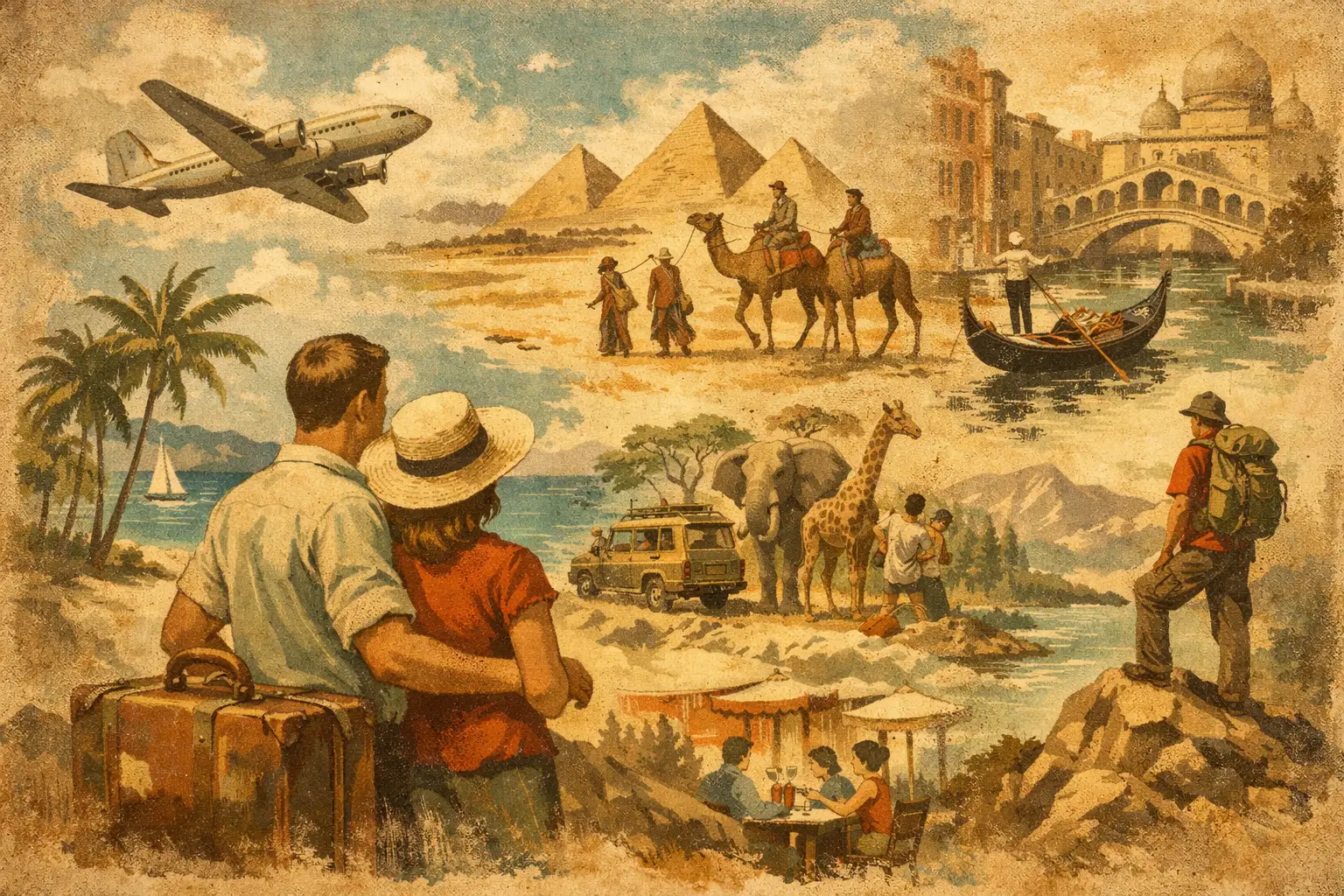
You can stay at a beautiful resort, take the postcard photo, order the signature cocktail, and still come home feeling like you barely touched the place. That gap is exactly why people ask, what is travel experiences really about? It is not just movement from one destination to another. It is the feeling of being changed by where you went, who you met, what you tasted, and the moments that stayed with you long after the suitcase was unpacked.
For a lot of travelers, that shift happens in surprisingly small ways. It might be the drumline echoing through a city street, a late-night meal that tastes like family history, or a conversation on a cruise deck with someone from a completely different walk of life. A travel experience is not simply an activity you can book. It is the personal meaning created when a place becomes more than a backdrop.
What is travel experiences in simple terms?
If we strip away the industry language, travel experiences are the moments that make travel feel alive. They are the sensory, emotional, and cultural parts of a trip that create memory and connection. Think less about checking into a hotel and more about the jazz band playing in the lobby. Less about arriving at port and more about the smell of local spices drifting from a nearby market.
That distinction matters because travel products and travel experiences are not the same thing. Flights, rooms, transfers, and reservations are part of the framework. They make the trip possible. The experience is what gives the trip personality.
This is also why two people can take the same itinerary and have completely different reactions to it. One person remembers the ocean view. Another remembers the street musician in Cozumel who turned a quick walk into a whole mood. Same route, different experience.
The difference between travel and travel experiences
Travel, on its own, can be transactional. You go from home to somewhere else, spend money, see a few things, and return. Travel experiences add texture. They invite you to engage instead of just consume.
A basic trip often centers convenience. An experience-centered trip centers presence. That does not mean every vacation needs to be packed with deep cultural immersion or dramatic self-discovery. Sometimes an experience is simply giving yourself enough room to notice the place instead of rushing through it.
There is also a trade-off here. Convenience has value. Not every traveler wants to wander side streets or spend hours hunting for the most local spot. Some people want ease, comfort, and a smooth plan, especially on a short getaway. That is valid. The sweet spot for many travelers is blending comfort with a few meaningful moments that feel real and personal.
What makes a travel experience memorable?
Usually, it comes down to four things: emotion, senses, story, and connection.
Emotion is the big one. The places we remember most are rarely just the ones that looked good. They are the ones that made us feel something. Awe, joy, nostalgia, surprise, even a little discomfort. Those emotional responses are what turn a destination into a memory.
The senses play a huge role too. Music pouring from an open-air plaza, the heat rising off a stone street, the buttery crunch of a pastry you cannot stop thinking about, the salt in the air before a ship leaves port – these details stay with us because they pull us into the moment. Great travel experiences are rarely only visual.
Story is what gives those moments shape. A sunset is lovely. A sunset after a day of hearing local stories, tasting regional food, and finding your favorite corner of town becomes your sunset in that place. It has context. It has personality.
Then there is connection. Sometimes that means connecting with the culture around you. Sometimes it means connecting with the people you traveled with. Sometimes it means reconnecting with yourself in a setting that lets you breathe a little differently. That is often the part people do not expect, but it is the part that lingers.
Why travel experiences matter more now
People are getting better at spotting the difference between content-worthy travel and meaningful travel. A beautiful setting still matters, of course. We all love a breathtaking view. But a lot of modern travelers are not chasing a photo alone. They want atmosphere. They want a sense of place.
That is one reason food, music, neighborhood culture, and local events have become such a big part of the conversation. They offer access to the emotional side of a destination. You are not just looking at a city. You are hearing it, tasting it, and feeling its rhythm.
This is especially true for travelers who follow creator-led lifestyle brands. They are often looking for more than booking tips. They want help imagining how a destination feels. They want to know where the magic is, not only where the landmarks are.
What travel experiences can look like
They do not all need to be dramatic or expensive. In fact, some of the best ones are quiet and personal.
A luxury cruise can absolutely be an experience, but not only because of the ship itself. It becomes memorable when the journey includes live music that changes the energy of the evening, a meal that introduces you to a region before you even arrive, or a shore day that gives you a real taste of local life instead of a rushed shopping stop.
A city break becomes an experience when you follow the sound of music into a neighborhood you had not planned to visit. A beach destination becomes an experience when you learn the story behind the dish on your plate. A road trip becomes an experience when a random roadside stop turns into the most talked-about part of the whole week.
This is where personality matters too. The same destination can feel completely different depending on what you seek out. Some travelers find their best moments through food. Others through architecture, dance, history, nightlife, or nature. There is no single correct version of a meaningful trip.
How to create better travel experiences
The first step is to stop treating the itinerary like the whole point. Plans help, but over-planning can flatten a trip. If every hour is assigned, there is less room for surprise, and surprise is often where the best stories live.
Give yourself anchors instead of a script. Maybe that means one special dinner, one cultural activity, and one free afternoon to wander. Maybe it means choosing fewer attractions and spending more time in each place. Slower travel is not always possible, but even a small shift in pace can change how much you absorb.
It also helps to build around your actual interests instead of copying a generic list. If music moves you, find the live performance, the record shop, the festival, the local sound. If food is your love language, make room for markets, family-owned restaurants, and dishes tied to the place. If scenic beauty is your reset button, wake up early for the view instead of trying to squeeze in one more indoor stop.
Curiosity matters more than perfection. You do not need to speak like a local or know the full history of every destination to have a meaningful experience. You just need to be open enough to notice what is around you.
What is travel experiences without personal perspective?
Honestly, not much. The personal side is what makes it count.
This is why storytelling matters so much in travel media. The best travel stories do not just say where someone went. They show why it mattered. They let you hear the soundtrack of the place, taste the meal, feel the mood, and understand why that one afternoon in a tucked-away spot became the highlight.
That is also why the most inspiring travel content feels human. It does not pretend every moment is glamorous. Sometimes the weather shifts. Sometimes the excursion is overrated. Sometimes the most polished option is not the one that leaves the biggest impression. Real experiences have texture. They include delight, unpredictability, and the occasional reset.
For a brand like Musical Smile Guy, that blend of travel, music, and food is exactly where the story gets richer. A destination is not just a pin on a map. It is a vibe, a soundtrack, a flavor, a memory you can almost replay.
Travel experiences are not about making every trip bigger. They are about making it more felt. So the next time you plan a getaway, leave a little space for the part you cannot schedule – the song drifting through the street, the dish you order twice, the view that makes everyone go quiet for a second. That is usually where the real trip begins.