Some trips give you photos. Others give you a new rhythm.
That is the real magic behind different types of travel experiences. The destination matters, sure, but the feeling you bring home often comes from how you chose to move through the place. A city can feel completely different as a food lover, a cruise traveler, a music fan, or someone chasing quiet mornings and ocean views. If you have ever come back from a trip talking more about a meal, a street performance, or a conversation than the landmark itself, you already know this.
Travel gets a lot more interesting when you stop asking, Where should I go next? and start asking, What kind of experience do I want to have? That question opens the door to more memorable choices and a lot more personality in the way you travel.
Why types of travel experiences matter
Not every traveler wants the same thing, even on the same itinerary. One person wants five museums and a walking tour. Another wants a beachfront dinner with live music and time to breathe. Someone else wants to wake up in a new port every morning and let the journey unfold one deck view at a time.
Knowing the different types of travel experiences helps you match your trip to your mood, your budget, your energy, and your curiosity. It also saves you from copying someone else’s dream vacation and wondering why it did not hit the same way for you.
The sweet spot is not choosing the most impressive trip on paper. It is choosing the one that feels like you.
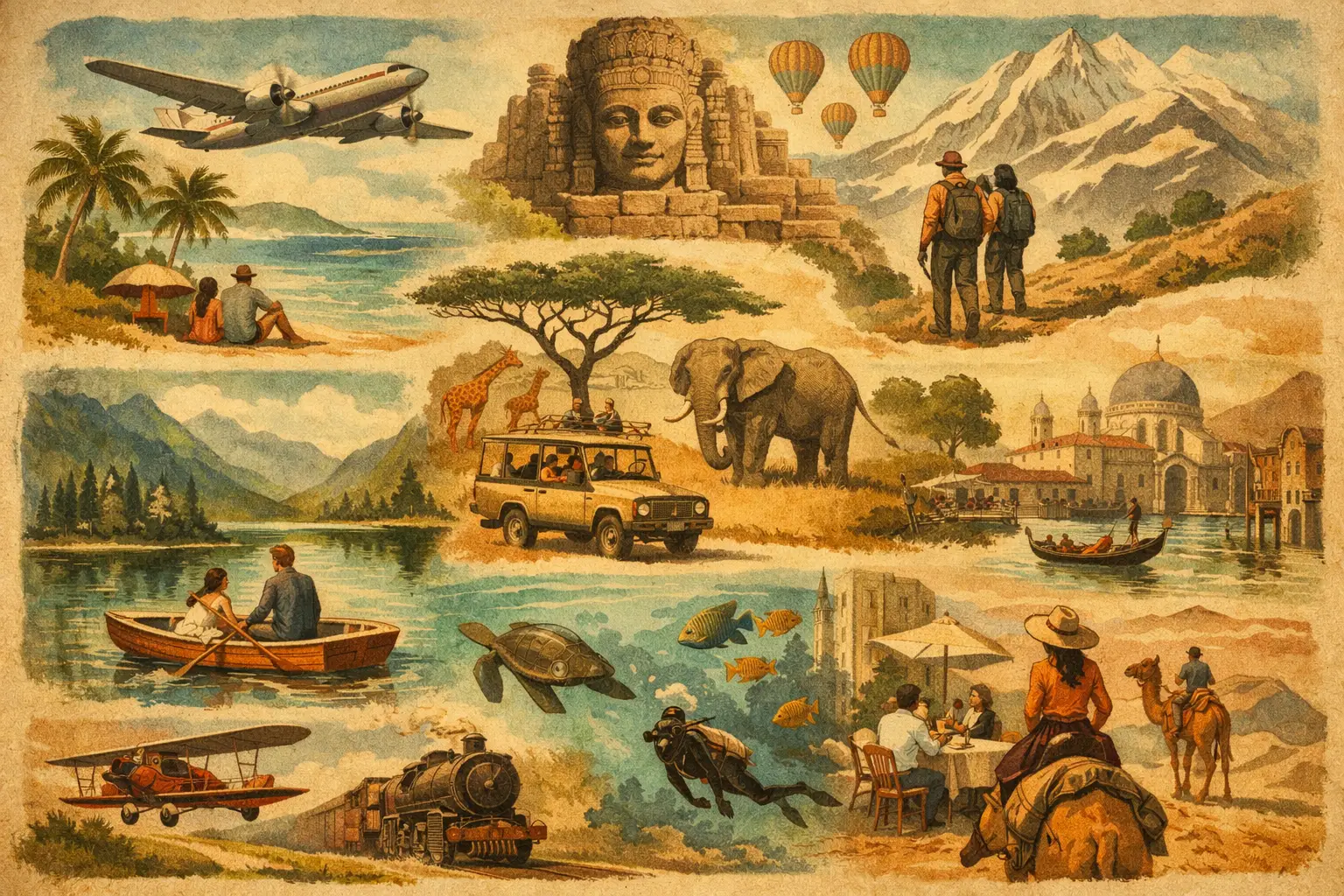
10 types of travel experiences worth trying
1. Cultural immersion travel
This is the experience for travelers who want more than a highlight reel. Cultural immersion is about spending real time with a place instead of just passing through it. That might mean joining a local festival, learning a few phrases in the language, browsing neighborhood markets, or choosing the family-run cafe over the obvious tourist stop.
What makes this style special is the sense of connection. You are not just observing culture from a distance. You are participating in it, even in small ways. The trade-off is that it usually takes more time and flexibility. You cannot rush your way into meaningful moments.
2. Food-focused travel
Some people remember a skyline. Others remember the perfect bowl of noodles, the smoky flavor from a roadside grill, or the dessert they are still thinking about months later.
Food travel is one of the most joyful ways to understand a destination because every plate tells you something. It tells you about climate, migration, family traditions, and what people celebrate. It can be beautifully casual or full-on luxurious, from street snacks to tasting menus.
This kind of trip works especially well if you like building your days around neighborhoods rather than checklists. Just be honest with yourself about pace. If you overpack the schedule, even the best meal can start to feel rushed.
3. Cruise travel
Cruise travel offers a distinct mix of comfort, movement, and variety. You unpack once, settle in, and still get the thrill of waking up somewhere new. For travelers who love a polished experience with built-in entertainment, dining, and ocean views, it can feel like the vacation equivalent of hitting play on the right soundtrack.
It is also one of the easiest ways to sample multiple destinations without the constant stress of changing hotels or figuring out every detail yourself. At the same time, port stops can be shorter than land-based travelers might prefer. If you like to go deep in one place, cruising may work best as an introduction rather than the whole story.
4. Luxury and indulgence travel
Sometimes the experience you want is simple. You want the suite, the spa, the rooftop view, the excellent service, and the meal that arrives like a performance.
Luxury travel is not only about spending more. At its best, it is about ease, atmosphere, and access. It gives you room to savor a destination without feeling worn down by logistics. It can be especially appealing for milestone trips, romantic getaways, or seasons when rest matters as much as sightseeing.
The catch is that luxury can create a bit of distance if every experience is heavily curated. The best version usually blends comfort with something grounded and local.
5. Adventure travel
Adventure travel changes your body language. You stand a little taller after the hike, the snorkel trip, the zipline, or the day that pushed you past your usual routine.
This category can mean a lot of different things depending on your comfort level. For one traveler, adventure is a multi-day trek. For another, it is trying an ATV excursion or finally saying yes to paddleboarding in clear blue water. It does not need to be extreme to feel exhilarating.
The key is matching the activity to your actual energy and experience. A trip should stretch you, not wreck you.
6. Wellness and reset travel
Not every vacation needs to be packed with movement. Some of the best travel experiences are built around slowing down enough to hear yourself think again.
Wellness travel can include spa retreats, beach stays, hot springs, nature escapes, yoga weekends, or simply a beautiful hotel where rest is the main event. For travelers coming off a busy season, this style can feel less like an escape and more like a return to balance.
The only real tension here is expectations. If you say you want rest but keep adding tours, reservations, and side quests, the reset disappears fast.
7. Music and nightlife travel
A destination sounds different after dark. The live band in a tucked-away lounge, the DJ set on a rooftop, the jazz club with a line out the door, the festival crowd singing every word – these moments create a pulse you cannot get from daytime sightseeing alone.
Music-centered travel is perfect for people who connect to places through energy and atmosphere. It turns a trip into a memory with a soundtrack. It also invites spontaneity, which can lead to your favorite stories.
Of course, late nights can compete with early mornings. If you are mixing nightlife with an ambitious itinerary, something has to give.
8. Nature and scenic travel
Some trips are about being reminded how big and beautiful the world is. Mountains, coastlines, deserts, waterfalls, and national parks offer a different kind of emotional payoff. They quiet the noise.
Nature travel is often less about doing everything and more about witnessing something unforgettable. A sunrise viewpoint, a winding coastal drive, or a long pause in front of a dramatic landscape can stay with you longer than a packed day in a major city.
This style is ideal if you crave space, but it may feel too quiet for travelers who want constant social energy or nightlife.
9. City break travel
City breaks are for travelers who like momentum. You can start the day with coffee and architecture, move into museums or shopping, slide into an afternoon food stop, and end with theater, cocktails, or live music.
What makes city travel exciting is density. So much is happening at once, and even an ordinary walk can feel cinematic. It is a great fit for long weekends or shorter trips when you want maximum variety.
The downside is that cities can be stimulating in every sense. If you are already running on empty, the buzz may feel more draining than energizing.
10. Slow travel
Slow travel is less about how far you go and more about how deeply you experience a place. Instead of trying to fit three cities into six days, you stay longer, revisit favorite spots, and leave room for surprise.
This approach often creates the richest stories because repetition builds familiarity. The coffee shop starts to recognize you. The neighborhood becomes legible. You notice details you would have missed on a faster trip.
Slow travel is not always possible with limited vacation time, but even one slower stretch within a busy itinerary can change the whole tone of a trip.
How to choose the right type of travel experience
Start with the feeling you want, not the trend you keep seeing online. Do you want excitement, softness, inspiration, connection, flavor, beauty, or a little bit of reinvention? That answer usually points you in the right direction faster than any top-10 list.
Then think about your current season of life. A high-energy adventure trip might be perfect one year and completely wrong the next. The same goes for a packed city itinerary, a luxury cruise, or a quiet wellness escape. Great travel is personal timing as much as personal taste.
It also helps to combine experiences instead of forcing a trip into one box. Some of the most satisfying vacations blend two or three styles naturally. A cruise can include cultural immersion in port and elegant dining at night. A city break can turn into a food journey with a music-filled evening. A scenic beach trip can have just enough adventure to keep it lively.
The best trips usually mix more than one style
The most memorable journeys rarely stay in a single lane. They move. They surprise you. You might spend the morning walking through a historic district, the afternoon eating something unforgettable, and the evening listening to live music with the kind of smile that says, yes, this is exactly why I came.
That is where travel starts to feel less transactional and more alive. It becomes a collection of moods, flavors, sounds, and scenes that belong to you.
If you are thinking about your next getaway, do not just pick a place. Pick the version of yourself you want to meet there, and let that guide the experience.