
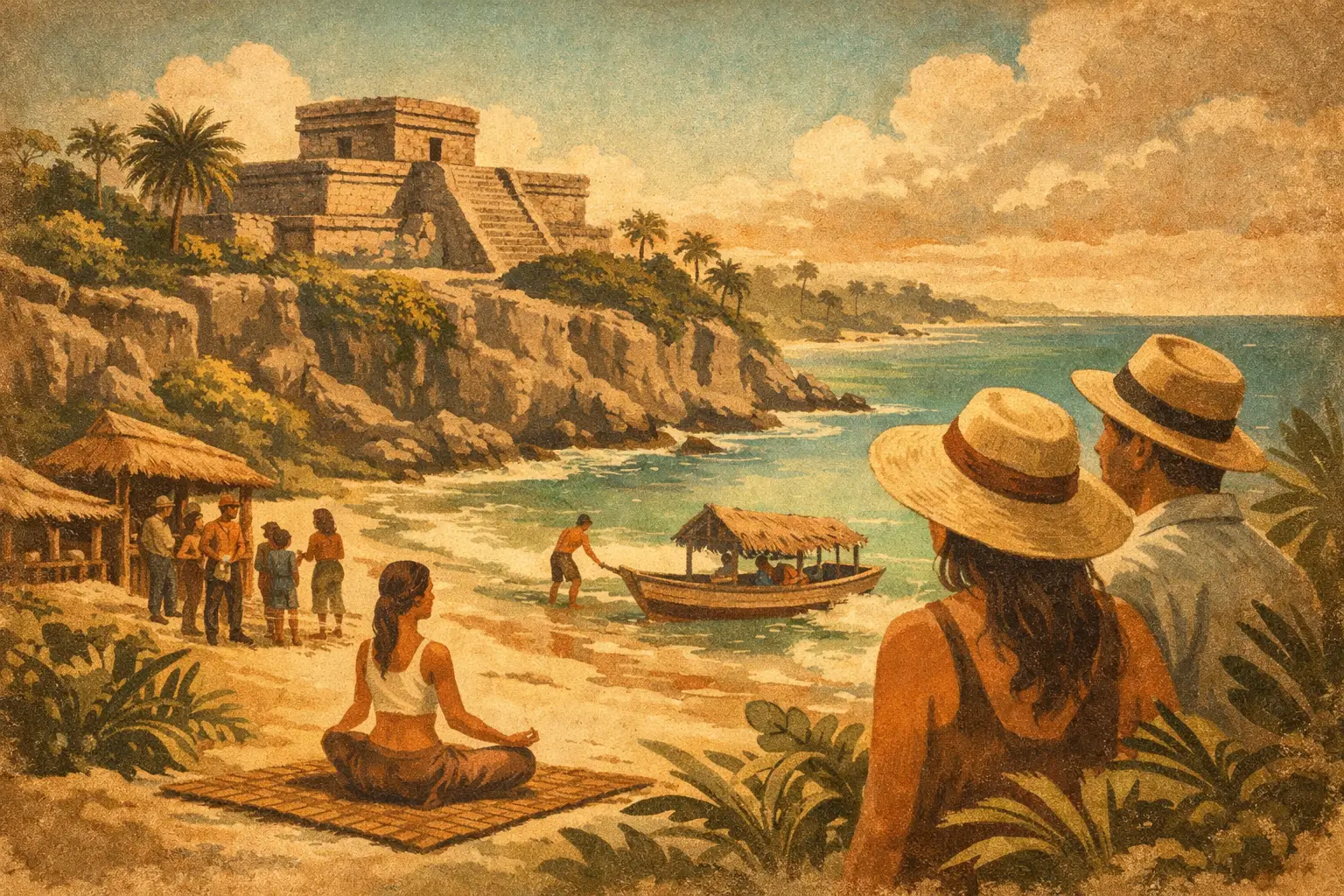
The first sound I associate with Tulum is not a camera shutter. It is the soft crash of Caribbean water, a scooter humming down a dusty road, and a bass line drifting out of a restaurant as the sky turns peach. This is a place that can look perfectly composed from a distance, yet its real appeal is wonderfully less polished. Tulum asks you to slow down long enough to notice the layers: ancient stone above the sea, jungle growing around cenotes, tortillas pressed by hand, and conversations that outlast the sunset.
For travelers who want more than a pretty backdrop, that is the invitation. Come for the color, absolutely. But leave room for the rhythm.
Tulum Is More Than the Beach Road
Tulum sits on Mexico’s Caribbean coast in the state of Quintana Roo, where the Riviera Maya meets a landscape shaped by Maya history and underground freshwater rivers. The town has become a global symbol of barefoot luxury, with design-forward hotels, candlelit dinners, beach clubs, and photo-ready corners everywhere. That version is real, but it is only one version.
There is also Tulum Pueblo, the inland town center, where daily life feels more immediate. You will find local restaurants, small shops, fruit stands, bicycles rolling past open-air tables, and the kind of casual evening energy that does not need a reservation weeks in advance. The beach zone may provide the cinematic entrance, but the pueblo often brings the human connection.
That split matters when deciding how to experience the destination. Staying near the beach gives you easy access to sunrise walks and ocean views, but it often comes with higher prices, traffic, and a more curated atmosphere. Spending time in town can make the trip feel less like a set and more like a place. The best itinerary usually makes room for both.
Let the Maya Ruins Set the Tone
The Tulum archaeological site delivers one of those travel moments that stays vivid long after your suitcase is unpacked. Perched on coastal cliffs, the ruins look out over water so bright it almost seems edited. The setting is spectacular, but the history deserves your full attention too.
Tulum was a walled Maya city and an important trading center, active during the later centuries of the Maya world. Walking there is not simply about getting the perfect frame of El Castillo. It is an opportunity to consider the intelligence, spiritual life, architecture, and trade networks that existed long before modern resort culture arrived on this coast.
Go with patience. Heat, crowds, and limited shade can change the mood quickly, especially in busy travel periods. An early visit is usually gentler, both for comfort and for allowing the site to feel like more than a checklist item. Put the phone down for a few minutes. Let the wind off the water and the scale of the stone do their work.
A Place Worth Treating With Care
The magic of the ruins and nearby natural areas depends on visitor respect. Follow marked paths, listen to site guidance, and avoid treating historic spaces as a personal photo studio. The same goes for cenotes and beaches. The most memorable travel content comes from genuine presence, not from forcing a moment that disrupts the place for everyone else.
The Cenotes Are Tulum’s Quiet Counterpoint
If the coast is Tulum’s bright, extroverted side, the cenotes are its deeper register. These freshwater sinkholes and cave systems are part of a vast underground network across the Yucatán Peninsula. Some feel open and playful, with sunshine filtering over clear water. Others are cool, shadowy, and almost cathedral-like.
A cenote swim changes the pace of a beach day. The water can be startlingly refreshing, the limestone formations make every glance interesting, and the jungle creates its own natural soundtrack. You may hear birds, dripping water, and the low echo of voices traveling through stone. It is the kind of setting that makes you understand why travel is often about sensation before it is about explanation.
Choose carefully, because cenotes vary widely. Some are built for social afternoons and easy access; others feel more remote or are better suited to confident swimmers. Respect the rules about sunscreen, showers, life jackets, and no-touch areas. Those details are not a buzzkill. They help protect fragile water systems that deserve to stay beautiful for locals and future visitors.
Eat Where the Flavor Has a Story
Tulum’s food scene can be glamorous, experimental, and undeniably fun. There are restaurants where dinner feels like a full production, complete with DJs, dramatic lighting, and plates designed to be photographed before the first bite. If that is part of your vacation mood, enjoy it.
But do not let the spectacle crowd out the essentials. A great taco, a bowl of cochinita pibil, fresh ceviche, grilled fish, or a simple breakfast with chilaquiles can tell you more about a destination than the most elaborate dining room. The Yucatán has a distinct culinary identity, shaped by Maya traditions, regional ingredients, citrus, chiles, achiote, and slow-cooked preparations.
Look for meals that feel rooted in place. Ask what is local, try something unfamiliar, and give yourself permission to choose the tiny table with plastic chairs over the reservation everyone is posting about. One night can be all polished cocktails and ocean air. The next can be tacos from a neighborhood favorite. That contrast is part of the fun.
Bring Music Into the Memory
Every destination has a tempo. In Tulum, it may be a live guitarist at dinner, cumbia from a passing car, electronic beats after dark, or the hush of waves before breakfast. Notice what you hear. Make a small playlist after your trip with songs that bring back the drive through the jungle or that first salty breeze.
Music gives a travel memory a return ticket. Months later, one song can put you right back at the table, tasting lime, hearing laughter, and watching palm leaves move in the night air.
The Honest Side of a Tulum Getaway
Tulum is beautiful, but it is not effortless paradise. Its popularity has created real pressure: higher costs, traffic, development, inconsistent infrastructure, and environmental strain. Depending on the season, sargassum seaweed can affect beach conditions. Construction or road delays can test your patience. A luxury label does not always guarantee smooth service.
None of this means you should skip the destination. It means arriving with realistic expectations and a flexible spirit. Build breathing room into your plans. Do not try to conquer every beach club, ruin, cenote, and dinner spot in two days. Leave an afternoon open. Have a backup plan if the seaweed is heavy or the weather turns. Often, the unscripted detour becomes the story you tell first.
It is also worth being intentional about where your travel dollars go. Support local guides, family-run restaurants, artisans, and businesses that show care for the environment and community. Travel is never entirely neutral, especially in places experiencing fast growth. Thoughtful choices will not solve every challenge, but they can make your visit more connected and more respectful.
Make Space for Your Own Tulum Moment
The version of Tulum that lasts is rarely the one you planned down to the minute. It might be an early bike ride before the roads get busy. It might be a swim that leaves you laughing because the water is colder than expected. It might be sharing a meal with no view at all, then realizing the conversation was the highlight.
So join the adventure with curiosity, not a shot list. Chase the sunrise if it makes you happy, taste the things you cannot pronounce yet, and let the music stay on a little longer. Tulum is at its best when you stop trying to make it look perfect and let it feel alive.