
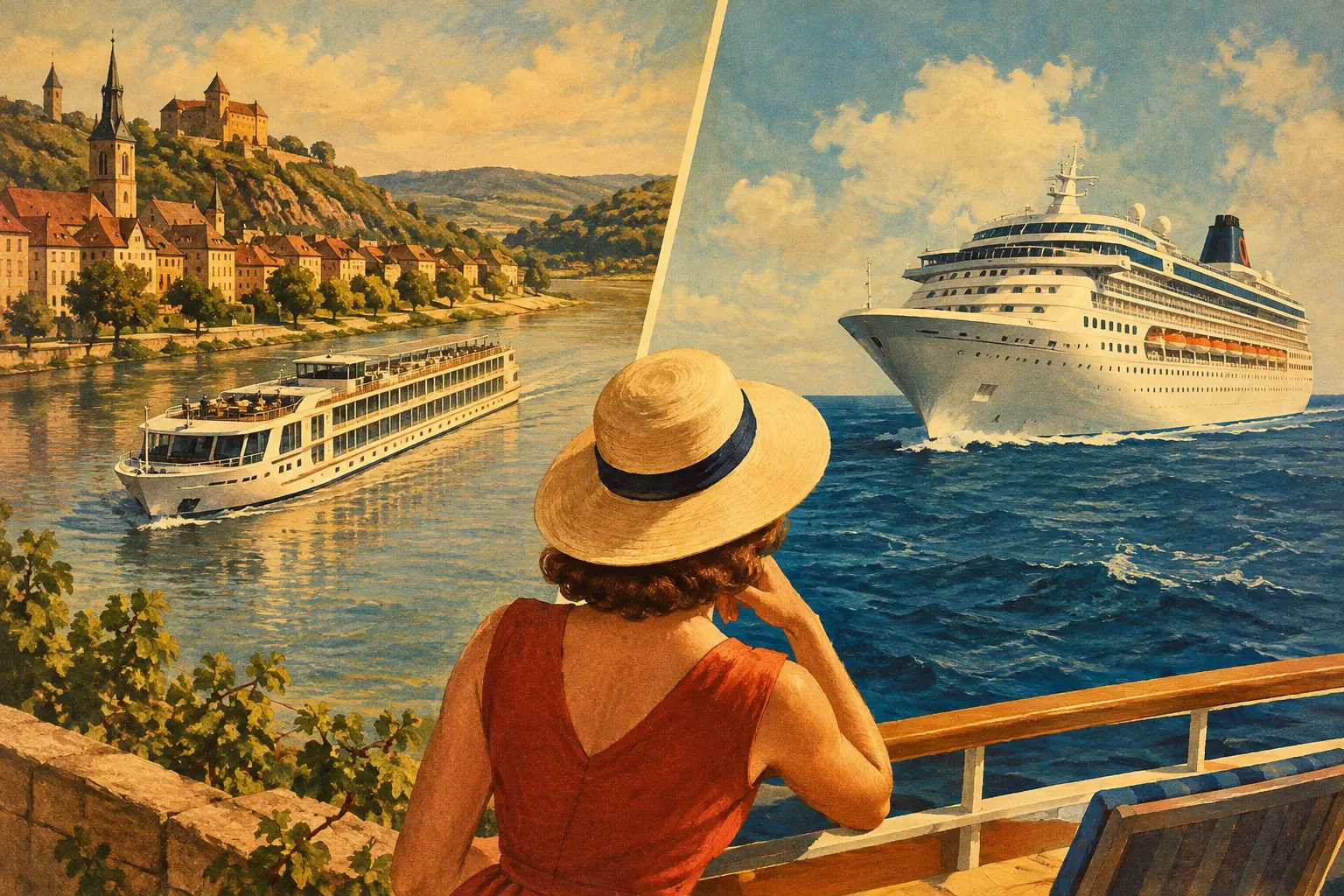
A cruise can be a floating resort, a moving front-row seat to centuries of history, or both. That is the real choice behind river cruises versus ocean cruises. One brings you close to the daily life, flavors, and architecture of a destination. The other gives you the thrill of open water, big entertainment, and the feeling that your vacation begins the second you step onboard.
Neither style is automatically better. The right one depends on the stories you want to bring home: a late-night sail-away with live music and a skyline fading behind you, or a morning coffee on deck as vineyard-covered hills drift past your window.
River Cruises Versus Ocean Cruises: The Big Difference
The simplest distinction is geography. Ocean ships travel across seas and oceans, connecting major coastal cities, islands, and private destinations. River ships navigate inland waterways such as the Danube, Rhine, Rhône, Seine, Mississippi, Columbia, and Mekong.
That difference shapes nearly everything. Ocean ships are often destinations themselves. They can have multiple restaurants, pools, theaters, lounges, spas, shopping, and enough activities to fill every hour of a sea day. River ships are much smaller and more intimate, with a strong focus on the places outside the ship.
Think of an ocean cruise as a lively festival with a new backdrop every few days. A river cruise feels more like a beautifully hosted road trip through the heart of a region, except your hotel moves with you and your luggage stays put.
The Pace: Busy Sea Days or Slow Scenic Sailing?
Ocean cruising offers range. A seven-night Caribbean itinerary might include three or four ports with a couple of sea days in between. Those sea days can be pure joy for travelers who want to sleep in, lounge by a pool, catch a production show, try a new cocktail, or simply enjoy the wide-open horizon.
River cruising is usually more destination-dense. Ships often dock right in town or within easy walking distance, and many itineraries visit a new village or city nearly every day. There may be no traditional sea days at all. Instead, the ship sails through the countryside, beneath bridges, and past castles, farms, and riverside neighborhoods.
That rhythm is wonderful for culturally curious travelers, but it does call for a little honesty. If you love a packed day of wandering cobblestone streets, tasting local pastries, and learning the stories behind historic landmarks, river cruising can feel deeply rewarding. If your ideal vacation includes a full day with no agenda beyond a pool chair and a frozen drink, an ocean ship may fit more naturally.
Ports Feel Entirely Different
On an ocean cruise, ports can be spectacular but sometimes require more logistics. Depending on the itinerary, you may dock near a city, take a shuttle from an industrial port, or tender ashore in smaller destinations. Shore excursions can range from snorkeling and beach clubs to food tours, museum visits, zip lining, and wildlife adventures.
River ports are often wonderfully immediate. You may step off the ship and be just minutes from a market square, a cathedral, a wine bar, or a family-run bakery. That easy access makes unplanned moments possible: hearing a street musician in Vienna, lingering over lunch in Lyon, or finding the perfect local cheese to enjoy back on deck.
There is a trade-off, of course. Ocean itineraries can cover huge distances and offer dramatically varied landscapes, from Alaska glaciers to Greek islands to the tropical Caribbean. River routes stay focused on a particular region and waterway. The scale is smaller, but the connection can be deeper.
For food lovers, the difference is delicious
Both cruise styles can serve excellent food, but they tend to express it differently. Large ocean ships provide enormous choice. You might move from sushi to steakhouse dining, casual tacos, Italian specialties, and late-night pizza without leaving the vessel. That variety is part of the fun, especially for groups with different tastes.
River ships usually have fewer venues, yet regional ingredients and local traditions often play a bigger role in the experience. A day in France may inspire a wine-focused dinner. A sailing through Germany may bring pretzels, sausages, and regional beer into the conversation. The real magic happens when the onboard meal becomes a preview of what you will taste ashore.
For travelers who see food as a way into culture, that connection can turn a meal into a memory. You are not just ordering dinner. You are tracing the flavors of the places passing outside the window.
Entertainment and Energy Onboard
Ocean cruises win on scale. Major ships can offer Broadway-style shows, live bands, comedy, dance clubs, casinos, water slides, game shows, sports courts, and themed parties. There is a special kind of vacation energy in walking through a buzzing promenade after dinner, hearing music around every corner, and deciding between a show, a lounge, or one more dessert.
River cruises are quieter, but not dull. Entertainment may include a local folk performance, a pianist in the lounge, a guest lecturer, cooking demonstrations, or an evening that feels more like a gathering among new friends than a production designed for thousands. It is less about spectacle and more about atmosphere.
Music lovers should consider what kind of soundtrack they want. On an ocean ship, you may find a full concert vibe, dancing late into the night, and plenty of options. On a river ship, the music might be a jazz set in an intimate lounge or a local ensemble that gives the destination a voice. Both can be memorable, just in completely different keys.
Cabins, Crowds, and the Social Feel
Ocean ships can carry anywhere from a few hundred guests to several thousand. That means more choices, more dining times, and more opportunities to meet people, but it can also mean lines, crowded elevators, and popular venues that require reservations. Choosing the right ship size matters as much as choosing the itinerary.
River ships commonly carry fewer than 200 guests. The crew may quickly learn your name, fellow travelers become familiar faces, and it is easy to settle into a favorite corner of the lounge. The social atmosphere is often relaxed and conversational, especially at shared meals and during excursions.
Cabin design reflects the two formats. Ocean ships may offer everything from interior rooms to expansive suites with balconies. River cabins are generally more compact, though many have French balconies or full balconies. One practical note: river ships often cannot accommodate the giant staterooms, large pools, or extensive outdoor decks found on modern ocean vessels because they must pass under low bridges and through locks.
Cost Is More Than the Fare
Comparing prices can be tricky because the inclusions are different. Ocean cruises may advertise a lower entry fare, then add specialty dining, drinks, Wi-Fi, gratuities, excursions, and other extras. That does not make them a poor value. It simply means travelers should look at the full vacation budget before comparing options.
River cruises often have a higher upfront cost, but many include guided excursions, Wi-Fi, some beverages, dining, and gratuities. The exact package varies by line, so it is worth reading the details instead of assuming every fare works the same way.
A helpful question is this: Do you want the freedom to choose and customize every day, or do you prefer more included experiences and fewer decisions? Ocean cruising often rewards the first approach. River cruising often appeals to the second.
Who Should Choose a River Cruise?
A river cruise is a beautiful match for travelers who want to wake up close to the action and spend their days exploring culture, history, food, and scenic towns. It also suits people who prefer a calmer ship environment, smaller groups, and a journey where the scenery is part of the experience from morning to evening.
It can be especially appealing for multigenerational travelers who want enriching experiences without constantly changing hotels, as well as couples and friends celebrating a milestone. The pace can still be active, though, so travelers with mobility concerns should review excursion details, walking distances, and the possibility of uneven streets or stairs in historic towns.
Who Should Choose an Ocean Cruise?
An ocean cruise is ideal when the ship itself is a major part of the vacation. Families, friend groups, entertainment lovers, beach seekers, and travelers who want abundant activity will find plenty to enjoy. It is also a strong choice for first-time cruisers because there are so many itinerary lengths, price points, cabin types, and onboard styles.
Choose ocean cruising if you want a blend of destination time and resort-style relaxation. A private-island beach day, an evening show, a sunrise at sea, and a lively dinner can all happen in one trip. For many travelers, that variety is the whole point.
The best voyage is the one that matches your travel rhythm. If you want to feel the pulse of a city, taste its signature dish, and hear its music echo through a historic square, a river cruise may be calling. If you want a bigger stage, more choices, and the exhilarating possibility of a new adventure around every deck, set your sights on the ocean. Wherever you sail, leave room for the moments you did not plan – those are often the ones that stay with you longest.