
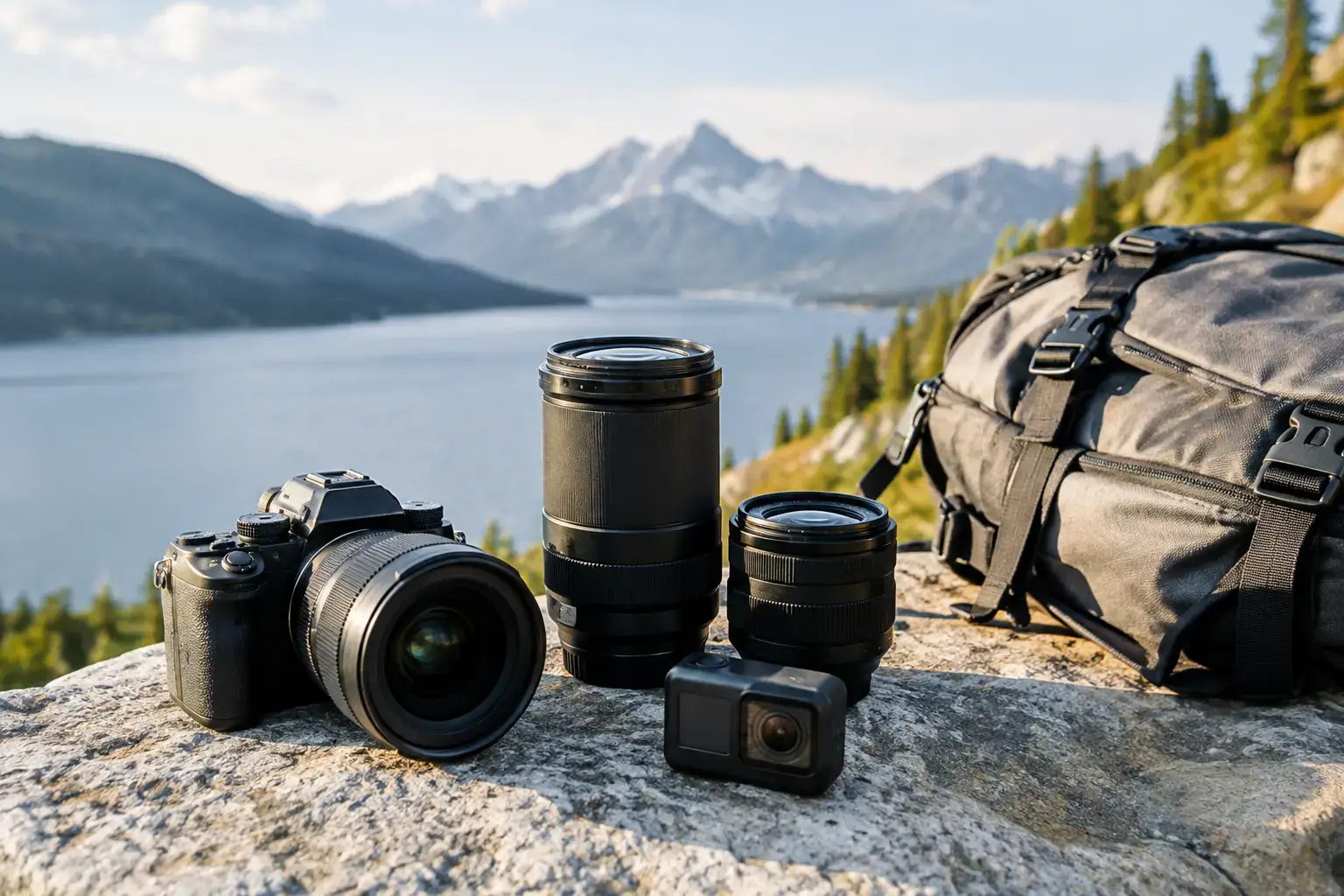
A sunrise over the water, a musician warming up on a side street, a plate that arrives looking too beautiful to touch – travel moves fast, and the right camera should help you stay in the moment instead of turning every outing into a production. These travel camera gear reviews focus on what matters for creators who want to capture culture, food, music, and unforgettable travel energy without hauling a studio through an airport.
The best setup is not automatically the most expensive one. It is the one you will happily carry from a cruise deck to a local market, pull out quickly in changing light, and use with enough confidence to tell the story you actually came to experience.
What Great Travel Camera Gear Needs to Do
A travel camera has a tougher job than a camera that lives in a controlled studio. It needs to handle bright beaches, dim dining rooms, moving ships, lively performances, and the occasional surprise rain shower. It also has to fit into a travel day that may include a flight, an excursion, and an elegant dinner before sunset.
For lifestyle storytelling, image quality is only part of the decision. Look for dependable autofocus, useful stabilization, solid low-light performance, easy phone transfers, and a screen that lets you frame yourself when you are narrating the adventure. Weight matters more than most people expect. A camera that feels incredible for 10 minutes in a store can feel very different after six hours exploring a historic city.
There is also a simple creative truth: a smaller setup often gets more footage. When your gear is easy to bring, you capture the spontaneous details that make a travel story feel personal – the clink of glasses, the chef’s final garnish, the band beginning its first song, or that first breathtaking view as the ship pulls into port.
Travel Camera Gear Reviews: Three Strong Directions
The smartphone: the camera already in your pocket
A current flagship smartphone is still the most practical travel camera for many people. Its biggest advantage is not just convenience. It is speed. You can capture a vertical video, edit a few clips, add music, and share a favorite moment while the memory is still fresh.
For cruise days, restaurant content, and quick destination updates, a phone delivers a wonderfully low-friction experience. Computational photography can also make night scenes and tricky exposure conditions look impressively polished. If your main goal is social content, a phone can absolutely be your primary camera.
The compromise appears in low light, at longer zoom ranges, and when you want a more cinematic separation between your subject and the background. Phones can create attractive portrait effects, but a larger camera sensor usually gives food, faces, and evening scenes a more natural depth. A phone also becomes less fun to use when storage is full and the battery is being asked to navigate, translate, book dinner, and film all day.
For many travelers, the smartest move is not choosing a phone or a camera. It is letting the phone handle quick captures and using a dedicated camera for the moments that deserve more care.
DJI Osmo Pocket 3: the easy video companion
The DJI Osmo Pocket 3 is a standout choice for travelers who want smooth, polished video without carrying a camera body, gimbal, and a bag full of accessories. Its built-in gimbal is the real magic. Walking through a colorful neighborhood, entering a ship atrium, or filming a food tour suddenly looks more intentional because the footage stays steady.
Its compact size makes it especially appealing for creators who do not want attention every time they record. The rotating screen is helpful for both vertical and horizontal shooting, which is a major plus when one trip needs to feed short-form social posts and longer YouTube stories.
There are trade-offs. It is video-first, so it is not the ideal tool if still photography is your priority. It also has a fixed lens, meaning you cannot zoom in on distant details or switch to an ultra-wide view with the flexibility of an interchangeable-lens camera. Still, for walking footage, host-led clips, ship tours, and energetic scenes set to music, this little camera makes travel content feel wonderfully alive.
Canon EOS R50: a friendly step into interchangeable lenses
The Canon EOS R50 is a compelling choice for travelers ready to move beyond a phone but not interested in wrestling with a highly technical camera. It is lightweight, approachable, and capable of beautiful photos and crisp video. Canon’s color science is often especially flattering for skin tones and vibrant food, which makes a difference when your content is centered on people and experiences.
Its autofocus is a confidence builder. When you are filming a friend trying a local dish or capturing a quick introduction in a busy terminal, reliable face and subject tracking gives you one less thing to worry about. Pair it with a compact zoom lens, and it becomes a practical all-around setup for city wandering, port days, and indoor dining.
The main limitation is that a kit lens may feel a little limiting after your creative eye grows. A small, bright prime lens can dramatically improve nighttime shots and give your videos a more polished look, but it adds another item to pack. If you are new to dedicated cameras, that is not a reason to avoid the R50. It is a reason to begin simple, learn what you love shooting, and add gear only when your storytelling asks for it.
Sony a6700: for creators who want more control
The Sony a6700 earns its place for travelers who take both photography and video seriously and want a camera that can grow with them. It has strong autofocus, impressive stabilization, and excellent image quality in a relatively compact body. For filming performances, capturing motion on excursions, or working in dim cocktail lounges, it gives you more room to create than a phone or pocket camera.
This is a camera for the person who notices the light falling across a table and wants to shape the shot, not just record it. With the right lens, it can produce rich, cinematic footage and detailed stills that hold up beautifully on a large screen.
That added power comes with a learning curve and a higher investment. Lenses can also make the system larger quickly. The a6700 is an exciting choice, but it is not automatically the best travel choice if you want to stay present and keep your packing light. Buy it because you enjoy the craft, not because you think serious travel stories require serious-looking gear.
The Small Accessories That Save the Day
A great camera without power, storage, or clean audio can leave a travel story unfinished. You do not need a suitcase of accessories, but a few compact pieces make a major difference.
Bring at least one spare battery for a dedicated camera and a small power bank for your phone. Travel days stretch longer than expected, especially when you are filming from breakfast through an evening show. Extra memory cards are equally important. Cards are tiny, affordable compared with the trip itself, and far less stressful than trying to delete footage from a ferry or a café table.
Audio deserves special attention if you speak to the camera. Built-in microphones are fine for casual moments, but wind on an open deck and crowd noise at a festival can overwhelm your voice. A small wireless microphone or compact on-camera mic can make a story feel instantly more intimate. Viewers will forgive an imperfect shot more readily than audio they cannot understand.
Finally, consider a small tabletop tripod or grip. It helps with room tours, hands-free food shots, sunset time lapses, and those moments when you want to be in the frame rather than always behind it. Choose one that folds down easily and feels stable enough for your device.
Build a Kit Around Your Actual Travel Style
If your dream day involves pool decks, quick city stops, and sharing highlights as they happen, keep it light: a smartphone, power bank, and small grip may be all you need. If your travel stories lean toward walking tours, lively markets, and host-led video, the Osmo Pocket 3 brings smooth movement with very little effort.
For travelers who love photographing food, portraits, architecture, and evening atmosphere, the Canon EOS R50 with one versatile lens is a lovely middle ground. And if creating visual stories has become a true passion, the Sony a6700 offers the control and quality to take that passion further.
Whatever you choose, leave space in your bag for the real reason you traveled: curiosity. The most memorable footage is rarely the perfectly planned shot. It is the laugh between takes, the unexpected melody drifting through a plaza, the first bite that makes everyone at the table pause. Bring gear that supports those moments, then put it down long enough to enjoy them. Join the adventure with a camera that feels like an invitation, not a burden.
Leave a Reply