
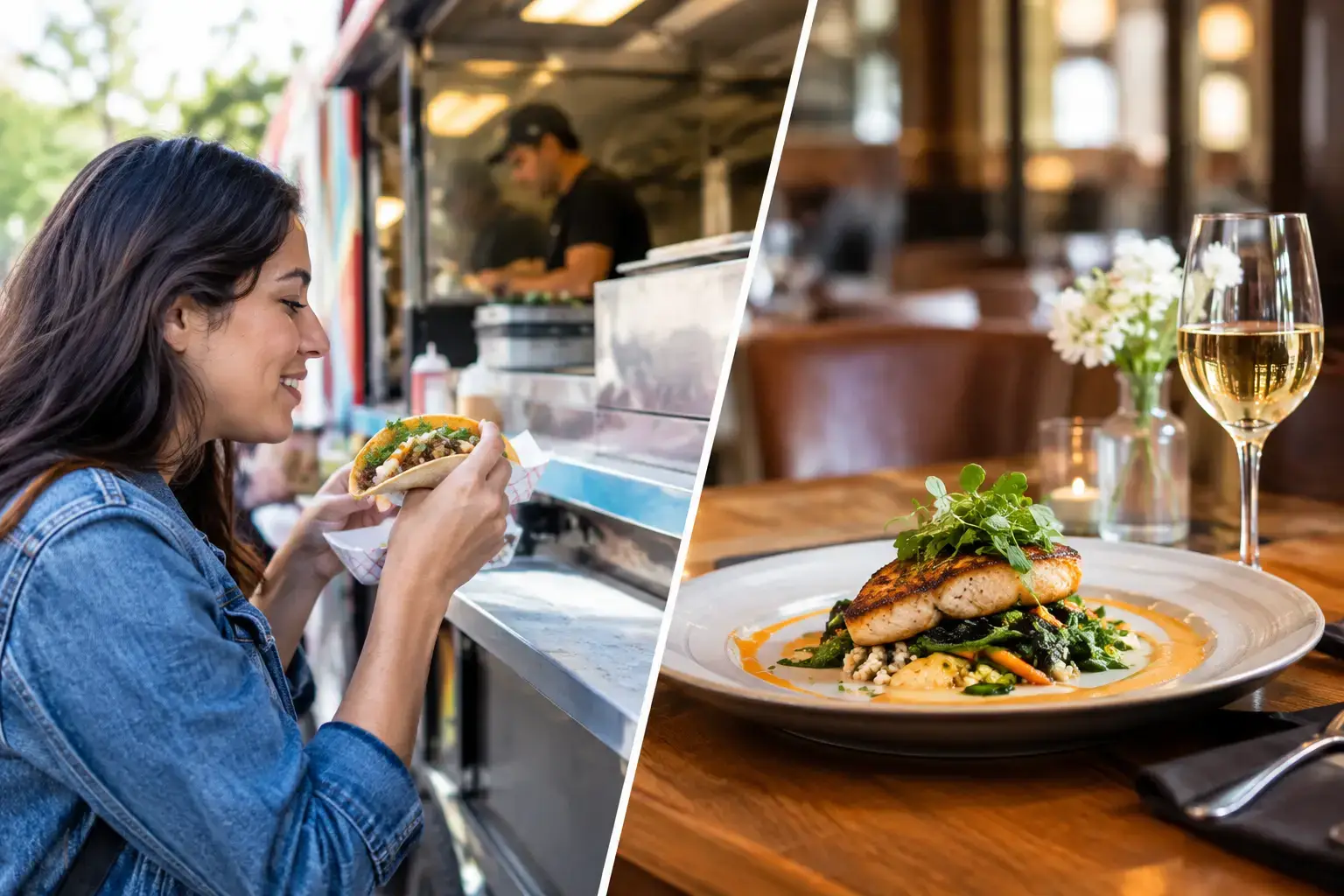
The first meal after stepping ashore can shape an entire destination. Maybe it is a paper tray of jerk chicken near the cruise port, steam rising from a late-night noodle cart, or a candlelit table where the city skyline glows beyond the glass. Street food versus restaurants is not a battle to declare a winner. It is a choice between two very different ways of listening to a place.
For travelers who chase culture as much as a great photo, food is never just fuel. It is rhythm, memory, conversation, and occasionally the best surprise of the day. One meal may put you shoulder-to-shoulder with locals on a busy corner. The next may slow you down long enough to appreciate a chef’s point of view. Both belong on the itinerary.
Street Food Versus Restaurants: Two Ways to Meet a Destination
Street food is often immediate. You smell it before you see it, pulled forward by grilling smoke, warm spices, fresh citrus, or the sizzle of oil against a hot pan. There is usually no long introduction. You point, smile, ask a question, and within minutes, something delicious is in your hands.
That speed is part of the magic. A street stall is built around a specialty, sometimes a single dish perfected through repetition. Think crisp arepas with melting cheese, tacos cut straight from the trompo, savory skewers brushed with sauce, or a flaky pastry served while it is still warm. The cook may have made that same recipe thousands of times, for neighbors on their way to work and families heading home after a long day.
Restaurants tell a different story. They can offer the space to settle in, the comfort of a table, and the pleasure of a menu with a clear point of view. A great restaurant does more than serve a meal. It frames an experience through service, lighting, music, plating, and pace. After a full day of exploring, that kind of pause can feel like its own destination.
Neither experience is automatically more authentic. Authenticity is not measured by plastic stools or white tablecloths. It lives in care, context, and the people behind the food. A family-run restaurant preserving regional recipes can be just as revealing as a beloved market vendor, while a stall created only for tourists may offer less connection than it promises.
Why Street Food Stays With You
Street food has an energy that is hard to recreate indoors. You are not separated from the city when you eat it. Motorbikes buzz past. A nearby musician plays a familiar melody. Vendors call out orders, friends laugh, and the scent of dinner drifts through the evening air. The setting becomes part of the flavor.
It also invites spontaneity. You may leave your hotel intending to find coffee and end up sharing fried plantains with a local who insists you try the house sauce. Those little detours are often where travel becomes personal. A street-food meal can be inexpensive, but its value is not about spending less. It is about being close to the everyday life of a place.
There is a creative freedom to it, too. Food vendors move quickly, adapt to seasonal ingredients, and serve people with different schedules and budgets. In many cities, street food is a living archive of migration and cultural exchange. A sandwich, dumpling, or rice plate can carry generations of history in a few bites.
Of course, a smart traveler keeps judgment in the picture. Busy stalls with high turnover are generally reassuring because food is being cooked and served continuously. Watch for clean prep areas, hot foods that are actually hot, and vendors handling money and ingredients thoughtfully. If your stomach is sensitive, start with cooked items and ease into the adventure rather than making your boldest food decision five minutes after landing.
The Restaurant Moment Is Worth Protecting
There is a reason some meals deserve a reservation. Restaurants create room for deeper exploration, especially when you want to understand an ingredient, a region, or a chef’s personal story. A thoughtful menu can connect the dots between traditional flavors and modern techniques in a way that a quick street snack simply is not designed to do.
Restaurants can also be the better choice for celebrations, group dinners, dietary needs, and nights when comfort matters. Traveling does not require treating every meal like an endurance challenge. Sometimes the most memorable experience is slipping into a welcoming dining room, ordering a local specialty, and giving the conversation time to unfold.
The best restaurant meals often have a sense of place without turning culture into decoration. You might hear local musicians playing in the corner, taste seafood brought in that morning, or meet a server who explains why a particular stew belongs to that region. Those details are not extras. They are the bridge between a beautiful meal and a meaningful one.
For cruise travelers, a restaurant meal can also offer a satisfying contrast to life on board. Ships bring plenty of dining options, but a locally owned restaurant in port can reset your palate. It reminds you that the destination is not just the backdrop to your vacation. It is a community with its own flavors, traditions, and people worth meeting.
Price Is Not the Whole Story
It is tempting to frame the choice as cheap street food versus expensive restaurants, but travel rarely works that neatly. Street food is often budget-friendly, which means you can taste more and share more. That makes it ideal for curious eaters who want to try several regional dishes in one afternoon.
Yet a restaurant is not necessarily a splurge without purpose. The cost may reflect trained staff, a more elaborate preparation, locally sourced ingredients, a carefully designed space, or simply the ability to sit comfortably for two hours while the rain passes outside. The question is not, “Which one costs less?” It is, “What kind of memory do I want this meal to hold?”
A balanced food budget leaves room for both. Grab breakfast from the vendor with the longest local line. Save one evening for a restaurant that feels special. Let lunch be a market adventure, then enjoy a polished dinner when the mood calls for it. That mix keeps a trip flavorful without making every decision feel like a trade-off.
Follow the Sound, the Crowd, and Your Curiosity
Food and music share something beautiful: both can tell you where you are before anyone says a word. The percussion from a nearby festival, the clatter of pans at a night market, the soft conversation in a neighborhood bistro – each creates a soundtrack for the meal. Pay attention to that atmosphere. It may guide you toward the experience you are actually craving.
If you want motion, surprise, and a taste of daily life, follow the crowd toward street food. Look for vendors who seem to know their regulars, and do not be afraid to ask what they recommend. If you want a slower, more composed evening, choose a restaurant with a menu that makes you curious and a room where you can linger.
The strongest travel stories rarely come from doing only one thing. They come from contrast: a spicy snack eaten on a sunlit sidewalk, followed by a beautifully plated dinner that turns into a three-hour conversation. One is not the warm-up for the other. Each offers a different lens on the same destination.
So on your next adventure, make space for both the paper napkin and the proper table setting. Order the dish that smells incredible, ask the question you almost did not ask, and let the sounds around you become part of the meal. The best travel food memories begin when you stay curious enough to taste the place in more than one way.
Leave a Reply