
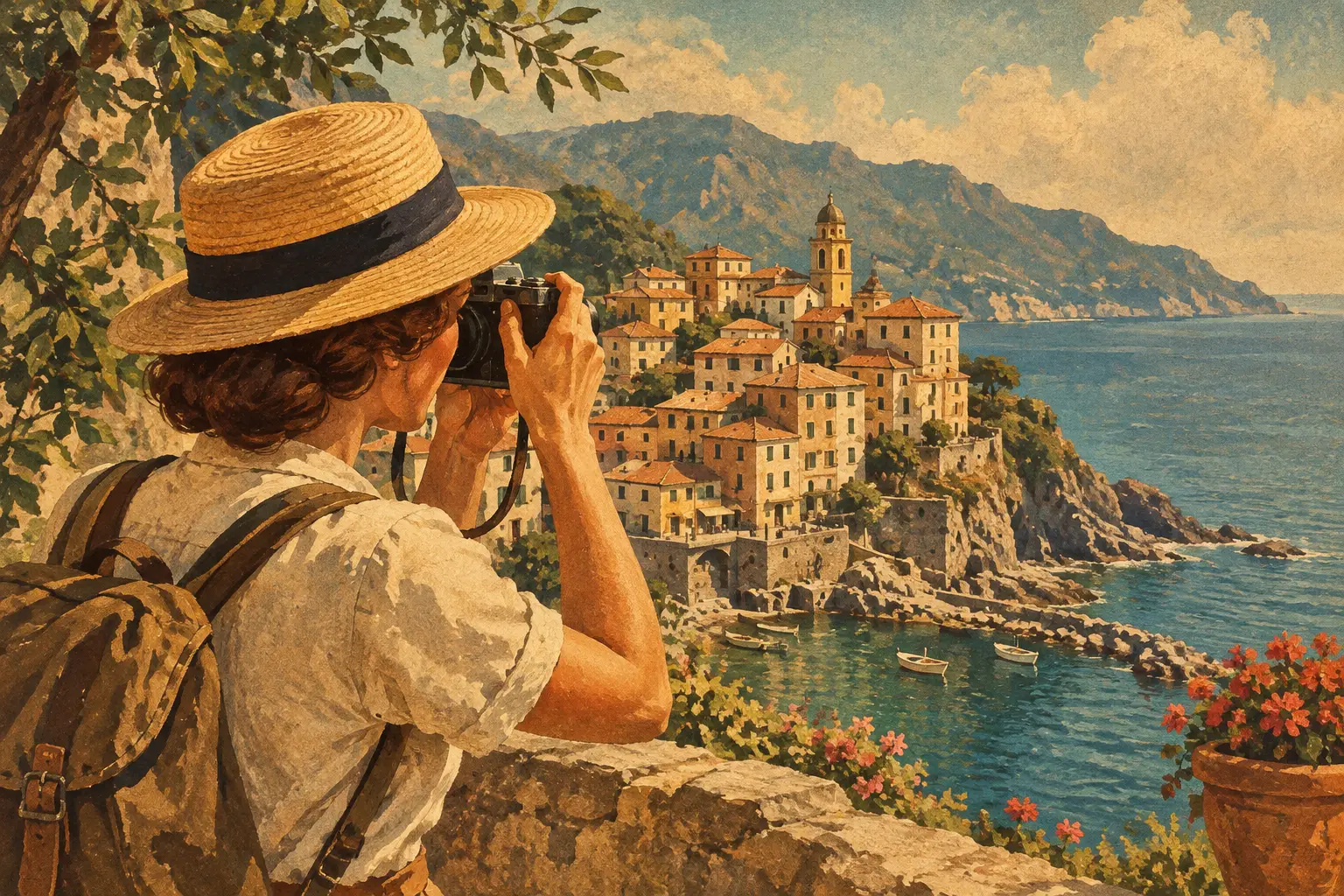
The moment that stays with you is rarely the postcard view. It is the jazz guitarist warming up outside a New Orleans club, the first crack of a spoon through crème brûlée in Paris, or the quiet laugh shared with a stranger on a cruise deck at sunset. Learning how to capture authentic travel moments means noticing those little sparks before they disappear. Your camera helps, but your attention does the real work.
The goal is not to prove you went somewhere beautiful. It is to bring people into the feeling of being there: the sound, the pace, the flavors, the people, and the unexpected details that gave a destination its personality.
Start by Experiencing the Moment First
It sounds almost too simple, but the fastest way to make travel content feel staged is to view every experience through a screen. Before taking a photo or recording a clip, give yourself a beat. Look around. Listen. Notice what is happening beyond the obvious landmark.
If you have just arrived at a lively market, resist the urge to immediately film the widest possible shot. Let the scene unfold. Watch who is greeting whom, which stall has a line, what colors keep catching your eye, and where the rhythm of the place lives. Maybe it is a vendor singing to draw customers in. Maybe it is the hiss of a grill or a child holding an oversized fruit drink with both hands.
This pause changes what you capture. Instead of collecting proof of your itinerary, you begin collecting atmosphere.
There is a balance here. You do not need to put the camera away for an entire trip, especially if creating content is part of the adventure. Just give yourself permission to be present before you press record. Even 30 seconds of observation can lead you to a much better story.
Let People Move Naturally
Authentic travel photography and video often have a little motion in them. A friend stepping into the ocean, a chef adding the final garnish, a musician finding the first note of a song, or fellow travelers leaning into the view as a ship pulls into port can say more than a perfectly arranged pose.
Rather than asking everyone to stop and smile, start recording a few seconds before the expected action. Keep rolling a few seconds after. The in-between moments are where personality shows up: the glance toward the camera, the laugh after a missed bite, the wind catching someone by surprise.
For portraits, make the interaction more comfortable by giving people something to do. Ask them to choose a pastry, look at the menu, walk toward a colorful doorway, or tell you what they are excited to try. A person with a small task is usually more relaxed than someone waiting to be photographed.
Of course, consent matters. If you are filming locals, performers, staff, or fellow guests closely, make eye contact and ask when appropriate. A warm request is not only respectful, it can create a better connection. Sometimes that conversation becomes the real story.
Avoid turning every stop into a set
There is nothing wrong with a polished photo. A little intention can make an image shine. But if every meal arrives cold while you hunt for the perfect angle, or every companion is asked to repeat a reaction three times, the experience starts to feel like a production.
Choose your moments. Get the hero shot when it counts, then put the phone down and enjoy the plate, the performance, or the view together. The most magnetic creators know when to document and when to simply live.
How to Capture Authentic Travel Moments Through Details
Big scenery gives your audience context. Details give them a reason to feel something.
When you are exploring a destination, look for the small visual clues that could belong nowhere else. A hand-painted menu. Condensation on a tropical drink. Tile patterns under your feet. A stack of vinyl records in a neighborhood music shop. The elegant texture of a cruise ship cocktail lounge before the evening crowd arrives.
These shots are especially useful in video because they create rhythm between larger scenes. If you film a sweeping harbor view, follow it with the rope knots on a dock, a server carrying a local specialty, or sunlight flashing across the water. The sequence feels more lived-in than a stream of wide shots.
Food is one of the easiest ways to tell this kind of story, but do not stop at the finished dish. Capture the menu, the cooking process, the first sip, the shared reaction, and the table after everyone has lingered longer than planned. A meal is rarely just a meal when you travel. It is a place, a conversation, and often a memory waiting to happen.
Record the Sound That Makes a Place Feel Alive
Travel content can look gorgeous and still feel strangely flat when it has no sense of sound. A destination has a soundtrack: street performers, ferry horns, clinking glasses, waves against the hull, a language you do not hear at home, and music drifting from an open doorway.
Whenever possible, record short clips with clean natural audio. Stand still for ten or fifteen seconds. Avoid talking over every scene. That ambient sound may become the detail that transports someone back into the moment when you edit later.
Music can elevate a travel video, especially when it reflects your own energy, but it should support the scene instead of erasing it. A high-energy track might be perfect for a colorful beach club or a fast-paced city montage. For a quiet morning in a coastal town, the sound of coffee being poured and chairs scraping gently across a patio might tell the story better.
If you are attending a live performance, check the venue’s rules before filming. Capture a short respectful glimpse, then let yourself enjoy the full song without holding up a screen between you and the artist.
Follow Curiosity, Not Just the Itinerary
The most authentic travel moments are often unplanned. You turn down a side street because you smell something incredible. You stay at a bar because the band is fantastic. You accept a recommendation from a crew member, bartender, guide, or local who genuinely lights up when they describe a place.
Build room for those detours. A packed itinerary can be useful, particularly on a short port day or a first visit to a major city. But scheduling every minute leaves little space for the discovery that makes a trip feel personal.
Try giving yourself one open window each day. It could be an hour after lunch or the final stretch before dinner. Wander without needing a result. Keep the camera accessible, but do not force the story. The goal is not always to find a viral moment. It is to notice what pulls you in.
This is also where your point of view matters. Two people can visit the same destination and bring home completely different stories. One might be drawn to architecture, another to local desserts, another to a percussionist performing near the waterfront. Your taste is not a distraction from authentic storytelling. It is the thread that makes your story yours.
Tell the Truth in the Edit
Editing is where travel memories become a shareable story, but it is also where authenticity can get lost. You can brighten a dark clip, trim an awkward pause, and choose the most flattering frame without pretending the trip was something it was not.
Leave in a little humanity. The rain that changed your beach plans may become the reason you found an unforgettable café. The missed turn might lead to the best view of the day. The funny reaction to a food you had never tried can be more memorable than a flawless restaurant reveal.
Be thoughtful about captions, too. Instead of writing only “hidden gem” or “must visit,” say what made a place meaningful. Was it the grandmotherly welcome at a tiny bakery? The way the live music changed the energy of dinner? The first glimpse of land after a peaceful day at sea? Specific feelings invite your audience into the experience much more than generic praise.
Make Space for the People You Are With
Travel is often remembered through relationships. Include the friend who always orders dessert, the family member who gets emotional at sail-away, the guide whose enthusiasm reshaped your view of a city, or the new acquaintance who made a night unexpectedly special.
You do not have to share every private moment to tell a human story. A hand reaching across the table, a shared laugh heard off camera, or a brief reflection recorded at the end of the day can say plenty. Protecting the intimacy of a moment sometimes makes it more meaningful, not less.
At Musical Smile Guy, the adventure is never only about where the map takes us. It is about the music that catches us off guard, the flavors we talk about all night, and the people who turn a beautiful location into a real memory.
The next time you travel, do not chase perfection. Chase the feeling that makes you smile before you even check the footage. That is usually the moment worth keeping.
Leave a Reply