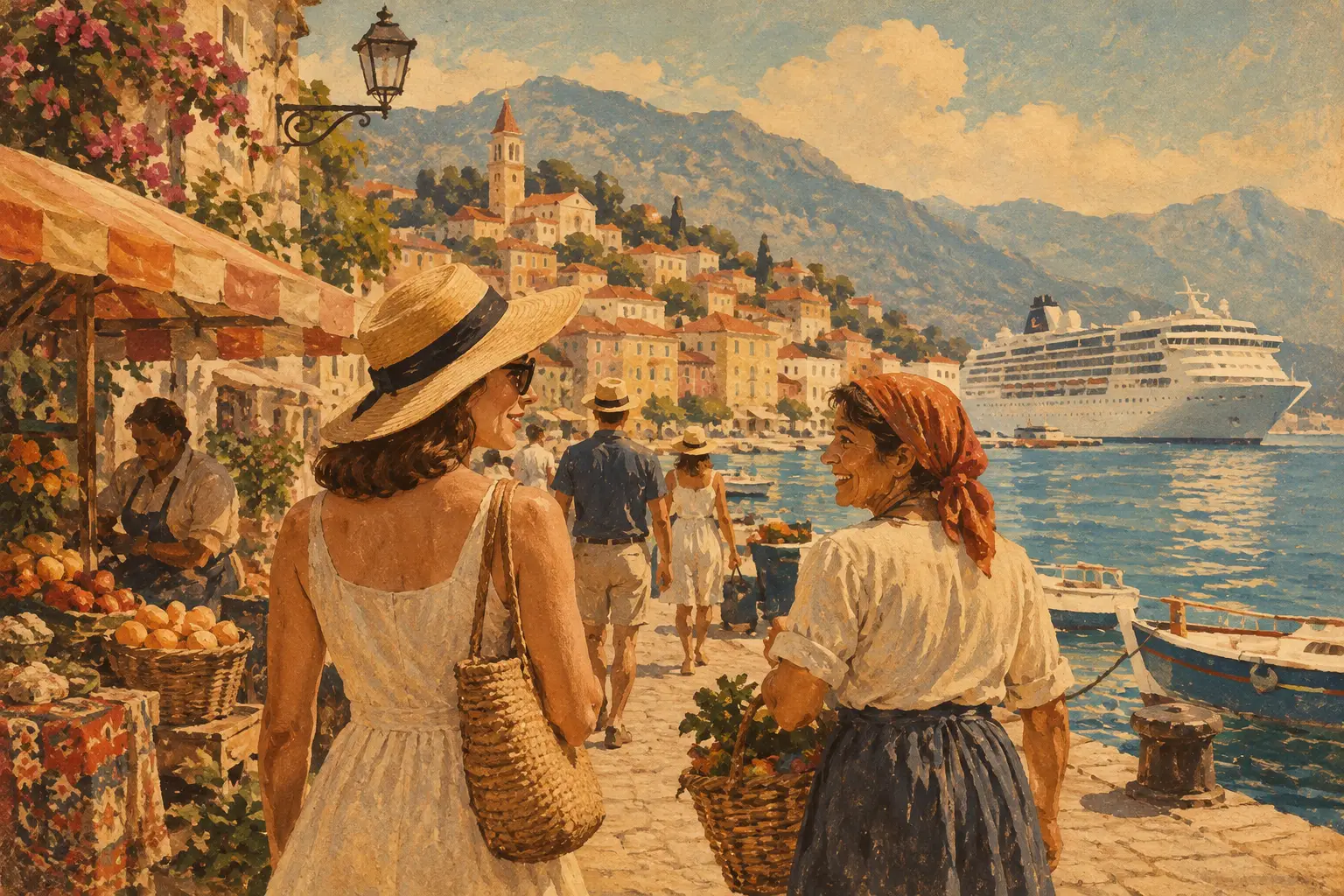
A cruise port can disappear in a blur of souvenir shops, timed excursions, and a race back to the ship. Or it can become the day you still talk about months later: the little bakery with warm pastries behind the counter, the musician playing outside a plaza, the family-run lunch spot where the menu needs no translation because the owner is happy to point and smile. To experience ports like locals is not about pretending you belong somewhere after six hours. It is about showing up with curiosity, respect, and enough room in your schedule for a place to surprise you.
For me, the best port days have a rhythm. There is a song coming from somewhere nearby, a meal that tastes like the destination rather than a familiar chain restaurant, and one unplanned moment that shifts the whole day. That is where the real travel story begins.
Start With One Neighborhood, Not the Whole Island
The temptation in a new destination is to see everything. Cruise schedules can make that feeling even stronger. You may have eight hours in port, a ship full of options, and a map filled with places that all look irresistible. But trying to cover an entire city or island usually means spending your best hours looking through a vehicle window.
Pick one area and let it breathe. In San Juan, that might mean lingering in Old San Juan beyond the main fort stops. In Cozumel, it could mean moving beyond the immediate cruise zone to find a relaxed lunch and a quieter stretch of coastline. In Nassau, it may mean choosing one historic neighborhood, one cultural stop, and time to sit with a drink while life moves around you.
This approach does not make a port day smaller. It makes it more vivid. You notice painted doorways, hear the conversation at the next table, and recognize the same street performer when you circle back later. Those details are the difference between checking off a destination and actually feeling it.
Leave Space for the Detour
A good rule is to plan one anchor experience, then protect some unscheduled time around it. Your anchor might be a food tour, a beach club, a cooking class, a museum, or a local guide who knows the stories behind the streets. The open time is for the small discoveries that cannot be booked in advance.
Of course, it depends on the port. If you are visiting a destination where transportation is limited or key sights are far apart, a structured excursion may be the smartest choice. The goal is not to reject planning. It is to make sure planning leaves room for personality.
Eat Where the Port Actually Eats
Food is one of the quickest ways to understand a place, especially when you skip the most obvious tourist menu. Look for a busy counter at lunchtime, a neighborhood market, or a casual restaurant where families and workers are gathering. The room does not need to be fancy. It needs to feel alive.
Ask a simple question: “What do you recommend?” Better yet, ask what people order when they come in hungry. That is how you find the plate with the local personality – jerk chicken in Jamaica, mofongo in Puerto Rico, fresh conch in the Bahamas, or a bowl of stew that tastes like someone has been perfecting it for generations.
There is a trade-off here. The spot with the most authentic atmosphere may take longer than a restaurant designed for quick cruise traffic. If your all-aboard time is close, do not turn lunch into a stressful gamble. Go early, confirm how long you have, and save a little time for the walk back. Relaxed travel is not about ignoring the clock. It is about using it wisely.
Markets deserve special attention. Even if you are not shopping for groceries, they reveal a destination in color, sound, and scent. Follow the aromas of roasted spices, grilled seafood, citrus, coffee, or sweet bread. Buy something small, ask about it, and enjoy it where you can watch the neighborhood move. That five-dollar snack may become the flavor you remember most.
Find the Soundtrack of the Destination
Every port has a sound. Sometimes it is steelpan music drifting through a Caribbean square. Sometimes it is salsa from an open doorway, jazz from a waterfront bar, church bells, a street drummer, or the steady energy of a market crowd. Music is not background noise when you travel. It is a direct line into the mood of a place.
Before you leave the ship, look for daytime performances, community events, local venues, and cultural centers. A short stop at a live music spot can add more texture to your day than another hour of browsing shops. If you hear something that makes you pause, pause. Let the song finish.
Be respectful of the setting. A musician performing in a public space is working, not simply decorating your vacation photo. Listen, tip when appropriate, and ask before recording close-up footage. Those small choices matter. They also create better interactions, which tend to create better stories.
At Musical Smile Guy, that connection between place and sound is part of the joy. A destination is never just a view. It is the feeling that stays with you when you hear a certain rhythm later and suddenly remember the sunshine, the streets, and the people who made the day glow.
Choose Guides Who Add Context, Not Just Stops
A local guide can transform a port day, especially in destinations with deep history, layered cultures, or neighborhoods that are easy to misunderstand from the outside. The right guide does more than point out landmarks. They explain why a dish matters, how a neighborhood changed, which traditions are still practiced, and what visitors often miss.
Look for experiences that feel specific rather than generic. A walking tour led by a historian, a cooking lesson in someone’s home, a small-group fishing outing, or an artist-led studio visit can offer a more meaningful connection than a bus that pauses for photos every 20 minutes.
That said, “local” is not automatically better just because it is marketed that way. Read the experience description carefully, pay attention to group size, and choose operators who seem clear about safety, timing, and respect for the community. A memorable day should feel spontaneous in spirit, not chaotic in execution.
Let Curiosity Lead, but Keep Cruise Timing Sacred
The ship will leave without you, and no plate of amazing food or perfect beach view is worth testing that reality. Build in a generous return buffer, particularly when you are traveling independently. Traffic, ferry delays, rain, and a wrong turn can happen anywhere.
A simple strategy helps: know the ship’s time, carry the address and port contact information with you, and make your final stop closer to the pier than your first. If you want a farther-flung adventure, consider booking it through the cruise line or with an operator experienced in cruise schedules. You are not being less adventurous by planning your return. You are protecting the adventure.
Also remember that local connection is not measured by how far you travel. A conversation with a café owner near the port can be more genuine than a rushed ride across an island. Ask about a favorite dish, a local celebration, or where they go when they have a free afternoon. Listen to the answer instead of treating it as a quick travel hack.
Experience Ports Like Locals With Respect
The most meaningful travelers do not arrive expecting a destination to perform for them. They arrive ready to participate with humility. Learn a few greetings. Dress appropriately for religious or residential areas. Ask before photographing people. Spend money with small businesses when you can. Be patient when the pace is different from the one you left behind.
And let go of the pressure to make every moment look perfect online. The bright mural may photograph beautifully, but the real magic might be the grandmother laughing with her friends outside a corner store, the server explaining a family recipe, or the sound of waves behind a local band tuning up for the afternoon.
Your next port day does not need a packed itinerary to be unforgettable. Choose one neighborhood, follow a good aroma, listen for the music, and leave room for a real conversation. The best souvenirs are often the stories you carry back to the ship – and the ones that make you want to return.