
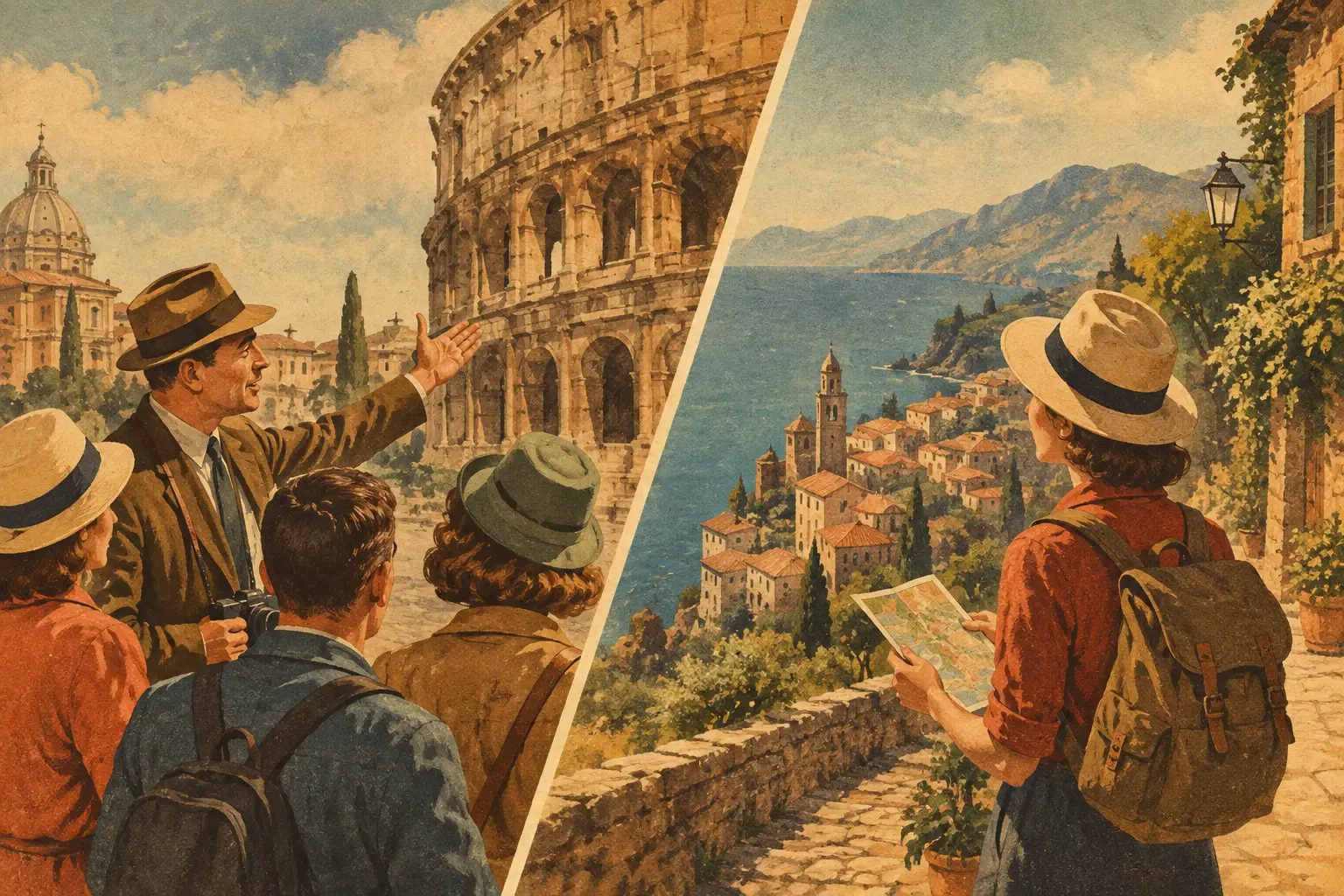
A street musician starts playing just as you step out of a small café. The rhythm pulls you toward a side street, where the scent of grilled seafood is floating through the air and a local market is still buzzing. Do you follow that moment wherever it leads, or do you rejoin a group that is headed to a landmark with a storyteller ready to bring it to life? That is the real choice behind guided tours versus independent travel. It is not simply about schedules. It is about the kind of memories you want to bring home.
For some travelers, the best day happens when a local guide shares the story behind a centuries-old church, introduces a family-run restaurant, and makes a faraway culture feel personal. For others, the magic is having no fixed plan beyond comfortable shoes, an appetite, and a little curiosity. Both styles can lead to an unforgettable adventure. The right one depends on your destination, your travel personality, and the season of life you are in.
Guided Tours Versus Independent Travel: The Real Difference
A guided tour gives your trip a rhythm. Transportation, timing, tickets, and often meals are organized before you arrive. Instead of studying train schedules or wondering whether a popular attraction requires a reservation, you can focus on looking up, listening closely, and taking in the atmosphere around you.
Independent travel puts you in the director’s chair. You choose the neighborhood, the pace, the detours, and the soundtrack. Maybe you spend an entire afternoon lingering over tapas in Barcelona because the energy feels right. Maybe you skip the museum everyone recommends and follow a local’s suggestion to a tiny vinyl shop with a live jazz set that evening.
Neither approach is automatically more authentic. A great guide can open doors that would otherwise stay closed, while a self-planned day can create room for the unexpected. The difference is how much structure you want around the discovery.
When a Guided Tour Makes the Journey Better
There is a special kind of ease that comes from arriving somewhere new and knowing the details are handled. This is especially valuable on a cruise port day, when your time ashore is limited and the ship’s all-aboard time is not flexible. A well-designed excursion can help you move from the pier to a rainforest trail, historic town, vineyard, or beach without spending precious hours figuring out transportation.
Guides also add context. A beautiful building is one experience. Hearing how generations of residents protected it, celebrated in it, or rebuilt it after a storm gives that same building emotional weight. The best guides do more than recite facts. They notice what the group is curious about, share personal stories, and help visitors see a destination through local eyes.
Guided travel can be especially appealing when language, logistics, or safety feel intimidating. Think of a first visit to Tokyo, a food-focused day in a sprawling city, or an early-morning wildlife outing where timing truly matters. When the planning is complex, expertise can turn stress into anticipation.
There is also the connection factor. Group travel can bring together people who might never have met otherwise: the couple celebrating an anniversary, the solo traveler with a big laugh, the family trying a new cuisine for the first time. A shared sunset viewpoint or a table full of regional dishes has a way of starting conversations.
Still, not every tour is created equal. A rushed itinerary with too many stops can make a destination feel like a checklist. Before booking, look for smaller groups, enough free time, and guides who emphasize culture rather than simply photo stops. The goal is not to see the most things. It is to actually feel where you are.
The Freedom of Independent Travel
Independent travel is for the traveler who sees an open afternoon as an invitation. You might wake up in a walkable neighborhood, choose breakfast based on the longest local line, and let the day develop from there. There is no need to leave a view you love because a bus is waiting outside.
That flexibility is especially rewarding in places made for wandering. In New Orleans, you can drift between brass bands, galleries, and beignets at your own pace. In Lisbon, a spontaneous stop for pastel de nata may become a long conversation with the person behind the counter. In coastal Italy, the best part of the day might be a quiet swim between planned meals.
Traveling independently also lets you shape the experience around your passions. Food lovers can build an entire route around markets, bakeries, and neighborhood restaurants. Music fans can seek out record stores, small venues, and local festivals. If you are the kind of traveler who wants to pause when a melody spills out of a doorway, independence gives you permission to stay awhile.
The trade-off is responsibility. You will need to research opening hours, transportation, cultural etiquette, and backup plans. Delays happen. Reservations sell out. A wrong turn can become a funny story, but it can also become frustrating when you are tired, hungry, or trying to get back to a ship on time.
Independent travel works best when you prepare enough to feel confident without planning every minute. Save key addresses offline, reserve the experiences you truly do not want to miss, and leave open space around them. That balance protects the trip while preserving its sense of possibility.
Cost Is More Than the Price on the Screen
At first glance, independent travel can look less expensive. You can choose budget-friendly transportation, eat where locals eat, and avoid paying for activities that do not excite you. That can be true, particularly when you are comfortable researching and making decisions on the go.
But a guided tour may offer value that is harder to measure. It can include entry fees, transportation, expert commentary, priority access, and a carefully planned route. On a short trip, paying a little more to avoid spending half a day navigating can be worth it.
The smartest comparison is not tour price versus no tour price. Compare the full experience. Ask what is included, how much time it saves, how many people are in the group, and whether the itinerary matches what you genuinely care about. A bargain is not a bargain if it leaves you standing in line all day or visiting places that do not interest you.
You Do Not Have to Choose Just One Style
The most memorable trips often blend both approaches. Start with a guided tour on your first day in a new city to get oriented, understand the history, and pick up local recommendations. Then use the rest of the trip to return to the neighborhoods, foods, and stories that caught your attention.
This mix works beautifully on cruises, too. Choose a structured excursion in a port where the logistics are challenging or the destination is far from the terminal. In a walkable port with a lively downtown, give yourself a few unplanned hours for browsing, tasting, and people-watching. Let one day be about learning and another be about following your instincts.
You can even divide a single day this way. Join a morning food tour, then revisit your favorite stop for lunch. Take a guided architecture walk, then spend sunset on your own at a waterfront café. A guide can introduce the first chapter, but you still get to write the rest of the story.
Choose Based on the Memory You Want
Ask yourself one simple question before you book: what do I want this trip to feel like? If the answer is relaxed, informed, and well supported, a guided experience may be the perfect fit. If the answer is spontaneous, personal, and a little unpredictable, independent travel may call your name.
Your answer can change from one destination to the next. You might want a guide for the temples of Kyoto and a free afternoon in San Juan. You may love meeting fellow travelers on a wine-country excursion but prefer solo wandering in a city with a strong live-music scene. That is not indecision. That is knowing that travel has more than one beautiful tempo.
The best journeys leave room for both a plan and a surprise: the story you were invited into and the song, flavor, or sunset you found for yourself. Join the adventure with an open mind, and let the destination tell you how it wants to be experienced.
Leave a Reply