
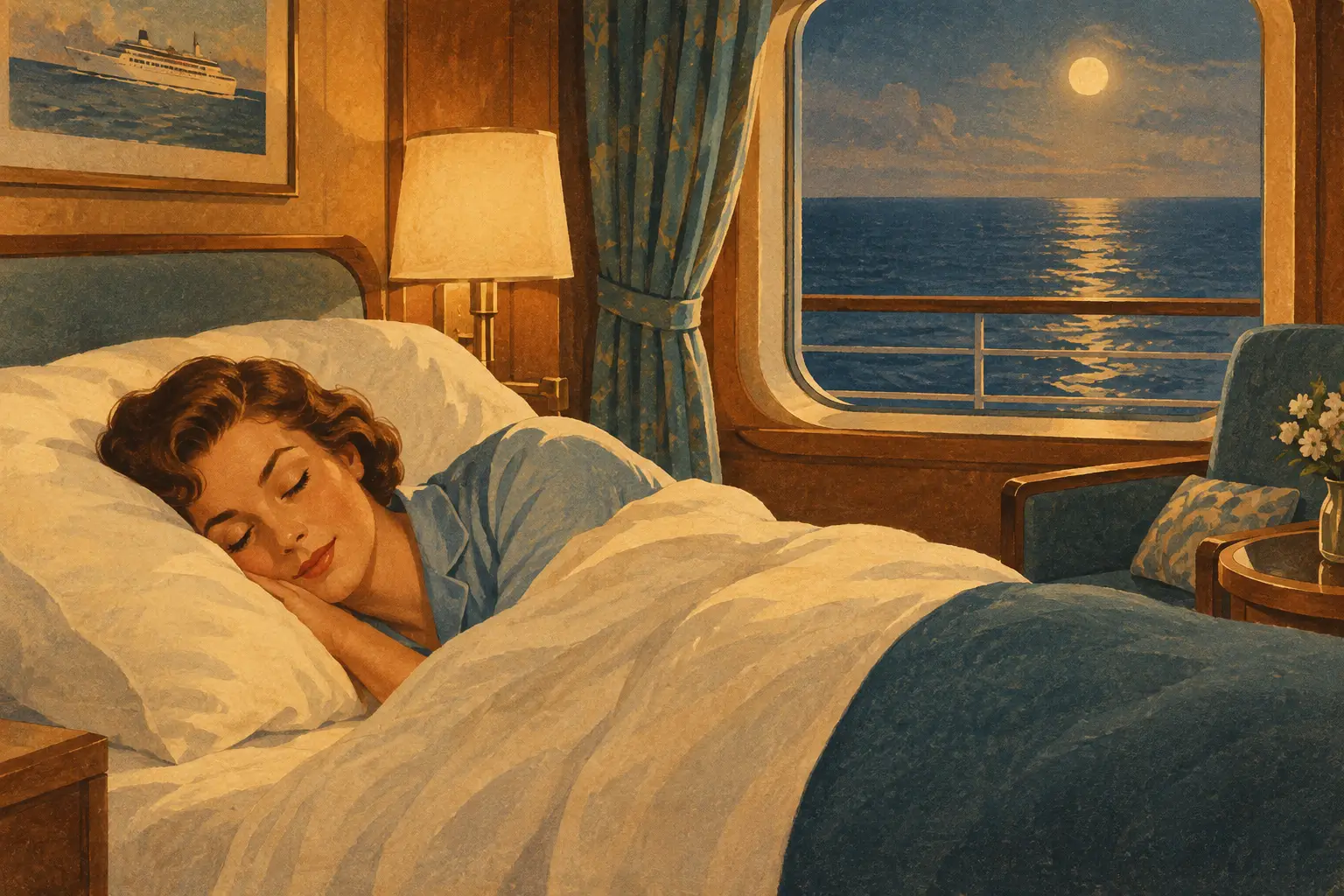
The room number can shape your whole cruise. A dreamy balcony is less magical if bass from the nightclub is still thumping at midnight, and an ocean view loses some sparkle when early-morning chair scraping starts above you. So, which cruise cabin is quietest? On most ships, it is a midship cabin on a middle deck, surrounded by other passenger cabins on every side – above, below, and beside you.
That answer is wonderfully useful, but it is not the whole story. Every ship has its own personality, from its theater layout to its pool deck to where the crew starts preparing breakfast. The best cabin is the one that protects your sleep while keeping you close to the kind of cruise experience you came for: late-night music, sunrise coffee on the balcony, lively dinners, or a peaceful reset between vibrant ports.
Which Cruise Cabin Is Quietest on Most Ships?
Look for a cabin in the middle third of the ship, ideally on a deck that has staterooms directly above and below it. Think of it as choosing the quiet center of a concert hall rather than sitting next to the kitchen door. You are insulated from many of the ship’s noisiest zones: the bow, where anchors and thrusters can make an appearance; the stern, where engine vibration may be more noticeable; and the top decks, where pools, loungers, and outdoor parties live.
A midship location also tends to feel less motion at sea. Noise and motion are different concerns, but they often travel together in the cabin-selection conversation. If you are a light sleeper who also gets uneasy in rougher water, a central cabin can make the entire voyage feel calmer.
The sweet spot is usually a standard passenger deck with cabins stacked above and below. On one ship, that might be deck 8; on another, it could be deck 10. Never choose by deck number alone. Open the ship’s deck plan and inspect what is on the levels immediately above and below your room.
The Deck Plan Test That Saves Your Sleep
Cabin categories tell you about size, view, and perks. The deck plan tells you what you may hear. Before booking, find your preferred cabin, then check three things: what is above it, what is below it, and what sits nearby on the same deck.
The quietest placement has cabins above, cabins below, and cabins across the corridor. Those neighboring rooms create a buffer between you and public spaces. A cabin beneath a restaurant, lounge, theater, pool deck, fitness center, or buffet can be perfectly lovely during the day and surprisingly busy when staff are moving furniture, equipment, or supplies.
Likewise, be careful with cabins that back up to elevators, stairwells, service closets, laundries, ice stations, or crew access doors. Elevator cars themselves are usually quiet, but the hallway traffic around them is not always. You may hear rolling luggage on embarkation day, excited voices after a show, or children racing back from the pool with all the joy in the world.
A little distance helps. You do not need to be at the far end of a hallway, but booking several doors away from elevator banks and major public entrances can make a noticeable difference.
Areas That Can Be Noisy – and Why
Cruise ships are floating neighborhoods, which is part of their charm. The same energy that makes a sailing feel alive can create noise in the wrong cabin location.
Forward Cabins
Forward cabins are often attractive because they can be close to the theater, spa, or a beautiful observation lounge. The trade-off is that they may pick up more motion, wind noise, and occasional sounds from the anchor or bow thrusters when the ship arrives in port. These sounds are usually brief, but they can be dramatic if your itinerary includes early port calls or tender operations.
Aft Cabins
Aft cabins can offer gorgeous wake views and a peaceful, tucked-away feeling. On some ships, they are wonderfully quiet. On others, lower aft cabins may experience engine hum, vibration, or a gentle shudder when the ship changes speed. That does not automatically make them a bad choice – many travelers love them – but light sleepers should read the deck plan closely and consider a cabin higher up and farther from machinery areas.
Cabins Under the Pool Deck or Buffet
This is one of the most common booking regrets. Above you may be a serene pool by afternoon, but early mornings can bring deck-chair scraping, cleaning crews, and the roll of carts as the buffet comes to life. If you enjoy sleeping in, avoid cabins directly under outdoor decks whenever possible.
Cabins Near Entertainment Venues
A cabin near the theater, nightclub, piano bar, casino, or atrium can be incredibly convenient. You can enjoy a show, linger for one more song, and be back in your room in minutes. But convenience comes with a soundtrack. If your cruise style includes early mornings for shore excursions, give yourself some hallway distance from nighttime venues.
Interior, Ocean View, or Balcony: Does Cabin Type Matter?
Cabin type matters less than location, but each option has its own quiet-life potential.
Interior cabins can be wonderfully dark and peaceful, especially when they are midship and surrounded by other cabins. They also tend to be farther from exterior wind noise. The catch is that you may notice sounds from adjacent rooms more clearly, particularly if your neighbors are social night owls or traveling with energetic little cruisers.
Ocean-view cabins have similar sound considerations, though their location can place them lower on the ship. A lower deck can be good for motion, but check whether the cabin sits near tender operations, crew work areas, or the ship’s bow or stern.
Balcony cabins bring fresh air, private views, and that unforgettable feeling of watching the horizon with your morning coffee. They can also pick up wind noise if you sail with the balcony door open, and partitions can carry conversations from next door. With the door closed, a well-positioned balcony cabin is usually very comfortable. For many travelers, the quiet value of a balcony is not silence itself – it is the ability to step outside when the ship feels busy and enjoy a private moment with the sea.
Suites are not automatically quieter, either. Some are in prime, calm locations, while others sit near popular top-deck attractions or high-traffic areas. Luxury should never replace a deck-plan check.
Small Details That Make a Big Difference
When two cabins look equally good, choose the one without a connecting door. Connecting cabins are ideal for families and groups, but the interior door can allow more conversation, television sound, and everyday movement to travel between rooms than a standard wall does.
Also consider your itinerary. A cabin that is peaceful on a sea-day-heavy Caribbean sailing may feel different on an Alaska itinerary with early scenic cruising, frequent port arrivals, and guests waking before sunrise to spot wildlife. If you know you will be up early anyway, a forward location may not bother you. If vacation means slow mornings and an unhurried breakfast, guard that sleep.
Your own travel rhythm matters, too. A couple who loves late shows and dancing may be happy near the action. A family with young children may value being close to the kids’ club more than having the ship’s quietest possible corridor. There is no universal perfect room, only the best room for the way you want to experience the voyage.
A Quick Booking Checklist for Light Sleepers
Before you press “book,” use this simple filter:
- Choose midship over far forward or far aft when quiet and stability are your priorities.
- Pick a middle deck with passenger cabins directly above and below.
- Stay away from cabins beneath pools, buffets, gyms, lounges, and outdoor activity decks.
- Book a few doors away from elevators, service rooms, laundries, and major stairwells.
- Avoid connecting cabins if you are especially sensitive to neighboring noise.
If you are booking through a cruise advisor, say clearly that you are a light sleeper. Ask them to check the ship’s exact deck plan rather than simply selecting the lowest available fare. That one conversation can be more valuable than an upgraded view in the wrong location.
A great cruise has its own rhythm: the hush of the wake, a distant melody drifting through the atrium, the soft anticipation of a new port ahead. Choose a cabin that lets you enjoy those moments on your terms, then rest well enough to meet every morning ready for the next beautiful adventure.
Leave a Reply