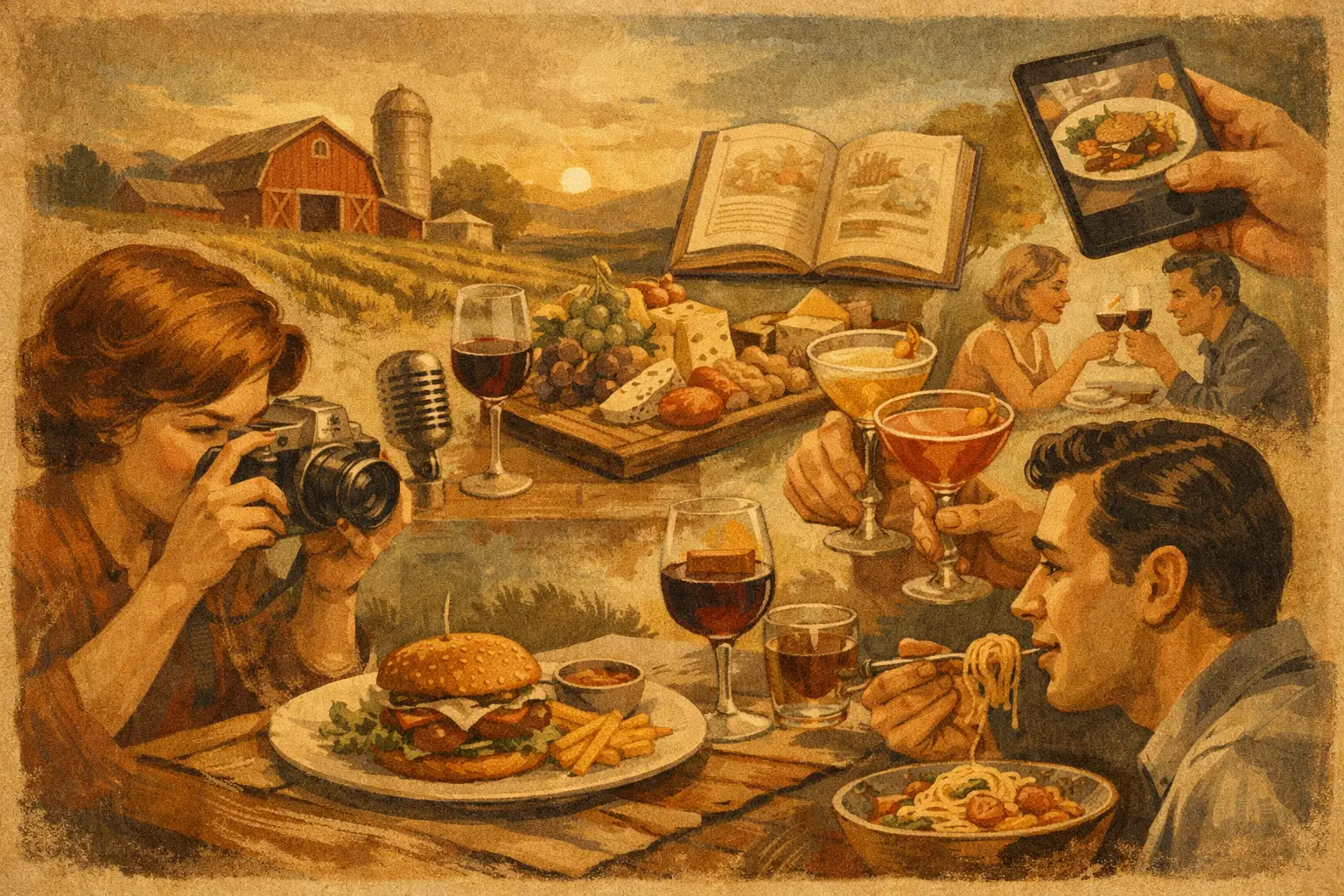
A perfectly plated dish can stop a scroll. But in 2026, the food stories people remember are rarely only about the plate. The most exciting food storytelling trends 2026 are making room for the hands that cooked the meal, the music in the room, the market down the street, and the feeling of taking that first bite somewhere new.
For travelers and food lovers, that is great news. A memorable meal has always been more than a restaurant recommendation. It is a tiny time capsule of place, personality, and connection. The next wave of food content is finally catching up to that truth.
Food storytelling trends 2026 put place back on the plate
For years, food media rewarded the instant verdict: Is it worth it? How much does it cost? Where can I get it? Those questions still matter, especially when we are planning a trip or deciding where to spend a special night out. But they do not tell us why a dish belongs where it is.
In 2026, stronger food stories begin with context. A bowl of seafood pasta means more when we know it was ordered after a breezy afternoon by the harbor. A late-night street snack lands differently when we hear the city still humming around it. A cruise ship dessert becomes part of the journey when it follows a sunset sail and an evening of live music.
The shift is not about turning every meal into a history lecture. It is about noticing the details that give food its emotional address. The color of the market stalls, the ritual of a family-style table, the local ingredient that keeps appearing on menus, or the server’s proud recommendation can do more than a long list of menu descriptions.
The destination is a character, not a backdrop
Travel creators are increasingly treating destinations as active participants in the story. Rather than filming a dish against a generic restaurant wall, they are showing the walk there, the neighborhood sounds, and the small anticipation that builds before the order arrives.
That approach works because viewers want to imagine themselves inside the moment. They do not only want to see what to eat in Santorini, New Orleans, or on board a ship. They want to understand what the meal feels like in that particular chapter of the adventure.
The human voice matters more than the polished reveal
There will always be room for beautiful food photography. A great overhead shot, glowing natural light, and a close-up of a dramatic first cut still earn attention. Yet polished images alone are losing their power to create trust.
Audiences are responding to creators who sound like real hosts. They want the honest reaction after a first bite, including the occasional surprise, hesitation, or change of heart. They want to hear why a meal mattered to you, not simply that it was amazing.
That means personality-led storytelling is becoming a bigger advantage. A creator who says, This reminded me of Sunday dinners with my family, or, I almost skipped this spot and I am so glad I did, gives viewers something to hold onto. The dish becomes a bridge between your experience and theirs.
Honesty also includes discernment. Not every celebrated restaurant will feel magical. Not every trendy dish will suit every palate. Saying that a place is gorgeous but better for cocktails than dinner, or that a spicy specialty may be challenging for cautious eaters, can make a recommendation more useful and more believable.
Sound is becoming part of the flavor
Food content has long leaned on visual drama: the cheese pull, the sauce pour, the crackle of a crust. In 2026, sound is playing a larger role in setting the scene. Not just close-mic cooking sounds, but the full atmosphere around a meal.
Think of steel drums drifting across an open deck, jazz floating out of a neighborhood bar before dinner, or the happy bustle of a market vendor calling out the day’s catch. These sounds give a food story rhythm. They help a short video feel less like an ad and more like a memory.
For a brand built at the intersection of music, travel, and culinary discovery, this creates a wonderful creative lane. A meal can have a soundtrack without becoming a music video. The key is matching the audio to the emotional temperature of the scene. A quiet breakfast overlooking the water needs a different energy than a lively night market or a celebratory tasting menu.
Original sound can be especially powerful when it is natural. Let the ice clink, the grill sizzle, the room laugh. Music should support the story, not cover up every human moment.
Process beats perfection when it reveals care
Another of the defining food storytelling trends 2026 is renewed respect for process. People are drawn to the making of things: dough being shaped, spices being ground, a cocktail being assembled with practiced precision, or a chef explaining a technique passed down through generations.
The appeal is not simply visual. Process shows care, skill, and time, three things that are easy to miss in a quick restaurant reveal. It gives viewers a reason to value a dish beyond its final appearance.
Still, there is a trade-off. Filming every step can turn a meal into a production and disrupt the people doing the work. The best creators know when to ask, when to observe quietly, and when to put the camera down. A brief moment of genuine access is better than a long sequence that feels intrusive.
When permission is clear and the relationship is respectful, behind-the-scenes storytelling can spotlight local talent beautifully. Let the baker, farmer, bartender, home cook, or chef speak in their own words whenever possible. Their perspective is not a decorative extra. It is often the story.
Small food moments are becoming the most shareable
Not every food story needs a reservation, a tasting menu, or a big reveal. Some of the most magnetic content in 2026 will come from smaller moments: the first coffee after arriving in port, a pastry shared on a rainy morning, a familiar snack found in an unfamiliar city, or a meal that saves the day after a travel delay.
These scenes work because they feel attainable. Luxury and aspiration still have a place, especially for audiences dreaming about an elevated cruise or a bucket-list destination. But aspiration feels warmer when it includes the simple pleasures that make travel personal.
The lesson for creators is to notice the in-between. Film the bite before the big activity. Tell the story behind the drink you ordered while waiting for a show. Share the food memory that did not make the glossy itinerary but became part of the trip anyway.
Credibility now includes cultural care
As food storytelling becomes more location-specific, audiences are also paying closer attention to how creators represent cultures that are not their own. Enthusiasm is welcome. Reducing a tradition to a gimmick is not.
A thoughtful story credits the people and place behind the meal. It avoids presenting a centuries-old dish as though it was just discovered for social media. It leaves room for local voices, recognizes regional differences, and avoids declaring one version of a food to be the only authentic one.
This does not require a cautious, joyless tone. Curiosity can be vibrant and celebratory. Ask good questions. Share what you learned. Be clear about what you experienced personally, rather than speaking for an entire culture. That kind of respect builds trust with viewers and with the communities that make travel worth pursuing.
Build stories in episodes, not isolated posts
The strongest food content is also becoming more connected across platforms. One memorable meal can become a short-form video, a photo story, a newsletter reflection, and part of a longer travel episode. Each format should add something new rather than repeating the same clip everywhere.
A quick video can capture the energy of the room. A longer video can reveal the journey to the restaurant and the conversation at the table. A newsletter can share the personal reflection: why that meal stayed with you after the bags were unpacked. This approach turns scattered posts into a world your audience can return to.
For Musical Smile Guy, that world can be especially rich when a destination’s food, sound, and sense of adventure are allowed to meet naturally. The goal is not to force three themes into every frame. It is to recognize when they are already sharing the same moment.
The next time a meal surprises you on a trip, stay with the scene for an extra minute. Notice what is playing, who is around you, what led you there, and what you will remember when the flavor is gone. That is where a food post becomes an invitation for others to join the adventure.