
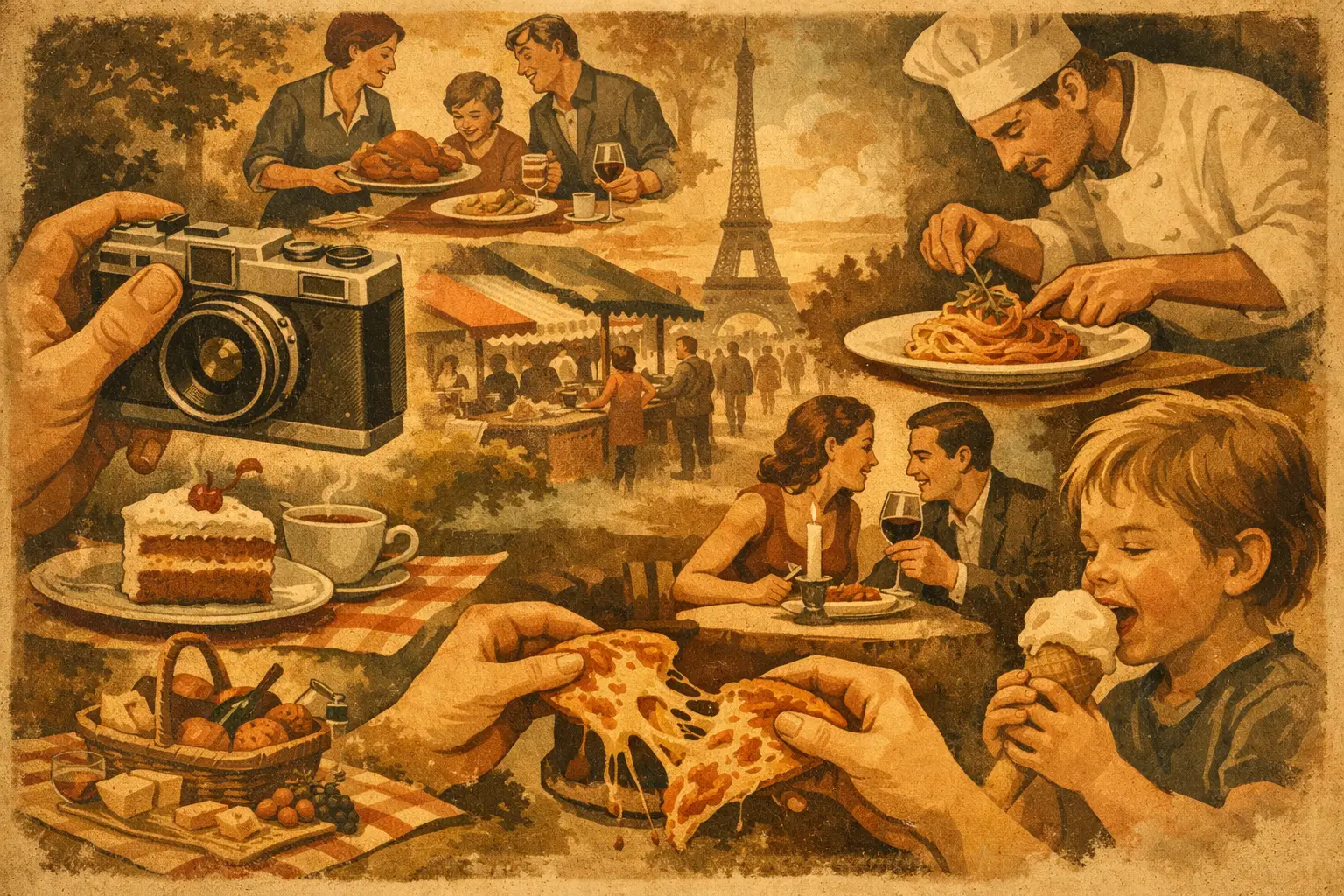
The warm steam lifting from a bowl of ramen in Tokyo. The first crack of a flaky croissant at a Paris cafe. A sunset dinner on a cruise ship where the sea is doing its best impression of a movie backdrop. Food is rarely just food when we travel. It is a mood, a memory, a conversation, and sometimes the reason we remember a place at all. Learning how to capture food moments means preserving that feeling, not simply proving what was on the plate.
You do not need a studio setup or a camera bag full of gear to make food content feel special. You need curiosity, a little patience, and an eye for the details that make a meal belong to a specific time and place. Let’s turn your next bite into a story worth sharing.
Start With the Moment, Not the Menu
Before you raise your phone or camera, take a beat. Notice what is happening around the table. Is the chef setting down a signature dish with a flourish? Is your travel companion taking that first delighted bite? Is there live music drifting through an open-air market while a vendor hands you something you have never tried before?
Those details are the heartbeat of your content. A perfectly framed plate can look beautiful, but a photo or video becomes memorable when it gives people a reason to imagine themselves there. Capture the hands passing a shared appetizer, the colorful menu resting beside a glass of wine, or the laughter after someone orders the hottest thing on the menu.
This is especially true when you are traveling. A plate of grilled fish could be anywhere. Add a glimpse of the harbor, a tiled table, a cruise ship balcony, or the bustling night market behind it, and suddenly the image has a passport stamp.
Let Natural Light Do the Heavy Lifting
Great food photography is often less about expensive equipment and more about knowing where the light is coming from. When possible, sit near a window or take the plate outside for a quick shot in open shade. Side lighting is especially flattering because it gives texture to glossy sauces, crisp crusts, bright fruit, and layers of a dessert.
Try not to use direct overhead lighting if you can avoid it. It can flatten the food and create hard shadows that make even an incredible meal look less inviting. If you are at dinner or inside a dim restaurant, embrace the atmosphere instead of fighting it. A candlelit table, warm pendant lights, and a moody cocktail can create a rich, intimate visual that feels true to the experience.
The trade-off is that low light can make photos grainy or video shaky. In those moments, stabilize your phone with both hands, keep your clips short, and choose one strong shot rather than taking thirty blurry ones. The vibe matters, but viewers should still be able to see the food.
How to Capture Food Moments From More Than One Angle
The overhead shot has earned its place for a reason. It is ideal for a table full of colorful dishes, a neat breakfast spread, or anything with graphic shapes and beautiful plating. But it is only one way to tell the story.
Bring your camera down to table level for burgers, stacked pancakes, towering cakes, or a cocktail with a great garnish. This angle shows height and gives the scene more depth. Get close for a detail shot of melting butter, a spoon cutting into tiramisu, or sauce being poured over a dish. Then step back for a wider frame that includes the restaurant, the market stall, or the landscape beyond the table.
Think of these images as a mini travel album: the wide shot establishes where you are, the medium shot shows the meal, and the close-up lets people almost taste it. If you are creating a reel or vlog, those three perspectives also make editing much easier.
Add Motion, Because Flavor Is Never Still
Some food is lovely in a still photo. Other dishes are begging for movement. Capture the cheese pull, the champagne pour, the sizzle from the grill, the chopsticks lifting noodles, or the server placing the final garnish on the plate.
For video, record short clips of five to ten seconds. Hold the phone still for a second before and after the action so you have room to edit. Slow, deliberate movement works better than swinging your camera around the table. A gentle push toward the dish or a simple pan across a shared spread can feel polished without stealing you away from the meal.
Sound deserves attention, too. The crackle of fried plantains, the clink of glasses, a musician playing nearby, or the hum of a busy food hall can place your audience right beside you. Not every clip needs music added over it. Sometimes the natural soundtrack is the flavor.
Include the People Who Make the Meal Matter
The most shareable food memories usually have a human pulse. Your face smiling over a dish, a friend reaching for a toast, a chef explaining a local ingredient, or a vendor proudly serving a family recipe all bring warmth to the frame.
That does not mean every shot needs to be posed. In fact, the best ones often are not. Ask someone to take a bite, look out at the view, or keep talking while you capture a few seconds. Genuine reactions are more compelling than a forced grin beside a plate.
Be thoughtful when photographing chefs, servers, and vendors. A quick ask and a sincere compliment go a long way. Many people are proud to share the story behind their food, and that conversation may become the most meaningful part of your post. If they would rather not be on camera, honor that immediately and keep the focus on the dish.
Tell the Cultural Story With Respect
Trying a local specialty is an invitation to learn, not a challenge to perform. Avoid treating unfamiliar food as a joke, a stunt, or a shock-value headline. Instead, get curious about its ingredients, history, and place in everyday life.
A few thoughtful details can transform a caption from “best meal ever” into something that gives your audience a real sense of place. What is the dish called? Who recommended it? Is it tied to a celebration, a region, or a family tradition? What surprised you about the flavor?
You do not have to sound like a food critic. Your personal reaction is the point. Say that the spice caught you off guard, that the texture reminded you of a dish from home, or that the meal made a rainy afternoon feel like an event. Honesty makes culinary storytelling inviting.
Edit for Appetite, Not Perfection
A little editing can help your food look as vibrant as it did in person. Brighten a dark photo, gently warm the temperature if the food appears too blue, and bring up contrast just enough to reveal texture. Keep colors believable. If the avocado becomes neon green or the lobster turns radioactive orange, pull it back.
The same principle applies to video. Choose clips that feel alive, trim out the shaky beginning, and let the pace match the moment. A buzzing street-food market can handle quick cuts. A sunset tasting menu may call for slower clips and more room for the scenery to breathe.
Do not get so focused on creating content that you miss the meal. Take your shots early, then put the phone down long enough to taste, talk, and be present. You can always photograph an empty plate, a final sip, or the view afterward. Those closing images often say more than another close-up of the entrée.
Give Your Caption a Point of View
A strong caption does not need to explain every ingredient. It needs to invite someone into your experience. Start with the feeling: the dish you still think about, the rainy-night comfort meal, the unexpected snack that became the highlight of the port day.
Then add one or two specific details. Mention the destination, the sound in the room, the local recommendation, or the flavor that surprised you. End with a question when you genuinely want conversation: Would you try it? What food brings you right back to a favorite trip? Which city has given you your most unforgettable meal?
Food connects us before we even speak the same language. So on your next adventure, capture the colors and the first bites, absolutely. But leave room for the music in the background, the people at the table, and the little surprise that made the meal yours. Those are the moments that keep the journey delicious long after the plate is cleared.