
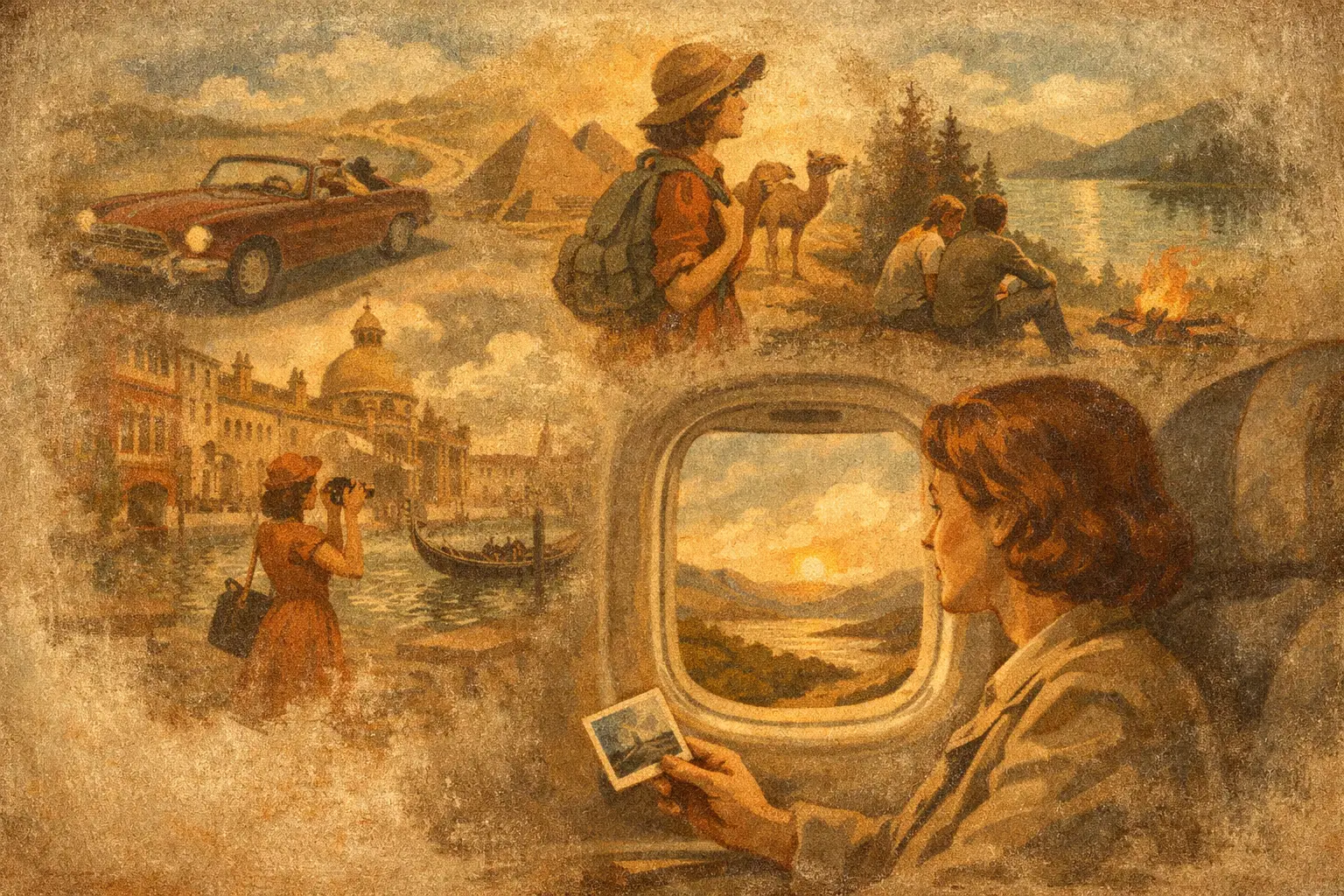
A destination can be beautiful, famous, and perfectly photographed – yet still feel distant until someone tells you what happened there. Personal travel narratives close that distance. They turn a sunset viewed from a cruise deck, a late-night plate of local food, or a song drifting through a busy street into something we can feel for ourselves.
That is the difference between travel content that simply shows us where to go and travel storytelling that makes us want to be there. The best stories do not hand us a checklist. They invite us into a moment: the nerves before stepping off the ship in a new port, the surprise of a flavor you did not expect, the joy of hearing live music where the crowd knows every word.
Personal Travel Narratives Make a Place Feel Human
A map can tell you where a place is. A guidebook can tell you what to see. But neither can fully explain why a tiny café in Lisbon felt more memorable than a grand landmark, or why a rainy afternoon in the Caribbean became the highlight of a trip.
Personal stories carry the details that formal travel advice often leaves behind. Maybe it was the friendly server who recommended the one dish you almost skipped. Maybe it was the first bass note from a band that made a whole room start moving. Maybe it was the quiet realization, halfway through a long walk, that you were no longer rushing to document the trip. You were simply present.
Those details are not side notes. They are the heartbeat of the experience.
For travelers who care about culture, food, music, and connection, this kind of storytelling offers a more honest way to see the world. It says, “Here is what this place felt like through my eyes.” That perspective is not less useful because it is subjective. Often, it is more useful. It helps us imagine how a destination might meet our own curiosity, energy, and appetite for adventure.
The Moments We Remember Are Rarely the Scheduled Ones
There is nothing wrong with an itinerary. A great cruise day, city visit, or food-focused getaway benefits from some thoughtful planning. Reservations matter. Timing matters. Knowing when the museum closes can save a whole afternoon.
Still, the moments that stay with us often happen between the plans.
It might be the musician playing outside a market after the crowd has thinned. It might be a conversation with someone who has lived in the neighborhood for decades. It might be ordering something unfamiliar because the person at the next table smiled and said, “You have to try that.” These scenes cannot always be researched in advance, but they are exactly what give a trip its personality.
A personal narrative makes room for the unexpected. It allows a travel story to include the missed turn, the sudden change in weather, the meal that was not glamorous but was absolutely delicious, or the spontaneous detour that became the day’s best decision.
This does not mean every travel story needs to be messy or unplanned. Luxury and spontaneity can belong in the same experience. You can enjoy a polished dinner, a beautiful stateroom, or a carefully chosen excursion while staying open to the unscripted moments around it. The real magic often comes from holding both: the anticipation of what you planned and the pleasure of what you never saw coming.
Music Gives Travel Stories a Soundtrack
Ask someone about a meaningful trip, and there is a good chance they will remember a song.
Music has a remarkable way of attaching itself to place. A steel drum rhythm can bring back an island afternoon. A jazz set can return you to a glowing lounge after dinner. A playlist heard on the road can become the sound of a particular season of life. Years later, one familiar melody can bring back the air, the colors, and the feeling of being somewhere new.
That is why music belongs so naturally in travel narratives. It gives the story movement. It captures the mood when words alone are not enough. A city may look different at night, but it also sounds different: train doors closing, voices spilling out of restaurants, a street performer finding an audience, waves against the side of a ship.
When we share those sounds and the emotions tied to them, we give others a richer picture of the journey. We are not just saying, “I visited this place.” We are saying, “This is how it moved me.”
Food Tells the Story Behind the Scenery
Food is another powerful keeper of memory. A meal is never only a meal when you are traveling. It can be an introduction, a celebration, a lesson, or a tiny act of courage.
Think about the first bite of something you have never tried before. There is curiosity in that moment, sometimes hesitation, and then the possibility of delight. A personal food story does not need to declare a dish the “best” in the world. It is far more interesting to explain what made it memorable: the spice that caught you by surprise, the view from the table, the person who shared the recommendation, or the way the meal reflected the spirit of the destination.
The same dish can mean different things to different travelers. That is a strength, not a problem. One person may fall for the elegance of a chef-driven restaurant, while another remembers a simple snack from a family-run stand. Both experiences can reveal something real about a place when they are told with respect and genuine curiosity.
How to Tell Better Personal Travel Stories
The most engaging stories are not necessarily the ones with the biggest budgets or the most famous locations. They are the ones with a clear point of view. Start with the moment that changed the energy of the day. Instead of trying to capture every stop, choose the scene that still makes you smile when you think about it.
Specificity makes that scene come alive. Rather than saying a meal was amazing, describe the smoky aroma, the bright color of the sauce, or the first reaction around the table. Rather than saying a beach was beautiful, mention the warm sand underfoot, the breeze that interrupted your conversation, or the song playing nearby.
It also helps to let the imperfect moments stay in the story. Maybe you expected a certain destination to feel one way and it surprised you. Maybe the weather changed your plans but made space for a better experience. A story does not have to be flawless to be inspiring. In fact, a little honesty makes it easier for others to connect.
Respect matters here, too. Traveling gives us the privilege of encountering communities, traditions, and cuisines that are not ours. The best personal travel narratives do not treat culture as a backdrop for content. They approach it with appreciation. They listen, credit local knowledge, and avoid making one brief visit sound like complete expertise.
That balance creates stories that are warm without being self-centered. You are still the host of the journey, but the place and its people are given room to shine.
Why These Stories Invite Us to Travel Differently
Personal travel storytelling can change how we move through the world. When we see a destination through someone’s genuine experience, we may feel encouraged to slow down, ask better questions, try the local specialty, or stay for one more song.
It can also make travel feel more possible. Not everyone is looking for a perfect, highly edited fantasy. Many people want to see the human side of a trip: the excitement, the uncertainty, the laughter, and the little discoveries that make the journey worth taking. A great story reminds us that meaningful travel is not reserved for one kind of person or one kind of budget. It begins with attention.
So on your next adventure, keep the camera ready, but keep your senses even readier. Notice what makes you pause. Remember the sound, the flavor, the conversation, and the feeling. Then share the part that is truly yours. Someone else may see a destination through your story and feel inspired to join the adventure with a little more curiosity of their own.