
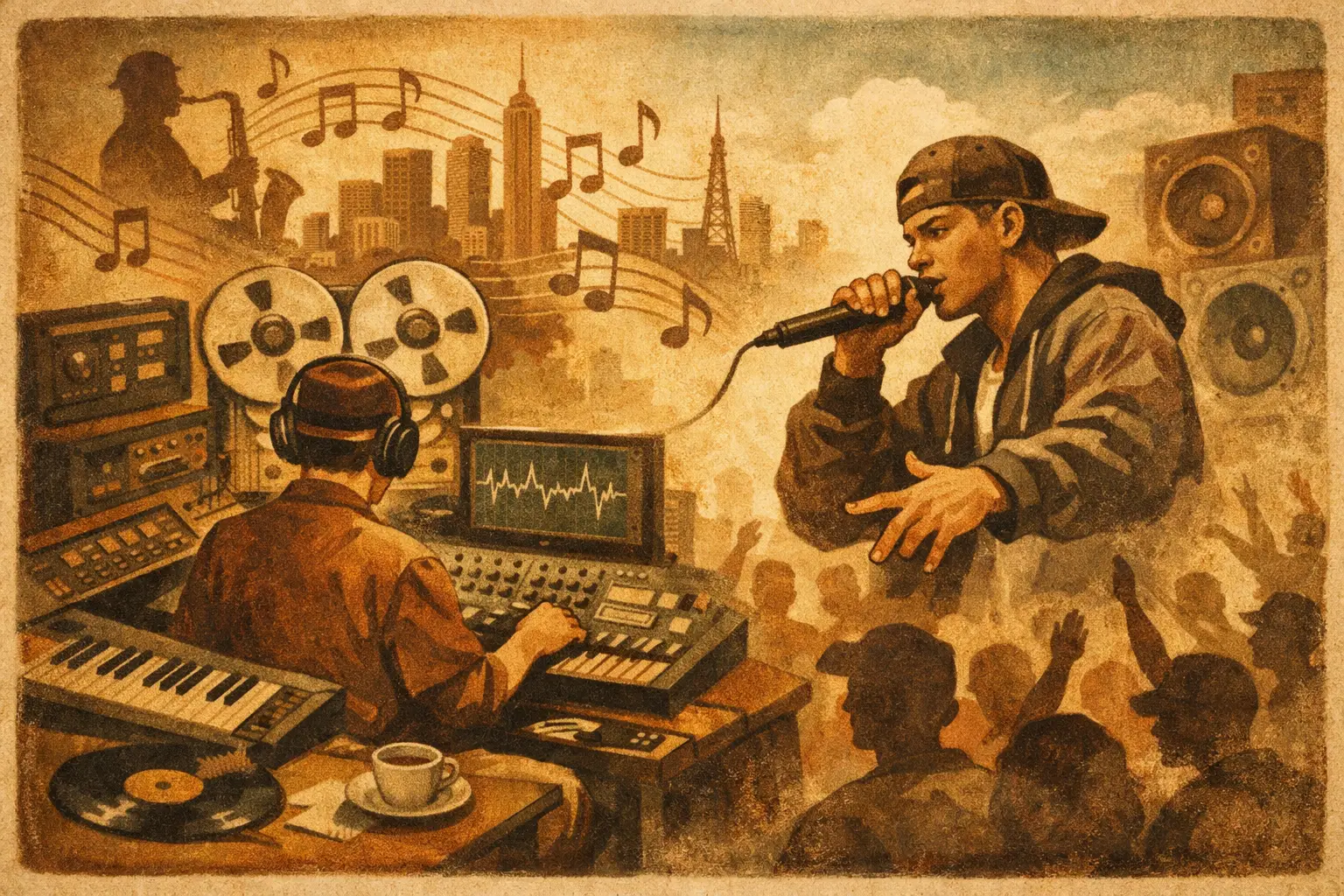
Scroll through YouTube for five minutes and you will trip over the phrase type beat like it is part of the platform’s wallpaper. Drake type beat. Travis Scott type beat. Central Cee type beat. It shows up everywhere because it works, but it also carries a weird tension. The label helps people find a sound fast, yet the best music never wants to stay inside a label for long.
That tension is what makes the whole conversation interesting. A type beat is not just a beat with a catchy tag slapped on it. It is part search strategy, part mood board, part cultural shorthand. It tells you what lane you are about to step into, even before you hit play.
What is a type beat, really?
At the simplest level, a type beat is an instrumental presented in the style of a known artist, producer, or vibe. It does not mean the beat was made for that artist, and ideally it does not mean it is a copy either. It means the producer is signaling a familiar sonic world – maybe moody pianos, airy pads, sharp hi-hats, heavy 808s, or a certain bounce that listeners already associate with someone.
Think of it like ordering food in a city you have never visited. Sometimes you do not know the chef, but you know the flavor family you are craving. Spicy. Smoky. Sweet and savory. A type beat does something similar for the ear. It says, if you like this atmosphere, come closer.
That is why the term took off. It translates a sound into a reference point people already understand.
Why type beat culture exploded
The rise of the type beat was not random. It grew out of the way people discover music online. Search bars reward recognizable terms, and artists often hunt for instrumentals by typing the name of a favorite rapper or singer plus the word beat. Producers learned quickly that if listeners search that way, titles need to match that behavior.
There is also a creative reason. Modern music moves fast, and scenes blend constantly. A beat can carry pieces of trap, R&B, Afro-fusion, drill, house, and pop all in one arrangement. Calling it a type beat gives people a handle. It is not the whole story, but it is enough to start the conversation.
For independent producers, this became a storefront sign. For rising artists, it became a shortcut to inspiration. For listeners, it turned into a giant digital crate of moods.
The good side of the type beat world
A lot of people dismiss type beats as formulaic, but that misses why they matter. They make music discovery more democratic. You do not need a label office, a manager’s contact list, or a studio in a major city to find a sound that fits your voice. You can be at home, on a late-night creative streak, searching for one emotional texture that clicks.
That accessibility has changed careers. Producers can build audiences from their laptops. Artists can test ideas without booking expensive sessions. Creators from completely different backgrounds can meet in the middle through a shared sound reference.
There is also something culturally revealing here. A type beat reflects what the audience is hearing in the moment. If one season is full of glossy melodic trap and the next swings toward darker, stripped-down percussion, the tags change with it. In that way, the type beat scene acts like a live map of taste.
Where a type beat can go wrong
Of course, there is a downside. The same label that helps people find music can also flatten originality. If every beat is trying to resemble the hottest artist of the moment, the result can feel less like influence and more like imitation.
This is where the trade-off shows up. A producer might use a familiar artist reference to get discovered, but if the music stays too close to that reference, it becomes hard to build a lasting identity. The beat gets clicks because of the name in the title, not because of the producer’s own signature.
For artists, the risk is similar. Writing over a type beat can be a great entry point, especially when you are figuring out your cadence or emotional range. But eventually you have to ask a bigger question: does this sound support who I am, or am I borrowing someone else’s silhouette?
That is the line. Inspiration is useful. Dependence is limiting.
How to hear a type beat with better ears
The best way to approach a type beat is not to ask, “Who does this copy?” Ask, “What elements create the association?” That answer is usually more revealing.
Sometimes it is the drum programming. Sometimes it is the space in the mix. Sometimes it is the chord progression or the way the melody leaves room for a vocal to float instead of fight. A beat tagged as one artist might actually pull influence from three different scenes at once.
That is where listening gets fun. You start noticing that the title is only the entry point. The actual beat might carry its own story, its own motion, its own sense of place.
In a way, this feels a lot like travel. A destination may first attract you because of the headline image everyone knows, but once you arrive, the real experience is in the details – the side street, the background music in a cafe, the dish you did not expect to love. The name gets you there. The texture makes it memorable.
Why producers still use type beat titles
Even producers with serious talent still lean on the phrase because discoverability matters. Online platforms are crowded, and a strong beat can disappear if nobody finds it. Calling something a type beat is often less about creative limitation and more about translation. It tells the listener where to place the sound in their mental library.
That said, smart producers usually balance searchability with personality. They may use an artist reference in the title, then make sure the beat itself has one or two details you can recognize later as theirs – a certain drum pocket, a haunting vocal texture, an unusual transition, a warmer low end, a sample choice that feels cinematic rather than generic.
That is the long game. Use the familiar door, then give people a room they remember.
The future of the type beat
The phrase is not going away soon, but its meaning keeps stretching. More beats now get labeled by mood, place, or hybrid identity rather than one direct artist comparison. You will see tags that blend genres, aesthetics, and even visual cues. That shift makes sense because listeners are getting more fluid too. They do not only want “sounds like this artist.” They want late-night rooftop energy, ocean-view luxury, reflective drive-home mood, or festival-afterglow warmth.
That evolution is healthy. It opens space for music to feel more experiential and less imitative. It also better reflects how people actually listen. We do not soundtrack our lives in neat genre boxes. We soundtrack them by feeling.
For a brand like Musical Smile Guy, where music, movement, and atmosphere naturally connect, that idea lands especially well. The songs and beats we remember most are often attached to a place, a meal, a trip, a moment of confidence, or a night that felt bigger than itself.
So what should artists and fans take from it?
If you are an artist, use a type beat as a starting point, not a creative ceiling. Let it help you find direction, then push past the obvious choices. Change the cadence. Shift the mood. Bring your own storytelling into it.
If you are a producer, think beyond naming a trend. Ask what emotional world you are really building. The title might get the first click, but the feeling is what earns the replay.
And if you are simply a fan, keep listening past the label. Some of the most exciting music online is hiding inside search-friendly packaging. A type beat may introduce itself through familiarity, but the best ones still carry surprise.
That is probably the most interesting thing about the whole ecosystem. A phrase built to organize sound has also become a place where new sound keeps being born. Stay curious enough to hear the difference.