
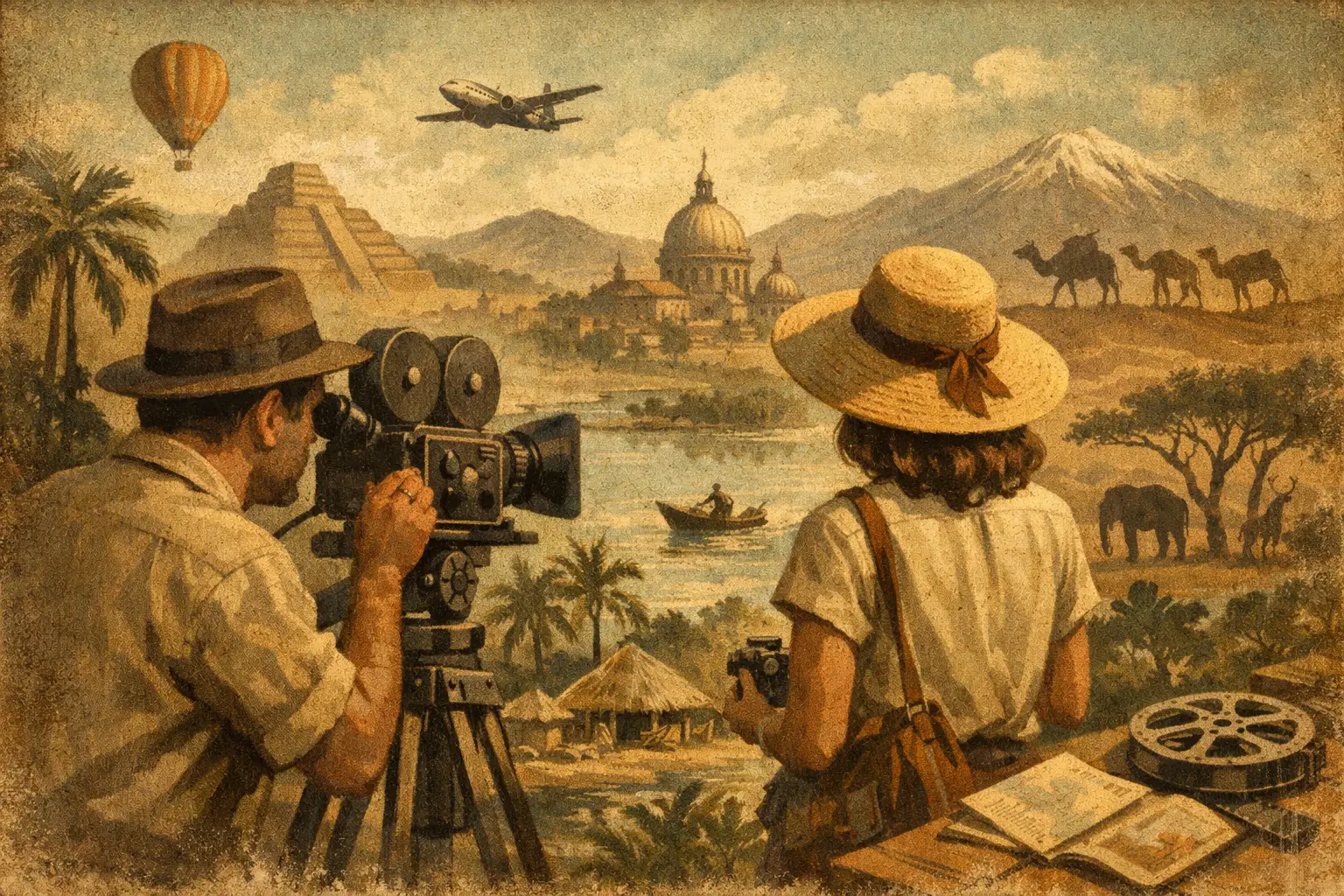
A sunrise shot over a famous skyline can be beautiful. But if that is all a travel documentary gives you, it fades fast. The ones that stay with you do something deeper – they make you feel the rhythm of a place, hear its personality, and connect with the people who give it life.
That is what makes this format so special. A great travel documentary is not just about movement from one destination to the next. It is about perspective. It turns a place into a lived experience, where the streets, the meals, the music, and the small human moments matter just as much as the postcard view.
Why a travel documentary matters more than a highlight reel
We are surrounded by quick travel clips, polished montages, and short videos built to stop a scroll. They can be fun, and sometimes they are genuinely inspiring. But a documentary has room to breathe. It can show not only where someone went, but why that place felt meaningful.
That difference matters. A highlight reel often sells the fantasy of travel. A documentary, at its best, shares the texture of it. You notice the laughter at a market stall, the sound of live music drifting out of a doorway, the pride behind a local dish, or the quiet pause that happens when a landscape is so stunning it makes everyone stop talking.
For audiences who want more than tips and top-10 lists, that kind of storytelling creates a stronger connection. You are not simply collecting destination ideas. You are being invited into a fuller experience of culture.
What makes a travel documentary actually work
The strongest travel stories usually balance three things well: place, people, and point of view. If one is missing, the whole piece can feel flat.
Place should feel alive, not staged
A location needs more than drone footage and pretty lighting. Visual beauty helps, of course, especially when you are filming coastlines, cityscapes, mountain roads, or a cruise ship gliding into port. But beautiful images alone do not create emotional memory.
A place starts to feel alive when the camera lingers on details that reveal character. Maybe it is the steam rising off a bowl of soup on a rainy afternoon. Maybe it is a street musician playing for a crowd that did not expect to stop but suddenly cannot leave. Maybe it is the contrast between luxury and local life, where a glamorous arrival gives way to a much more grounded, personal moment.
That is often where a documentary separates itself from promotional content. It is willing to let the destination speak in its own voice.
People make the story worth following
This is the part many glossy travel videos miss. Places matter, but people are what give a destination heart.
A chef explaining why a family recipe still matters. A guide sharing what changed in their hometown over the years. A performer turning a public square into a stage. Even brief interactions can add warmth, tension, humor, and honesty. Without those moments, the film may look polished but feel distant.
There is a trade-off here. Some travel documentaries lean heavily on the host’s personality, while others step back and let local voices lead. Neither approach is automatically better. It depends on the story. A charismatic host can make viewers feel welcomed and engaged, especially when the tone is warm and curious. But if the host becomes the entire focus, the destination can start to feel like a backdrop instead of a living culture.
Point of view is what gives it soul
A documentary needs a reason to exist beyond, “Here is where I went.” That reason can be personal, cultural, historical, emotional, or even musical. The key is that the story has a lens.
Maybe the lens is food. Suddenly, a city becomes a story about migration, memory, and identity through what people cook and share. Maybe the lens is music, and a neighborhood opens up through rhythm, performance, and local sound. Maybe it is about cruise travel, where the movement between ports creates a layered narrative about anticipation, arrival, and contrast.
When a travel documentary knows its lens, it becomes more memorable because it offers interpretation, not just documentation.
The role of food and music in a travel documentary
Food and music are often treated like extras in travel media, but they are usually central to the most memorable stories. They give a place atmosphere. They also give audiences an entry point that feels immediate and human.
Food works because it is intimate. It is history you can taste. A market, a roadside stand, a fine dining room, or a family-run kitchen can all reveal something different about a destination. The meal itself matters, but so does the setting, the conversation, and the emotion attached to it.
Music works in a different but equally powerful way. It sets pace, tone, and identity. Live music in particular can shift a scene from visually interesting to emotionally electric. You do not just see where you are – you feel it. That is one reason creator-led travel storytelling can be so compelling when it pays attention to sound as much as image.
For a brand like Musical Smile Guy, that intersection feels especially natural. Travel becomes richer when it is not boxed into scenery alone. The soundtrack, the shared meal, the local performance, and the personal reaction all belong in the same frame.
Why some travel documentaries feel unforgettable
Usually, it comes down to emotional honesty.
The most memorable films are not afraid of imperfection. They allow for surprise, awkwardness, weather changes, missed expectations, and the little detours that make travel real. They do not flatten every moment into glossy sameness.
That honesty builds trust with the audience. Viewers can tell when a host is genuinely moved, curious, or challenged. They can also tell when a scene has been stripped of its complexity to look cleaner on camera.
This does not mean every documentary needs to be serious or heavy. Joy is powerful too. Wonder is powerful. Celebration is powerful. But the emotion has to feel earned. If every destination is described with the same level of excitement and the same set of visuals, the story starts to blur together.
A great documentary gives each place its own emotional signature.
How creators can think differently about the format
For modern travel creators, the documentary format offers a big opportunity. It lets you move beyond quick content and build something with staying power.
That does not mean every piece needs to be feature length or cinematic in the traditional sense. A short-form series can still feel documentary-driven if it has a clear story, a strong voice, and real cultural curiosity. What matters is intention.
Ask what the audience should feel when the piece ends. Should they feel inspired to visit? More connected to a culture they did not know well? Hungry? Nostalgic? Surprised? If you know the emotional destination, the creative choices become sharper.
It also helps to resist the urge to over-explain everything. Sometimes a documentary is strongest when it leaves room for atmosphere. A street scene, a musical performance, or a quiet meal can carry meaning without a lot of narration. The right balance depends on the creator’s style, but less can be more when the visuals and sound are doing real storytelling work.
What audiences really want from a travel documentary
Most people are not looking only for information. They are looking for transport in the emotional sense. They want to be taken somewhere, not just told about it.
That is why personality-led travel storytelling continues to resonate. When the host feels open, observant, and genuinely engaged, the viewer has someone to travel with. The experience feels shared. It becomes less about consuming content and more about joining the adventure.
At the same time, audiences are getting more selective. They want beauty, yes, but they also want authenticity. They want entertainment, but not at the expense of depth. They appreciate aspiration, but they can spot empty gloss pretty quickly.
The sweet spot is a story that feels polished without feeling detached. Stylish without feeling manufactured. Personal without becoming self-absorbed.
That is a high bar, but when a travel documentary reaches it, the result is powerful. It can inspire a future trip, reshape how someone sees a culture, or simply remind them that the world is still full of texture, flavor, rhythm, and connection.
The best travel stories do not just show you where to go next. They remind you why going anywhere at all can still feel magical.