
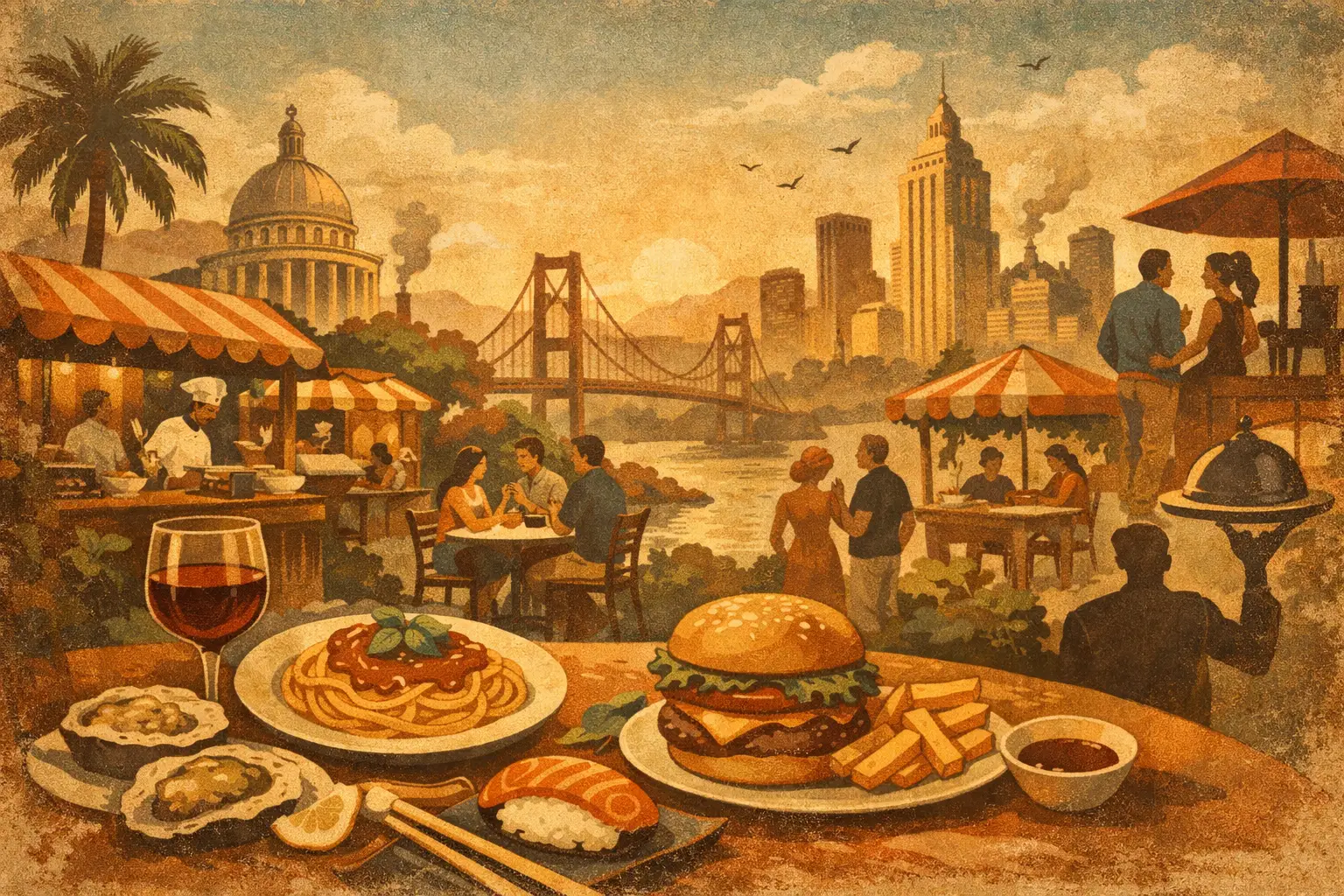
Some cities feed you. Others stay with you.
That difference is what makes the best foodie city such a fun debate, because the answer usually has less to do with reservations and rankings than with the feeling a place leaves behind. It is the late-night taco that somehow tastes like the whole neighborhood. It is the jazz drifting out of a doorway while dinner lands at your table. It is the market stall, the grandmother-run bakery, the chef pushing tradition forward without losing the soul of it.
If you love travel for the atmosphere as much as the itinerary, this question gets interesting fast. A great food city is not just where you eat well. It is where food becomes part of the local soundtrack, the street energy, the stories, and the way people gather.
The best foodie city is more than fine dining
A city does not earn that title just because it has a few impossible-to-book restaurants. Fine dining matters, sure. Ambition matters. Creativity matters. But if the food magic disappears the second you leave a polished dining room, that city might be excellent, not essential.
The best foodie city has range. You can have a beautiful multicourse dinner one night and then spend the next day chasing something wrapped in paper from a tiny counter with a line out the door. It gives you a sense of place at every price point. That is the part people miss when they turn the whole conversation into a list of famous chefs.
For travelers, especially the kind who want culture and flavor in the same frame, accessibility matters. A city becomes memorable when you can taste its identity without needing a concierge, a month of planning, or a luxury budget for every meal.
Flavor matters, but context matters too
I think the strongest food cities offer more than delicious bites. They serve food in context. You understand why that dish exists, who shaped it, how migration influenced it, and what local ingredients give it character.
That is why cities like New Orleans, Mexico City, Tokyo, Bangkok, Barcelona, and Istanbul keep showing up in this conversation. They are not just food capitals because they have popular dishes. They are food capitals because history is sitting right there on the plate.
New Orleans is a perfect example. You are not only eating gumbo, po’boys, charbroiled oysters, or beignets. You are tasting African, French, Spanish, Caribbean, and Southern influences braided together in one city that already moves like music. The meal is incredible, but the atmosphere is doing real work too. You hear it, feel it, and taste it all at once.
That is where food and travel become something bigger than checking boxes. The city starts performing for you in the best way, and your meal becomes part of the show.
The street food test
One of my favorite ways to judge a food city is simple: how strong is it before you ever sit down at a formal restaurant?
Street food is often where a city reveals its confidence. If the snacks between destinations are as exciting as the headline meals, that place probably has depth. You are seeing daily life, not just curated experiences. You are tasting what locals actually crave when they are in a hurry, out late, or heading home from work.
That is why cities with vibrant street food scenes usually feel more alive. They invite you in. They let you participate. Food becomes less of a performance and more of a rhythm.
What separates a good food city from the best foodie city
A good food city can impress you for a weekend. The best foodie city makes you want to rearrange your life just a little so you can come back hungry.
Part of that comes down to consistency. You want the coffee shop to care. You want the neighborhood spot to have a signature dish. You want the dessert scene to be strong enough that dinner does not get the final word. The best cities build trust quickly because the floor is high, not just the ceiling.
Another part is diversity. Not diversity as a buzzword, but as a lived reality. Cities become world-class food destinations when immigrant communities, local traditions, and new creative voices all have room to shape the scene. That is where culinary momentum comes from. You want old-school institutions, rising chefs, family-owned spots, and modern experiments all sharing space.
It also helps when the city has edible personality. Some places are technically impressive but emotionally flat. Others have swagger. Their food feels playful, proud, and deeply connected to place. You can tell when a city knows exactly who it is.
Can one city really claim the title?
Honestly, it depends on what kind of eater you are.
If your dream trip revolves around precision, seasonality, and obsessive craftsmanship, you may lean toward Tokyo. If you want layered history, bold flavors, and meals that spill into the street, Mexico City makes a strong case. If you love soulful classics, live music, and a dining culture that feels celebratory from lunch through midnight, New Orleans is right there waiting for its applause.
This is where the conversation gets personal, and that is a good thing. The best foodie city for one traveler may not be the best for another. Some people want innovation. Others want comfort. Some want market culture and casual bites. Others want a city where every night can turn into an event.
So instead of asking for one universal winner, it may be smarter to ask: what kind of flavor experience moves you most?
The role of energy and memory
A lot of food content focuses on what was eaten. I think the deeper question is what you remember.
Do you remember the sauce, or do you remember the way the whole street smelled after the rain? Do you remember the plating, or the song playing when the dish arrived? Great food cities are memory builders. They create scenes, not just meals.
That is why some destinations outperform their own restaurant lists. The food may be excellent, but the real magic is the mood around it. A waterfront lunch, a neon-lit noodle bar, a tiny bakery before sunrise, a seafood table with live music in the background – those moments are what turn a place into a personal classic.
For a brand like Musical Smile Guy, that connection feels especially real. Food lands harder when the soundtrack, scenery, and human energy are all in sync.
Best foodie city contenders that always deserve the conversation
New Orleans deserves a spot because it offers one of the clearest identities in American food. It is rich, joyful, rooted, and unmistakable. You do not need a lecture to understand it. One meal can tell the story.
Mexico City belongs here because it gives you scale without losing soul. You can eat brilliantly at every level, from elegant tasting menus to unforgettable tacos. The city feels creative, grounded, and endlessly delicious.
Tokyo is almost unfair in its excellence. The precision is astonishing, but what really wins people over is the depth. You can spend days eating one category of food and still feel like you have only scratched the surface.
Bangkok brings electricity. Sweet, sour, spicy, smoky, fresh – it is a city that hits with confidence. It rewards curiosity, and it keeps your palate fully awake.
Barcelona offers that beautiful mix of market culture, social dining, and a sense that food belongs in everyday life, not just special occasions. It feels stylish without losing warmth.
There are plenty of other contenders, of course. Istanbul, Singapore, Lima, Seoul, and San Sebastian all have serious arguments. That is the trade-off with this topic. The more you know, the harder it is to crown one winner.
How to choose your own best foodie city
Start with your appetite, not someone else’s ranking.
If you want a city that feels musical, social, and emotionally rich, look for places where food spills into public life. If you want culinary craftsmanship at the highest level, focus on destinations known for obsessive technique and strong local ingredients. If budget matters, and for most of us it does, look for cities where everyday eating is part of the joy rather than an expensive side quest.
It also helps to think about pace. Some food cities are made for lingering. Others are made for grazing all day and staying out late. Some are best when you plan ahead. Others are best when you wander and follow the crowd.
And maybe that is the real answer. The best foodie city is the one that makes you feel present. It pulls you out of routine, puts something unforgettable in your hands, and reminds you that a meal can tell you almost everything about a place if you are paying attention.
So when you pick your next destination, do not just ask where the famous restaurants are. Ask where the city itself tastes alive.