
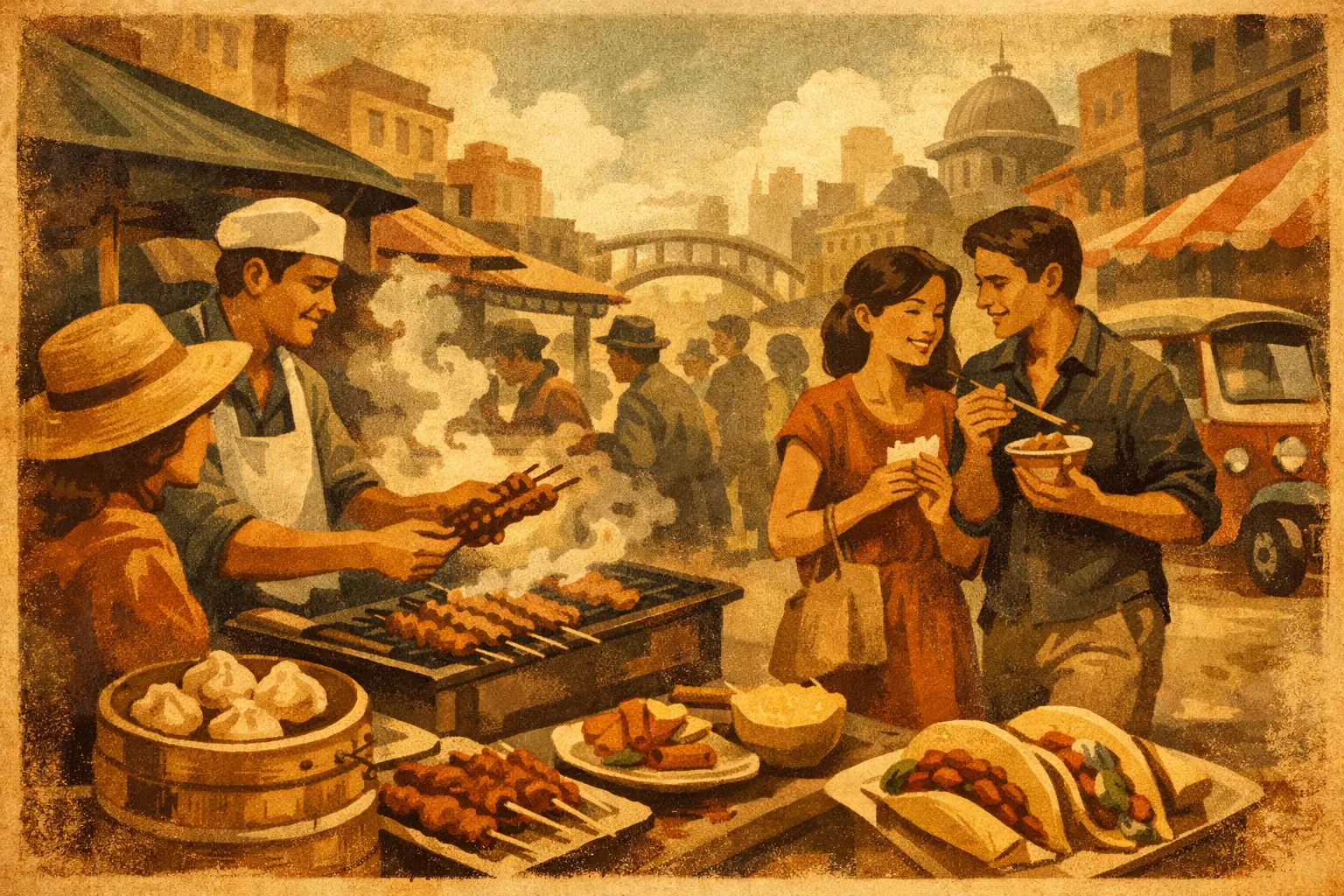
You can learn a lot about a place from its skyline, its soundtrack, and the way people move through a busy square. But if you really want the city to speak, follow the smoke, the sizzling pan, and the line of locals waiting for one perfect bite. Street food has a way of cutting through the polished version of travel and bringing you straight to the heartbeat.
That is what makes it unforgettable. Street food is rarely about formality. It is about timing, instinct, aroma, and the kind of flavor that feels tied to the pavement beneath your feet. One cart on one corner can tell you more about immigration, family tradition, regional pride, and neighborhood identity than a polished brochure ever could.
Why street food feels so personal
A restaurant can absolutely tell a story, but street food often tells it faster and with less filter. You are standing outside, surrounded by traffic, conversation, music, weather, and movement. The setting becomes part of the meal. The person cooking may be preparing the same specialty they learned from a parent or grandparent, using techniques that were shaped by another city, another country, or another chapter of history.
That is why the experience lands differently. You are not just tasting a dish. You are tasting adaptation, resilience, and local taste in real time. In many cities, the most beloved street food comes from communities that turned limited space, limited resources, and deep culinary knowledge into something iconic.
There is also an honesty to it. Street food usually does not hide behind heavy presentation. If the seasoning is good, you know immediately. If the texture is right, the whole bite lights up. If the balance is off, there is nowhere for it to hide. That directness is part of the appeal.
The rhythm of a city lives in its street food
Every destination has its own tempo, and street food often moves right in sync with it. Morning street food feels different from midnight street food. A market breakfast has one kind of energy. A late-night grill outside a music venue has another. You are not just eating according to hunger. You are eating according to the city’s rhythm.
That is one of my favorite parts of travel. Some places wake up with coffee, fresh bread, fruit, and warm savory pastries. Others hit their stride after dark, when sidewalks fill up, music drifts into the street, and food stalls become social anchors. In that sense, street food is not just cuisine. It is choreography.
If you love travel because it helps you feel more present, this matters. Street food asks you to slow down enough to notice who is gathering where, what people order without hesitation, and how one neighborhood tastes different from the next. The meal becomes a scene, and the scene becomes a memory.
What street food reveals about culture
The best part about street food is that it makes culture tangible. You can read about migration patterns, trade routes, and regional ingredients, but one bite can connect all of that in a way that feels immediate. Spice blends, cooking methods, bread styles, sauces, and even serving rituals often reflect layers of cultural exchange.
You see this especially in port cities, border regions, and places shaped by tourism or colonial history. A single popular snack might carry Indigenous influence, imported ingredients, and a preparation style shaped by generations of blending traditions. That does not make it confusing. It makes it real.
Street food also shows what people actually crave in daily life. Not the ceremonial meal. Not the special occasion dish. The real everyday favorite. The portable lunch. The after-work comfort bite. The snack that everyone argues about because every local has a preferred vendor. That is where food culture gets lively.
And yes, there is often joy built into the whole thing. The color of the produce, the sound of the grill, the motion of hands assembling a plate at speed – it all creates a sensory experience that feels closer to live performance than routine dining.
Not all street food experiences are the same
This is where nuance matters. Street food can be magical, but it is not one-size-fits-all. Some cities have deeply established street food scenes with generations of vendors, clear specialties, and strong local trust. In other places, regulations may push street food into markets, festivals, or pop-up environments rather than sidewalks and carts.
Price is another thing people tend to oversimplify. Street food is often affordable, but not always cheap. In highly touristed areas, a famous stall may charge more because demand is high. In trend-driven neighborhoods, street food can even become part of a lifestyle scene, where the look and social buzz matter as much as the taste. That does not automatically make it bad. It just changes the experience.
There is also the question of comfort level. Some travelers love improvisation and spontaneity. Others want a little more structure around food choices, especially in unfamiliar destinations. Both are valid. Part of enjoying street food is knowing your own travel style and making choices that let you stay curious without feeling stressed.
How to enjoy street food like a traveler, not a checklist
The best street food moments usually happen when you leave a little room for surprise. Instead of chasing a giant list from your phone, pay attention to the neighborhood first. Look for places with steady turnover, focused menus, and locals who seem to know exactly what they came for.
Watch how people order. Notice whether a vendor makes one thing exceptionally well instead of ten things adequately. That is often a good sign. If there is a line, ask yourself why. Sometimes it is social media hype. Sometimes it is because the food is genuinely worth the wait. Learning to tell the difference is part of the fun.
Conversation helps too. If the setting allows it, ask what the vendor is known for or what people usually order first. You do not need a long interview. A simple question can open the door to a better choice and a more human interaction. That exchange is often just as memorable as the dish.
It also helps to stay flexible. The stall you planned to try may be closed. The item you wanted may be sold out. Honestly, that can be part of the charm. Street food lives in the moment. Some of the best bites happen because you followed the scent of something unfamiliar and trusted your curiosity.
Street food and the memory of place
Long after a trip ends, street food tends to stick around in your mind in a very specific way. You may forget the exact sequence of museums or the details of a long transit day, but you will remember the steam rising from a bowl on a cool evening or the crunch of something fresh while a local band played nearby.
That memory is rarely just about flavor. It is about atmosphere. It is about who you were with, what song was playing from a speaker across the street, what the light looked like at that hour, and how alive the city felt around you. Food anchors memory because it engages the senses all at once.
For a brand like Musical Smile Guy, that connection feels especially true. Travel, music, and food are all emotional languages. They tell you where you are, how a place feels, and why it matters. Street food sits right at the intersection of all three. It is flavorful, visual, rhythmic, and deeply tied to human connection.
Why street food deserves more respect
There is still a tendency in some travel spaces to treat street food like a side attraction rather than serious culinary culture. That misses the point completely. Street food is often one of the purest forms of a region’s culinary identity. It can preserve heritage, support small businesses, and give local cooks a visible place in the city’s daily life.
It is also where innovation shows up quickly. Vendors respond fast to what people want, what ingredients are available, and how tastes are changing. That means street food can be both rooted in tradition and open to reinvention. The balance depends on the place, the vendor, and the audience.
When you approach it with respect, street food becomes more than a travel photo or a quick snack between attractions. It becomes a way to meet a city where it actually lives – on corners, in markets, outside stations, near beaches, beside plazas, and anywhere people gather because something smells too good to ignore.
So the next time you travel, give yourself permission to be led by appetite and atmosphere. Let the music of the street, the energy of the crowd, and the promise of one unforgettable bite pull you closer to the story. Sometimes the most meaningful way to understand a destination is to eat where the city is already singing.