
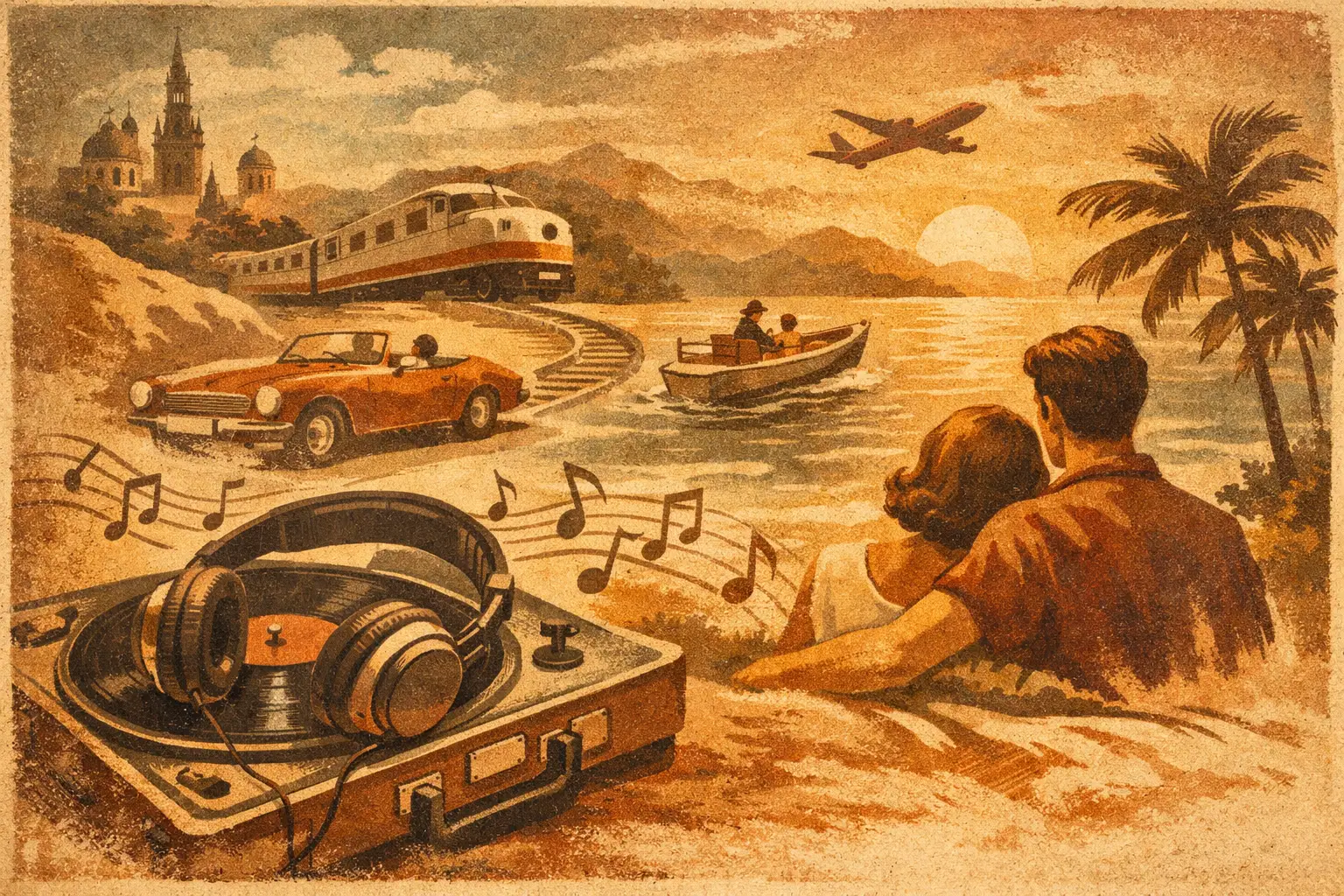
Some travel memories arrive like postcards. Others come back as beats.
You hear a drumline rolling through a street festival, bass slipping out of a beach club, or the quick hand rhythm of a cook chopping on a busy corner, and suddenly a place is right there again. Not just the look of it, but the pulse. That is what makes beats so powerful in travel and culture – they do not simply soundtrack a moment. They give it motion, mood, and identity.
For anyone who loves exploring with all their senses, this matters. A destination is never just the view from the balcony or the famous landmark at golden hour. It is the tempo of the room, the rhythm of the crowd, the pace of the meal, the energy that tells you whether a place wants you to slow down, dance a little, linger longer, or keep moving.
Why beats stay with us
A great beat has a way of bypassing the rational part of memory. You may forget the name of a side street in San Juan, a lounge in Miami, or a waterfront spot in Cozumel, but you remember how the music felt in your chest. You remember the sway of the room. You remember the exact second the atmosphere changed.
That emotional shortcut is part of why music travels so well across platforms and experiences. You can photograph architecture and plate a beautiful meal for the camera, but beats capture energy in a way a still image never can. They tell you whether a city feels elegant, restless, playful, smoky, celebratory, or laid-back.
There is also something deeply communal about rhythm. Melody can feel intimate, even private. Beats gather people. They give strangers a shared pattern to follow, whether that means dancing, clapping, nodding along, or just walking in sync down a crowded avenue. When you are visiting somewhere new, that matters. Rhythm can make you feel included before you understand every word around you.
Beats and the personality of a place
Every destination has its own pulse, even when no formal performance is happening. You can hear it in transit systems, marketplaces, restaurant kitchens, nightlife districts, and open-air promenades. Some places move with a soft, unhurried groove. Others hit fast, bright, and percussive.
That is why the most memorable trips are often the ones where you stop treating music as background noise. When you pay attention to beats, a destination starts revealing itself in layers. A port city may feel polished by day and percussion-heavy by night. A luxury cruise may offer one rhythm by the pool, another in the theater, and something completely different in a late-night lounge where the crowd finally loosens up.
It depends, of course, on what kind of traveler you are. Some people want beats that energize the adventure. They want rooftop sets, live bands, dance floors, and festival streets. Others want a subtler rhythm – café playlists, soft jazz in a dining room, acoustic grooves near the water. Neither approach is more authentic than the other. The point is noticing how sound shapes your version of place.
The connection between beats and food
Food and music have more in common than most people admit. Both are about timing, layering, texture, anticipation, and release. A meal with no atmosphere can still be technically excellent, but when the beats are right, the experience gets bigger. The room breathes differently. Conversation shifts. Even the plating seems to land with more confidence.
Think about a seafood lunch near the water with relaxed, sunny rhythms in the background. The whole meal feels lighter. Now picture a late dinner in a city restaurant where the bass is low, warm, and stylish. Suddenly the same act of dining feels dressed up, cinematic, and social.
This is one reason culinary travel hits differently when you stop separating the plate from the playlist. Street food markets, beach bars, tasting menus, local bakeries, and cruise dining rooms all carry a sonic identity. Sometimes it is obvious, and sometimes it is barely noticeable. Either way, beats help frame flavor.
There is a trade-off here, though. Not every food moment needs heavy music. Some dishes deserve quiet. Some restaurants overplay the vibe and underdeliver on the meal. The sweet spot is when the sound supports the experience rather than competing with it.
When beats turn movement into memory
How beats change the way we travel
One of the easiest ways to tell whether a trip is landing emotionally is to notice your body. Are you slowing down? Speeding up? Walking with more bounce? Lingering in places you would normally rush through? Beats often influence that before you even realize it.
A good rhythm can make a long promenade feel cinematic. It can turn a sail-away party into a shared release. It can transform a simple walk through a neighborhood into one of those moments where you feel fully present, like the scene and your mood finally matched.
This is especially true for creator-led travel storytelling. Video loves movement, and movement loves rhythm. The reason certain travel clips feel instantly alive is not just editing or camera quality. It is the beat underneath the visual. The right rhythm gives shape to color, crowd energy, food shots, ocean views, and city lights.
That does not mean every trip needs to be edited like a music video. Sometimes the best beats are the ones you find in real time, with no production at all. A train platform musician. A pool deck DJ catching the exact mood of sunset. A local celebration you stumble into by accident. Those moments feel special because they are not manufactured for you. You joined them where they already lived.
Listening beyond the obvious beats
When people think of beats, they usually think of songs first. Fair enough. But travel opens up a wider definition.
Beats can be literal percussion, club production, or live instrumentation. They can also be the repeated sounds that define a place – waves hitting the hull, footsteps across a busy square, silverware and laughter in a packed dining room, the call-and-response energy of a market, the steady engine hum before a ship leaves port. All of that builds rhythm.
That broader way of listening makes travel richer because it pushes you beyond checklist tourism. You are not just asking, What should I see here? You are asking, How does this place move? What tempo does it invite? What sound belongs to this hour, this meal, this neighborhood, this view?
That is where cultural curiosity gets more personal. You stop consuming destinations and start feeling them.
Finding your own travel beats
There is no single perfect soundtrack for a trip. The best beats are the ones that fit the moment you are actually having, not the one you think you are supposed to have.
Some mornings want soft rhythm and coffee with a view. Some afternoons call for bright energy, open water, and something playful in your headphones. Some nights deserve live music, a packed room, and the kind of bass that makes everybody smile at each other for no real reason. Let the place guide you, but let your mood have a vote too.
If you create content, this is where taste matters more than trend. Chasing whatever sound is popular can flatten the personality out of a destination. Choosing beats that genuinely match the setting makes the story feel lived in. It feels less like performance and more like presence.
That balance is part of what makes travel, food, and music such a strong trio. Each one sharpens the others. A beautiful setting becomes more emotional. A meal becomes more atmospheric. A song becomes attached to a view, a flavor, a laugh, a person, a night you did not want to end.
At Musical Smile Guy, that connection is part of the fun. The journey feels fuller when you let sound join the itinerary.
The next time you travel, pay attention to what the place is playing back to you. The beats might end up being the part you carry home longest.