
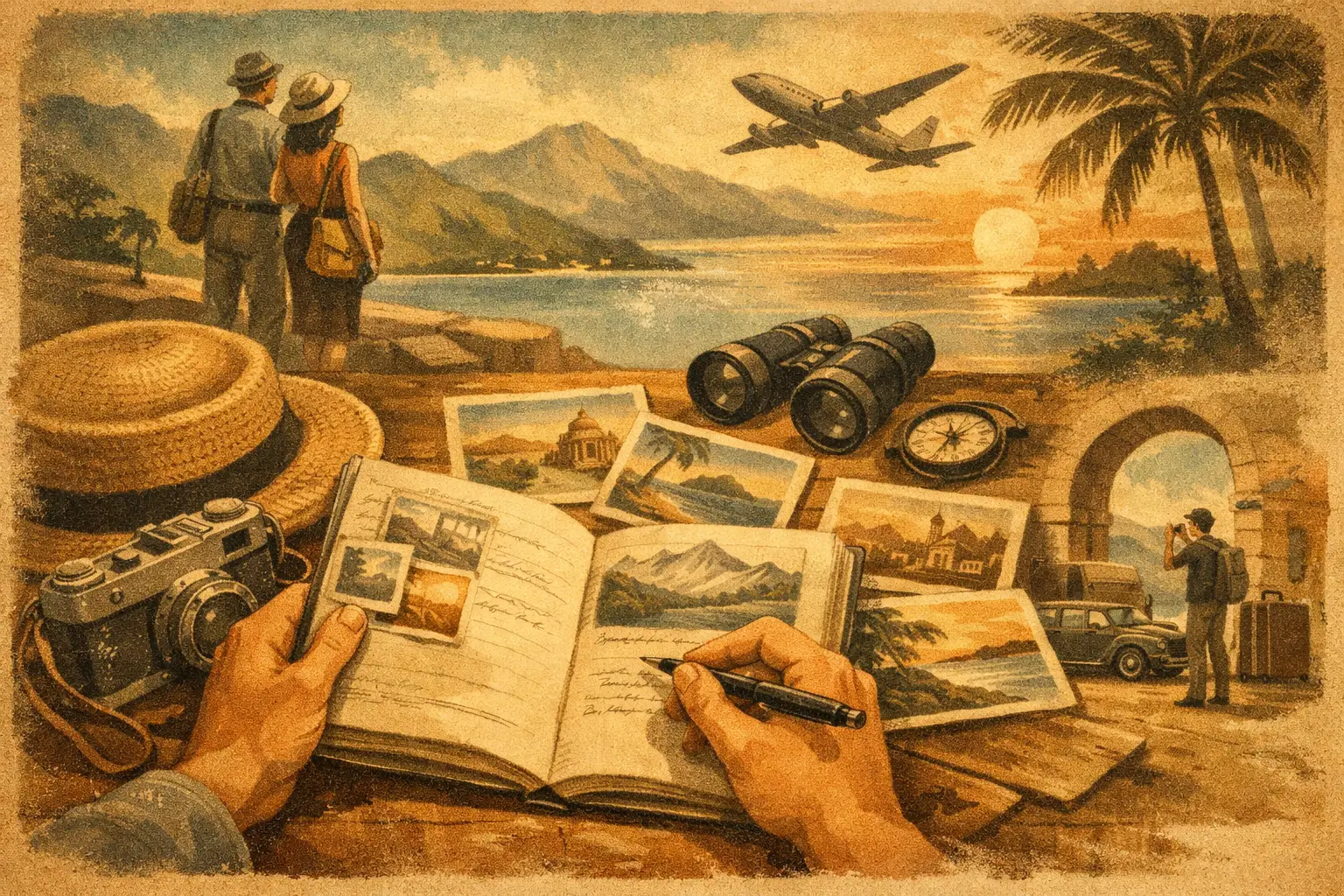
The best travel memories usually do not disappear all at once. They fade in pieces. First it is the name of the little cafe with the perfect late-night pasta. Then it is the song playing from a street performer while the city lights came on. A few months later, even that breathtaking view can start to blur. If you have ever wondered how to document travel experiences in a way that feels vivid, personal, and worth revisiting, the answer is not to capture more. It is to capture better.
That shift matters because travel is not just about where you went. It is about how a place felt when you were standing in it. The most meaningful travel documentation preserves atmosphere, emotion, surprise, and the tiny details that make a trip yours. A polished photo album is nice. A living memory you can step back into is better.
Why most travel documentation falls flat
A lot of people come home with hundreds of camera roll photos and almost no story. They documented proof of being somewhere, but not the experience of it. There is a difference between photographing a meal and remembering why that meal became the highlight of the day. There is a difference between filming a skyline and capturing the laughter, the music, and the tired, happy walk back to your hotel.
The problem is not effort. It is focus. When you try to save everything, you usually end up with a pile of disconnected moments. What you actually want is a rhythm that helps you notice what is worth keeping.
That means letting go of the idea that travel documentation has to look cinematic at all times. Sometimes the most valuable record is a voice memo you made in the taxi, still excited and a little breathless, talking about the jazz set you just heard. Sometimes it is a short note about the scent of the market, or the exact color of the water from the ship deck at sunset.
How to document travel experiences without living through your phone
This is where balance comes in. If you document every second, you can miss the trip while trying to preserve it. If you document nothing, the details vanish faster than you think. The sweet spot is creating a simple system you can actually maintain while still being present.
Start by deciding what kind of memories matter most to you. Some travelers are visual first. They want photos, clips, and scenic shots. Others remember through words, sounds, or food. If your strongest memories are tied to atmosphere, then a short journal entry and a few ambient videos may serve you better than fifty posed pictures.
Think in layers. One layer is visual – photos and video. Another is reflective – notes, captions, or journal entries. The third is sensory – sounds, music, food, weather, colors, and mood. When you combine those layers, the memory becomes much more complete.
For example, a cruise day in port can be documented with one wide shot of the harbor, one close-up of the local dish you tried, a ten-second video of the street band, and a few lines in your notes app about what surprised you. That is already more powerful than a hundred random snapshots.
Build a simple capture routine
The easiest way to stay consistent is to stop treating documentation like a huge creative project while you are still traveling. Give yourself a light routine instead.
In the morning, take one note about what you are most excited to experience. This creates a sense of intention and gives you something to reflect on later. During the day, capture a few anchor moments rather than everything. Focus on arrival, one emotional highlight, one food moment, and one detail that says something about the place.
At night, take five minutes to record what stood out. Not the full itinerary. Just the pieces that felt alive. Maybe the ocean looked silver before dinner. Maybe the live music in the lounge changed the whole mood of the evening. Maybe a conversation with a local gave the destination a different shape.
This nightly reset is where memories become stories instead of leftovers.
Use the right mix of formats
If you want your travel memories to feel rich later, one format is rarely enough. Photos are quick and powerful, but they can flatten sound, movement, and emotion. Video brings energy, but can be harder to revisit unless it is organized. Writing captures meaning, but it cannot always show scale or atmosphere on its own.
That is why the best approach is usually a mix.
Photos are ideal for landmarks, food, portraits, textures, and quick visual anchors. Try to get a few wide shots, a few close details, and at least one image with you in it. People often forget that being in the frame helps future-you remember the feeling of being there.
Short-form video works best when it is intentional. A ten-second clip of waves hitting the side of a ship, a bustling food stall, or a dance performance can transport you back immediately. Long videos are not wrong, but they often sit unwatched. Short clips are easier to save, edit, and actually enjoy later.
Notes or journaling add the emotional layer. Write down what surprised you, what you did not expect, and what you would want to tell a friend. If you are not a traditional journal person, use voice notes. Spoken reflections often feel more natural while traveling.
And if music is part of how you process the world, build a trip playlist. A few songs tied to a destination can become one of the strongest memory triggers you have. This works especially well when a place had a real soundtrack – live bands, street musicians, beach bars, or just that one song you kept hearing everywhere.
Pay attention to the details people forget
Big moments are easy to remember documenting. It is the smaller ones that often hold the heart of the trip.
Notice transitions. The train ride before the adventure. The first glimpse of a city from your balcony. The way the air changed when you stepped off the ship. Document ordinary moments that carry feeling, because those are often the scenes that make a travel memory feel real.
Food deserves special attention too, not just because it photographs well, but because it tells a story fast. A dish can reflect history, local ingredients, mood, and setting all at once. Instead of only snapping the plate, note what made it memorable. Was it comfort food after a long excursion? Was it beautifully plated but overrated? Was it the dessert you still think about months later?
People also forget to capture sound. This is a missed opportunity. Record thirty seconds of ambient audio now and then – market chatter, waves, live music, laughter, church bells, rain on a balcony. Sound gives memory depth in a way images alone cannot.
Organize while the trip is still warm
The longer you wait, the harder it gets. Travel documentation becomes overwhelming when everything stays buried in your camera roll and you tell yourself you will sort it out later.
You do not need a perfect archive on the road. You just need enough structure that your future self can find things. Create one album per destination or per day. Favorite your strongest images as you go. Rename voice memos with something recognizable. Put a few notes in one running document instead of scattering them across apps.
If you create content for social media, there is a trade-off here. Posting in real time can be fun and engaging, but it can also pull you out of the experience. Sometimes it is better to collect moments privately first and shape the story after you have had time to reflect. The polished version often gets better when it has a little breathing room.
That is especially true if your goal is storytelling, not just posting. A great travel story is not a stream of random updates. It has mood, pacing, and perspective.
Let your documentation reflect you
This is where travel memories stop looking generic. The strongest documentation has personality. It reveals what you notice, what moves you, what makes you smile, what flavors you chased, and what soundtrack followed you through the trip.
If you love culture, document the performance, the local art, the street energy, the conversations. If you are food-driven, build your memories around meals and markets. If you are visually inspired, focus on color, architecture, and motion. There is no single right formula for how to document travel experiences because the best method depends on the kind of traveler you are.
For creator-led storytelling, this is everything. People do not just connect with destinations. They connect with your lens on the destination. That is part of what makes travel content from a brand like Musical Smile Guy feel memorable – the journey is not reduced to facts. It becomes a lived experience shaped by rhythm, flavor, personality, and joy.
So the next time you travel, do not aim to capture every second. Capture what makes the place unforgettable to you. A few honest photos, a handful of sensory details, and one real reflection can hold more magic than an overloaded camera roll ever will. Years from now, that is what will bring the adventure back in full color.